Next-Generation Ceramics: Unlocking Superior Properties for Industry

The Unseen Dominance of Aluminum Oxide Ceramic
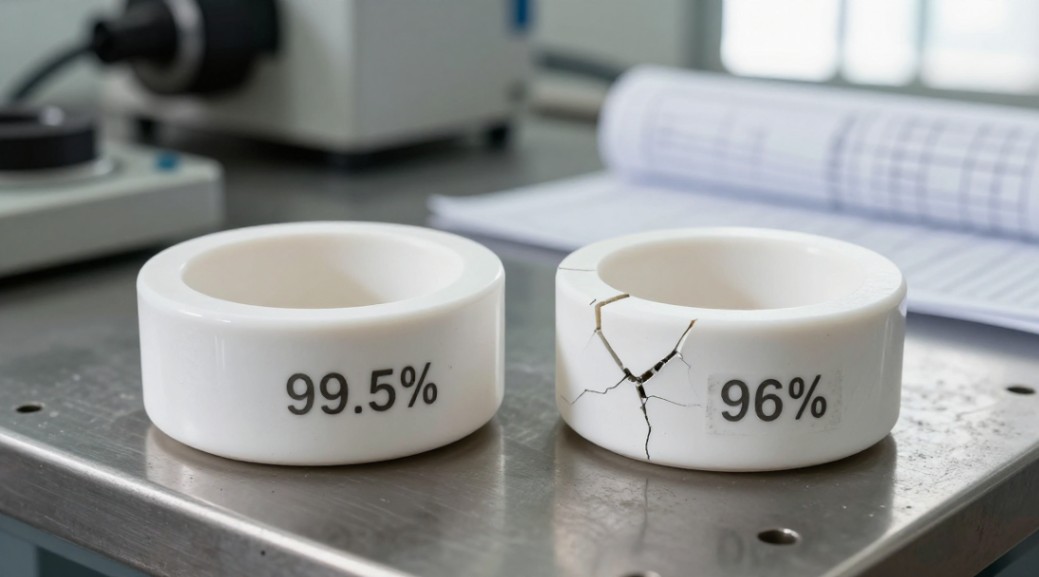
A common misconception is that exotic, high-cost ceramics always outperform the workhorse materials. However, data from bulk industrial consumption reveals that over 70% of all technical ceramic components in use today are based on aluminum oxide ceramic. This prevalence stems from its unparalleled balance of properties and cost. Yet, the real strategic error is selecting the 96% alumina grade when the application demands 99.5% purity. That single 3.5% difference can alter component life by a factor of ten.
1. Defining the Material: More Than Just Al2O3
Aluminum oxide ceramic, universally termed alumina, is a crystalline material synthesized from high-purity alumina powders. Its defining trait is a covalent-ionic bond structure. This structure delivers a specific combination of attributes. It is not the ultimate material in any single category. Instead, it occupies the critical intersection of performance, manufacturability, and economics.
- Chemical Composition: Primarily alpha-phase Al2O3. The “% alumina” specification (e.g., 96%, 99.5%) refers to the crystalline alumina content; the remainder consists of sintering aids like silica and magnesia.
- Core Property Triad: Extreme hardness (typically 9 on the Mohs scale), high wear resistance, and excellent electrical insulation even at elevated temperatures.
- Thermal Profile: High melting point (~2050°C) but moderate thermal conductivity. It retains strength at high temperatures but is susceptible to thermal shock compared to some nitrides or carbides.
2. The Critical Choice: Alumina Grades Decoded
Specifying “alumina” is insufficient. The grade dictates performance. The decision between standard and high-purity alumina is not about cost alone. It is a fundamental trade-off between mechanical integrity and processability.
2.1. 96% Alumina
- Advantages: Lower sintering temperature, easier machining in the green state, and significantly lower cost. Excellent for high-volume, geometrically complex parts where ultimate strength is secondary to wear and electrical insulation.
- Disadvantages: Lower flexural strength, reduced hardness, and lower corrosion resistance in harsh chemistries due to the glassy silicate grain boundary phase.
- Best For: Standard wear plates, thread guides, insulating bushes, and many electronic substrates.
2.2. 99.5%+ Alumina
- Advantages: Superior mechanical properties (strength, hardness), higher thermal conductivity, exceptional chemical inertness, and better performance at temperatures exceeding 1500°C due to a cleaner, more refractory grain boundary.
- Disadvantages: Requires higher sintering temperatures, is more challenging to machine post-sinter, and commands a premium price.
- Best For: High-performance cutting tools, semiconductor wafer processing components, advanced armor tiles, critical pump seals, and biomedical implants.
3. How Alumina Stacks Up Against Key Competitors
No ceramic is universally superior. The correct choice emerges from a logical analysis of application demands against material limitations.
3.1. Aluminum Oxide Ceramic vs. Silicon Carbide Ceramic
- Alumina Wins On: Electrical insulation, lower material cost, and superior surface finish capability (down to optical polish). Its biocompatibility is also proven.
- Silicon Carbide Wins On: Thermal conductivity (3-4x higher), thermal shock resistance, and extreme wear resistance in abrasive slurries. Reaction-sintered silicon carbide offers better machinability than most sintered grades.
- Verdict: Choose silicon carbide ceramic for heat exchangers, mechanical seal faces in hot water, or abrasive blasting nozzles. Choose alumina for electrical insulators, high-speed bearing balls, or labware.
3.2. Aluminum Oxide Ceramic vs. Silicon Nitride Ceramic
- Alumina Wins On: Cost-effectiveness, dielectric strength, and hardness for direct wear.
- Silicon Nitride Wins On: Fracture toughness (resistance to chipping), flexural strength, and lightweight nature. Silicon carbide-bonded silicon nitride variants push thermal limits further.
- Verdict: Silicon nitride is the definitive choice for metalforming rolls, high-reliability bearing elements, and engine components. Alumina remains king for electrically isolated wear surfaces and chemically stable substrates.
3.3. Aluminum Oxide Ceramic vs. Zirconia (ZrO2)
- Alumina Wins On: Hardness, wear resistance in non-impact scenarios, and long-term stability (zirconia can undergo low-temperature degradation).
- Zirconia Wins On: Fracture toughness (highest of all oxides) and bending strength, making it far more resistant to cracking and impact.
- Verdict: Use zirconia for scissors, knives, tweezers, or any component subject to tensile stress and impact. Use alumina for applications where hardness and dimensional stability under load are paramount.
4. Manufacturing and Finishing: From Powder to Precision Part
The chosen process dictates geometry, tolerance, and cost. Three primary methods dominate.
- Dry Pressing: Fast, economical. Ideal for simple, axisymmetric shapes like tiles, discs, and simple bushes. Limited geometry complexity.
- Isostatic Pressing: Applies uniform pressure from all directions. Produces components with higher, more uniform density and better mechanical properties. Suitable for more complex near-net shapes.
- Injection Molding: Enables highly complex, intricate geometries unattainable by pressing. Essential for parts with undercuts, thin walls, or complex features. Higher tooling cost but excellent for high-volume production.
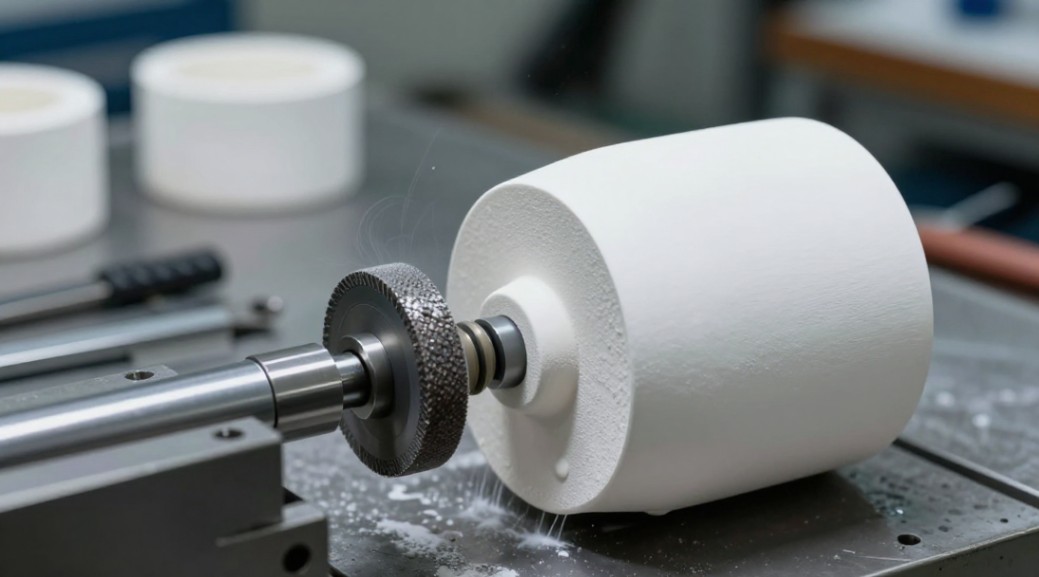
Post-sintering, machining is difficult but possible. Diamond grinding is standard. For ultra-fine surfaces, sequential grinding, lapping, and polishing achieve sub-micron roughness. This is critical for sealing surfaces, optical components, and biomedical implants.
5. Primary Application Domains
- Wear & Industrial: Pump seals, slurry valve components, textile guides, and wire drawing cones. It outlasts steel in abrasive environments by orders of magnitude.
- Electronics: The foundational material for thick- and thin-film electrical substrates, insulating housings, and spark plug insulators.
- Ballistic Protection: Used as a striking face in composite armor systems. High hardness shatters and erodes incoming projectiles.
- Biomedical: Leverages its biocompatibility and corrosion resistance for hip joint ball heads, dental implants, and bone screws.
- High-Temperature: Thermocouple tubes, furnace liners, and kiln furniture, though outperformed by silicon carbide or aluminum nitride ceramic in extreme thermal conductivity applications.
6. Limitations and Non-Negotiable Considerations
Ignoring these realities leads to component failure. Aluminum oxide ceramic is intrinsically brittle. It has high compressive strength but low tensile strength. Designers must avoid tensile stress concentrations.
- Brittleness: It does not yield or deform plastically. It fails catastrophically if its fracture stress is exceeded.
- Machining Complexity: Net-shape forming is always preferred. Post-sinter machining requires diamond tools, is slow, and adds significant cost. Complex internal geometries are often impossible.
- Thermal Shock: While good, it is inferior to silicon nitride or boron nitride ceramic. Rapid temperature cycles can cause cracking.
- Weight: It is denser than many alternative structural ceramics and metals.
The Logical Path Forward
The selection process is methodical. First, define the primary functional requirement: is it wear, insulation, thermal management, or structural integrity? Second, quantify the secondary constraints: temperature, chemical environment, and required precision. Third, assess the economic envelope for the component.
For the majority of applications demanding a balance of hardness, electrical resistance, and chemical stability, a high-purity aluminum oxide ceramic is the rational default. When thermal management becomes the dominant factor, shift the evaluation to silicon carbide or aluminum nitride. When impact resistance is critical, evaluate zirconia or silicon nitride.
To validate your material selection, engage with a technical ceramics manufacturer early in the design phase. Provide them with your functional and environmental specifications. Request test samples—often simple discs or tiles—of the candidate materials, including 96% vs. 99.5% alumina, to perform in-house validation under simulated conditions. This empirical step prevents costly design revisions and ensures your final specification leverages the precise properties your application demands.
Suppiler
Synthetic-chemical focus on the research and development, production and sales of ceramic products, serving the electronics, ceramics, chemical and other industries. Since its establishment in 2015, the company has been committed to providing customers with the best products and services, and has become a leader in the industry through continuous technological innovation and strict quality management.
Our products includes but not limited to Aluminum Nitride, Aluminum Oxide, Boron Carbide, Boron Nitride, Ceramic Crucible, ect. If you are interested in any type of these, please feel free to contact us.