Next-Generation Ceramics: Unlocking Superior Properties for Industry

Stop Overthinking It: Aluminum Oxide Ceramic Is Your Go-To for Hard Work
If you need a material that survives serious abrasion, laughs at high temperatures, and won’t break the bank, stop hunting. Aluminum oxide ceramic is the workhorse. We have spent decades watching engineers chase exotic ceramics for jobs this material handles perfectly well. Let’s cut through the noise. For industrial wear parts, cutting tools, and high-voltage insulators, alpha-alumina (α-Al2O3) with its corundum crystal structure is the default champion. It is not the toughest ceramic out there, and it hates sudden temperature changes, but for 80% of demanding applications, it is the smartest choice.
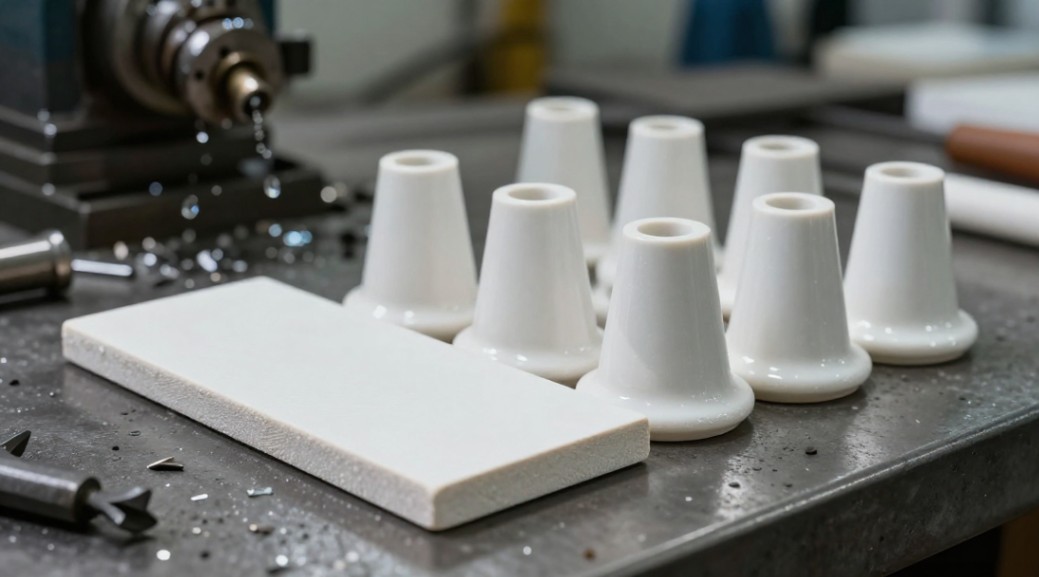
We often see people reaching for silicon carbide ceramic because it sounds more advanced. They overlook that aluminum oxide ceramic delivers a better balance of cost, electrical insulation, and sheer compressive strength for static structural components. Our collective experience tells us that misjudging these trade-offs leads to budgets blown on over-engineered solutions. This article lays out exactly where this ceramic wins, where it falls short, and how it stacks up against tough competitors like boron carbide ceramic, silicon nitride ceramic, and zirconia.
The Raw Mechanics: Why This Ceramic Works (and Where It Fails)
Let’s talk about what happens on a microscopic level. Aluminum oxide ceramic boasts high hardness and wear resistance that makes it the industry standard for industrial abrasives. Think grinding media, sandblasting nozzles, and pump seals. The secret is the dense, sintered structure we achieve through methods like sintering, hot pressing, or isostatic pressing. We press fine alumina powder, heat it to near-melting, and fuse it into a rock-solid mass. The result is a material with enormous compressive strength—it can handle tons of force pushing on it without flinching.
However, and this is critical, its tensile strength is only moderate. Pull it or twist it, and it will crack far sooner than steel. Fracture toughness is low. This is the reality we must work with. When we design a component, we ensure loads are purely compressive. A common pain point we have solved repeatedly is the poor thermal shock resistance. Drop a cold aluminum oxide ceramic tube into a hot furnace, or heat it unevenly, and it will shatter. We compensate by preheating parts, controlling thermal gradients, or switching to a material like recrystallized silicon carbide ceramics for extreme thermal cycling. You have to design around its limitations, not fight them.
Another major frustration: machining. You cannot simply drill or tap this stuff with standard tools. It requires diamond tooling for any post-sintering modification. We always tell clients to get the shape as close to final as possible before sintering. That saves weeks of time and avoids costly diamond grinding operations. For high-precision geometries, we rely on green machining (cutting the unfired powder compact) or near-net-shape pressing.
Aluminum Oxide vs. The Competition: An Honest Head-to-Head
Versus Silicon Carbide Ceramic (SiC): Silicon carbide ceramic wins on thermal conductivity and thermal shock resistance. For severe heat cycling (like furnace muffles or burner nozzles), SiC is superior. But aluminum oxide ceramic offers superior electrical insulation. We use alumina for spark plug bodies, vacuum feedthroughs, and substrate for electronics. If you need to insulate high voltage, choose alumina. If you need to shed heat fast, choose SiC. Simple.
Versus Zirconia (ZrO2): Zirconia is tougher. It has higher fracture toughness and can withstand some bending stress. For biomedical implants like joint replacements, zirconia or alumina-zirconia composites are often preferred because they resist cracking under cyclic loads. But alumina is cheaper, harder (less wear), and chemically more inert. For a chemical processing pump seal where wear resistance matters more than impact resistance, alumina is our pick. Zirconia also costs more per pound.
Versus Boron Carbide Ceramic (B4C): Boron carbide ceramic is exceptional for armor and neutron absorption. It is incredibly hard, but even more brittle and expensive. For most industrial wear tasks, B4C is overkill. We rarely recommend it unless you need ballistic protection or nuclear shielding. Stick with aluminum oxide ceramic for cost-effective abrasion resistance.
Versus Aluminum Nitride Ceramic (AlN): This is a different animal. Aluminum nitride ceramic has killer thermal conductivity (like some metals) and a coefficient of thermal expansion that matches silicon. It is the go-to for high-power electronics substrates. But it costs 5x to 10x more than alumina. Unless you are cooling high-density LEDs or IGBT modules, overpaying for AlN is a mistake. Regular aluminum oxide ceramic substrates work perfectly for standard thick-film circuits and resistors.
Versus Boron Nitride Ceramic (BN): Boron nitride ceramic is machinable, has excellent lubricity, and withstands extreme thermal shock. It is the special coating for boron nitride ceramic crucibles used for non-ferrous metal evaporation. But BN is soft and expensive. It wears out faster. For a structural wear part, BN is the wrong choice. For a crucible coating that needs to release molten metal, it is ideal.
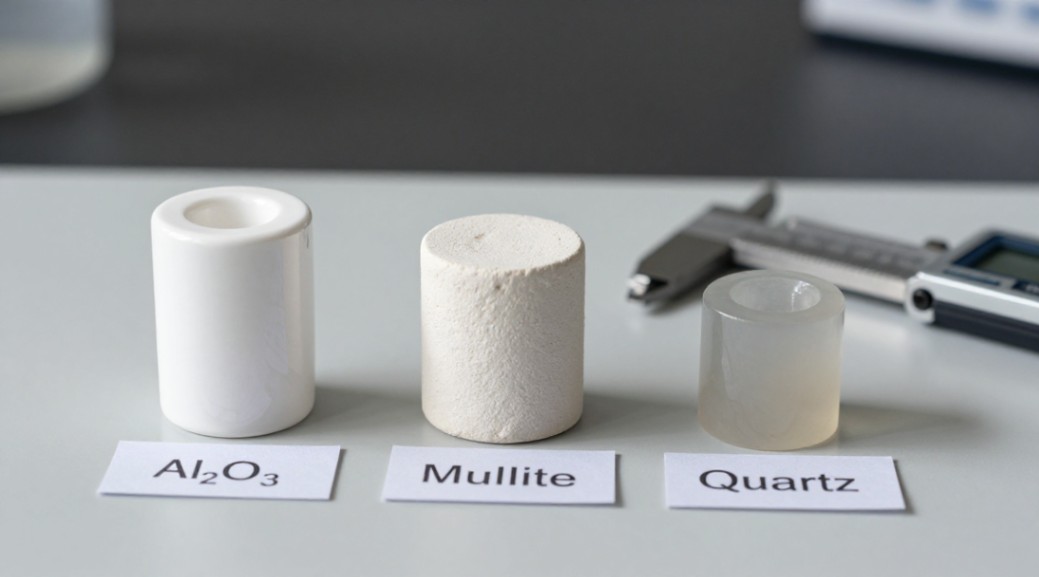
Versus Mullite Ceramic and Quartz Ceramic: Mullite ceramic offers good thermal shock resistance at a lower cost than alumina, but its hardness and wear resistance are far lower. Quartz ceramic (fused silica) is incredibly thermal-shock-resistant but very low in strength. For thermocouple insulation tubes, quartz works. For a cutting tool insert, you need aluminum oxide ceramic.
Versus Silicon Nitride Ceramic (Si3N4): Silicon nitride ceramic is the toughness king among engineering ceramics. It has high fracture toughness and good thermal shock resistance. For demanding mechanical components like engine valves or bearing balls, silicon nitride beats alumina hands down. But it is harder to sinter and more expensive. For a simple wear plate or sandblasting nozzle, the cost of Si3N4 is not justified. Alumina does the job for a fraction of the cost.
Versus Reaction-Sintered and Pressureless Sintered Silicon Carbide: For complex shapes, reaction-sintered silicon carbide ceramics offer near-net-shape manufacturing with lower shrinkage. But they contain residual silicon, which limits upper temperature use. Pressureless sintered silicon carbide ceramics are pure, dense, and strong, but require very high sintering temperatures. Both beat aluminum oxide ceramic in thermal conductivity and shock resistance. We switch to these when the application involves rapid heating and cooling above 1000°C.
Versus Silicon Carbide-Bonded Silicon Nitride Ceramics: This composite material combines the thermal properties of SiC with some toughness from Si3N4. It is a niche material for severe environments. For most standard high-temperature jigs and fixtures, well-formulated aluminum oxide ceramic (95% to 99.5% purity) is adequate and significantly cheaper.
Real-World Applications: Where We Use It Every Day
We have spent years specifying this material for dozens of environments. Here is where it shines brightest. Biomedical implants (hip and knee replacements) rely on the biocompatibility and chemical inertness of high-purity alumina. It does not corrode inside the body and wears very slowly. For high-temperature applications, we use alumina tubes for thermocouple sheaths, furnace liners, and insulators up to about 1600°C. Its excellent thermal stability and electrical insulation properties make it perfect for electrical feedthroughs in vacuum systems. We integrates these with metal components through surface finishing and metallization processes (like moly-manganese or active brazing) to create vacuum-tight seals. This is standard practice for high-power RF windows and HV bushings.
In the wear parts world, we machine (using diamond) alumina for seal rings, valve seats, thread guides, and slurry nozzles. It resists erosion from fine particles year after year. For cutting tools, aluminum oxide ceramic inserts run at high speeds on cast iron and hardened steel, outperforming carbide in dry machining. We also form it into crucibles, substrates, and custom-shaped components for electronics and wear parts. Thick-film substrates (alumina) carry resistor networks and hybrid circuits. Thin-film substrates also exist but require very fine surface finishes (Ra < 1 microinch).
A recent development we are excited about: nano-alumina composites. By adding nanosized particles or fibers, researchers have improved fracture toughness and even created translucent versions. This paves the way for transparent armor and more durable medical implants. It is not a silver bullet, but it closes the gap with tougher ceramics without sacrificing alumina’s core strengths like hardness and chemical stability.
Environmental Reality Check
Let’s not sugarcoat it. Producing aluminum oxide ceramic from bauxite involves energy-intensive calcining and sintering. The process releases CO2 and consumes a lot of power. However, once made, components last years. The material is recyclable and non-toxic in use. It does not leach chemicals or degrade into hazardous waste. For a sustainable design, we consider the lifecycle: a long-lasting alumina part often beats a short-lived plastic or metal part in total environmental impact. We advise clients to design for maximum part life, use recycled scrap where possible (many powder suppliers offer it), and avoid over-specifying purity grades beyond what the application truly needs. 99.5% purity costs more energy to produce than 96% purity. Do not waste it if your application does not need the extra electrical resistivity.
Our Final Recommendation: Make the Call
After two decades, here is our blunt advice. If your application involves high abrasion, high compressive loads, static high temperatures, or needs excellent electrical insulation at a reasonable price, specify aluminum oxide ceramic. Do not over-engineer with exotic materials. However, if you face severe thermal cycling, impact loading, or need ultimate toughness, look at silicon nitride ceramic or recrystallized silicon carbide ceramics. For high thermal conductivity electronics, consider aluminum nitride ceramic. But for the bulk of industrial ceramic needs, alumina is the smart, proven solution. We have used it in thousands of successful projects. It is reliable, predictable, and cost-effective. Stop chasing the new shiny ceramic unless you have a genuine need.
You are ready to move forward. We recommend you contact a reputable technical ceramics supplier (like CoorsTek, CeramTec, or Kyocera) with your specific temperature, load, and chemical environment data. Ask for a sample of 99% to 99.5% aluminum oxide ceramic to test in your actual rig. Run a thermal shock test at your process temperature. Machine a test coupon (they can provide it pre-ground or as-fired). Trust the data, not the marketing. If you need help interpreting the results or choosing the right grade (e.g., 94% vs. 99.8% for wear), drop us a line. We have seen these decisions go wrong a hundred times. We can save you the headache. Do it now—get prototyping.
Suppiler
Synthetic-chemical focus on the research and development, production and sales of ceramic products, serving the electronics, ceramics, chemical and other industries. Since its establishment in 2015, the company has been committed to providing customers with the best products and services, and has become a leader in the industry through continuous technological innovation and strict quality management.
Our products includes but not limited to Aluminum Nitride, Aluminum Oxide, Boron Carbide, Boron Nitride, Ceramic Crucible, ect. If you are interested in any type of these, please feel free to contact us.