Next-Generation Ceramics: Unlocking Superior Properties for Industry

Is Your Crucible Failing You at the Worst Possible Moment?
You push your process to the limit for peak purity. Your furnace cycles, your materials melt, and then it happens. The sample sticks. The crucible degrades. Carbon contamination ruins a costly batch. The failure is silent, costly, and utterly frustrating. You’re not just losing a crucible; you’re losing time, material, and confidence in your results. If this sounds familiar, the problem isn’t your process ambition. It’s the missing barrier between your graphite crucible and your molten material.
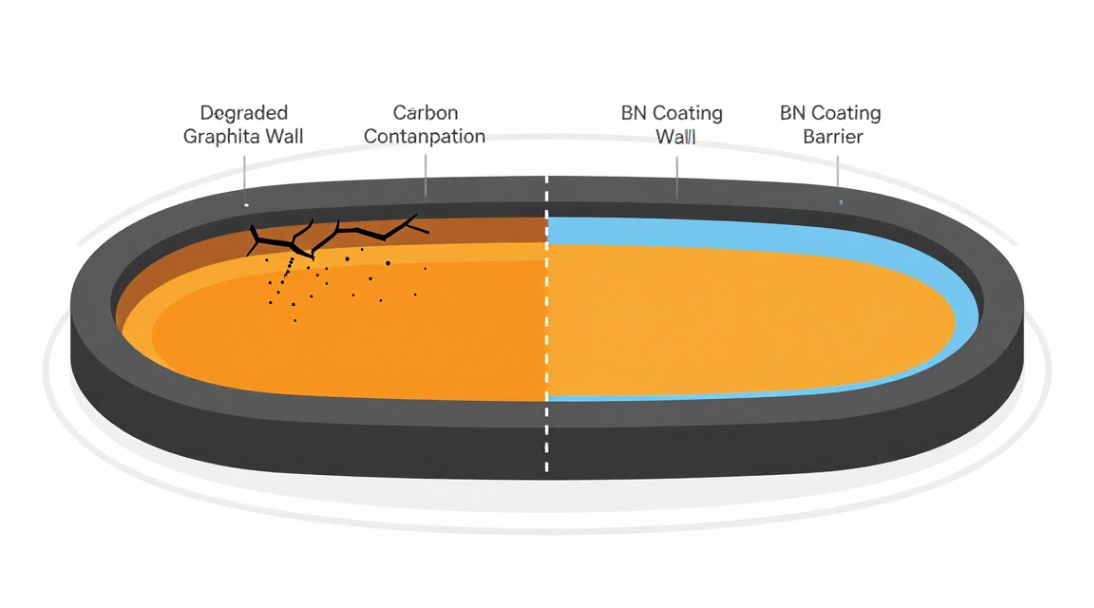
Why a Simple Coating Dictates Process Success
Graphite is a workhorse. It handles extreme heat and thermal shock with ease. But its atomic structure is also its Achilles’ heel. Carbon atoms readily dissolve into or react with many molten metals and salts. This leads to contamination, unwanted carbides, and frustrating adhesion that can physically destroy a crucible upon cooling. A high purity boron nitride coating acts as an inert, non-wetting shield. It doesn’t just protect the crucible; it protects the integrity of the material inside it.
The Core Mechanism: Inertness and Non-Wetting
Boron nitride, often called ‘white graphite,’ shares a similar layered hexagonal structure. But its chemical nature is radically different. It exhibits profound chemical inertness. Molten aluminum, silicon, gallium, and many reactive salts simply cannot wet its surface. Think of water beading up on a waxed car. The coating creates that same release effect, preventing the catastrophic sticking that leads to crucible failure and product loss.
Data-Driven Analysis: The Tangible Impact of a BN Coating
Let’s move beyond theory. The real-world difference between a coated and uncoated crucible isn’t subtle; it’s a fundamental shift in performance parameters. This table breaks down the critical contrasts that define a successful, repeatable process.
Coated vs. Uncoated: A Performance Comparison
| Performance Metric | Uncoated Graphite Crucible | High Purity BN Coated Crucible |
|---|---|---|
| Chemical Interaction | High risk of carbon dissolution/reaction | Effectively inert barrier; prevents contamination |
| Material Release | Molten materials often weld or stick | Excellent non-wetting; clean release every time |
| Lifespan (Cycles) | Degrades quickly from erosion/reaction | Dramatically extended; surface remains intact |
| Final Product Purity | Risk of carbon pickup | Purity safeguarded; essential for semiconductors |
| Operational Consistency | Variable results, unpredictable failures | Highly repeatable, reliable performance |
The data is clear. The coating transforms the crucible from a consumable part into a durable process tool. Industry chatter confirms this. Users in specialty metal refining forums note a 300-400% increase in crucible service life after switching to a properly applied BN coating. Crystal growth technicians for LED and semiconductor wafers report a measurable drop in defect rates attributed to carbon inclusion. The feedback consistently points to one outcome: predictable, high-yield operation.
Where It Matters: Critical Applications Demanding BN
This isn’t a general-purpose solution. It’s a targeted necessity for industries where failure is not an option and purity is paramount.
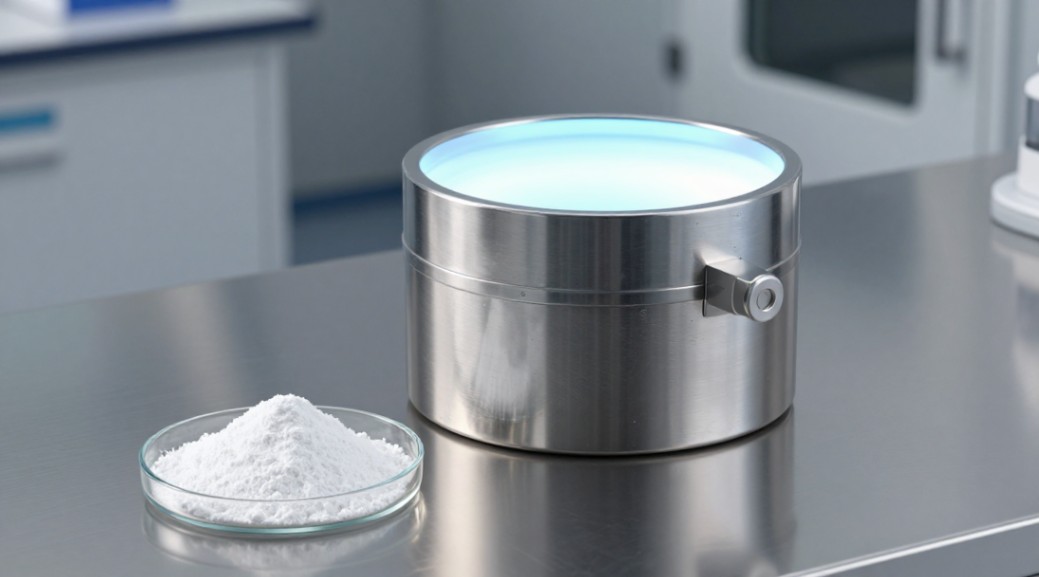
- Semiconductor Crystal Growth: Czochralski (CZ) and Vertical Gradient Freeze (VGF) processes for silicon, gallium arsenide, and other compound semiconductors. Any carbon contamination destroys crystal lattice integrity.
- High-Purity Metal Refining & Recycling: Processing of rare earth metals, aerospace-grade aluminium alloys, and precious metals like platinum. The coating prevents alloying with carbon.
- Advanced Ceramics & Powder Processing: Sintering of technical ceramics where even trace carbon alters sintering behavior and final properties.
- Research & Development: For labs exploring new alloys or materials, the coating ensures the crucible doesn’t become an uncontrolled variable in the experiment.
Selecting and Applying Your Shield: A Practical Guide
Not all boron nitride coatings are equal. Success hinges on two factors: the material itself and the application technique.
Choosing the Right Coating Material
Look for high purity hexagonal boron nitride (h-BN) powders specifically formulated for coatings. The binder system is critical. Water-based binders are common and easier to handle, but alcohol or solvent-based binders can offer better wetting on some graphite grades and faster drying. The coating must be designed for high-temperature service; the binder must pyrolyze cleanly without leaving residues.
The Application Process: Precision Beats Speed
Spraying and brushing are the primary methods. Spraying offers a more uniform, thin film ideal for complex geometries. Brushing provides more control for touch-ups or specific areas. The crucible surface must be impeccably clean and dry. Apply multiple thin coats. A single thick coat will crack and flake during thermal cycling. Let each coat dry completely. The final step is a careful thermal cure according to the manufacturer’s specifications to burn off the binder and sinter the BN particles into a coherent layer.
Maintaining the Barrier
The coating is a wear item. Inspect it before each critical use. Look for chips, cracks, or areas where the graphite substrate is visible. For minor damage, spot repairs are possible with the same coating slurry. When wear becomes significant, a complete strip and recoat is necessary. Avoid abrasive cleaners. Often, gently heating the used crucible can cause remaining material to shrink away from the non-wetting BN surface, simplifying cleanup.
Your Path to Uncompromised Process Integrity
Stop fighting your equipment. A high purity boron nitride coating is the definitive upgrade for your graphite crucibles. It shifts the paradigm from managing failure to ensuring success. The initial application requires care, but the payoff is immense: longer crucible life, zero contamination, perfect release, and total process control. Your work demands purity. Your crucible should protect it, not threaten it. Evaluate your next high-temperature run. Could a simple, inert layer be the key to unlocking consistent, high-quality results? The evidence suggests it is.
Suppiler
Synthetic-chemical focus on the research and development, production and sales of ceramic products, serving the electronics, ceramics, chemical and other industries. Since its establishment in 2015, the company has been committed to providing customers with the best products and services, and has become a leader in the industry through continuous technological innovation and strict quality management.
Our products includes but not limited to Aluminum Nitride, Aluminum Oxide, Boron Carbide, Boron Nitride, Ceramic Crucible, ect. If you are interested in any type of these, please feel free to contact us.