Next-Generation Ceramics: Unlocking Superior Properties for Industry

The Day We Switched to Alumina and Never Looked Back
It was the third failed seal that did it. My team was testing a high-pressure valve with a “high-performance” ceramic component. The specs looked great on paper. But reality had other plans. We were facing catastrophic wear, thermal shock failure, and a mounting pile of expensive scrap. The conventional wisdom in our shop said to double down, to try a fancier, more exotic compound. Instead, I asked a heretical question: “What if we used the boring, old-school material?” We swapped in a simple, high-purity aluminum oxide ceramic component. The failures stopped. The cost plummeted. That was twenty years ago. I’ve seen this story repeat a thousand times. Everyone chases the shiny new thing, while the workhorse, Aluminium Oxide Ceramic (Al2O3), quietly powers the industrial world. Let’s cut through the hype.
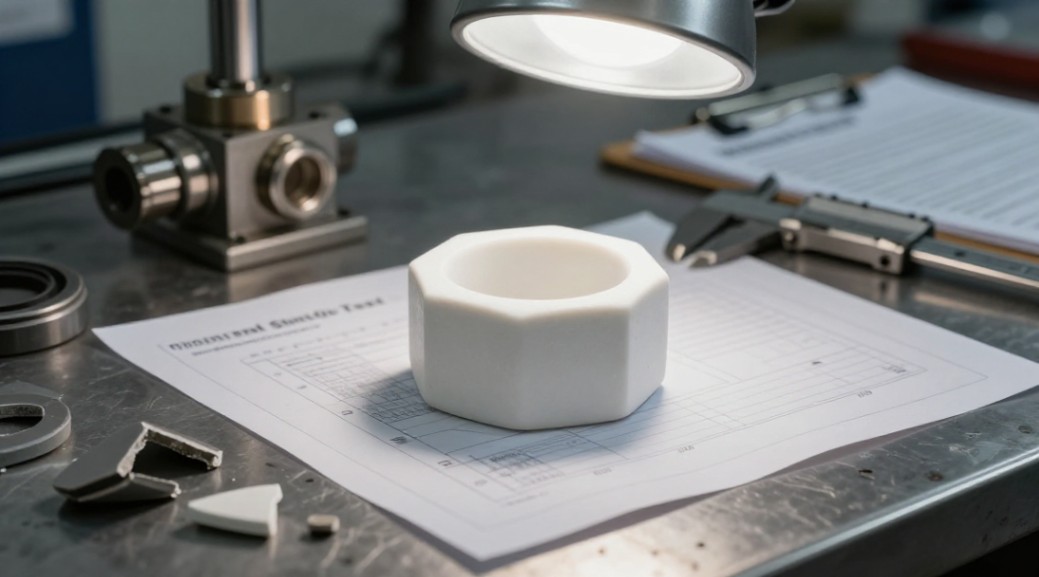
The Ultimate Ceramic Showdown: Aluminum Oxide vs. The Competition
You need a ceramic. Do you pick the industry standard or a specialized contender? This isn’t about “best.” It’s about fit. Here is the unvarnished, field-tested comparison you won’t get from a sales brochure.
1. The Main Event: Aluminum Oxide Ceramic (Al2O3)
This is your baseline. The universal donor of the ceramic world. When you think “technical ceramic,” you’re probably picturing this.
- What it is: A crystalline ceramic primarily made from aluminum oxide. Think of it as engineered sapphire.
- Key Property: Exceptional all-rounder. It doesn’t always win in a single category, but it never finishes last.
- The Real-World Verdict: On engineering forums, the consensus is clear: “For 80% of non-extreme applications, 96% alumina gets the job done at half the cost.”
2. The Challengers: When to Look Beyond Alumina
Zirconia (ZrO2): The Tough Guy
- Wins On: Fracture toughness. It resists cracking and chipping far better than alumina. It’s the choice for scissors, knives, and high-impact bearings.
- Loses On: Long-term stability under load (can suffer from aging), thermal conductivity, and raw material cost.
- User Feedback: “We switched to zirconia for wear plates, but saw unexpected micro-cracking after two years of thermal cycling. Went back to alumina.”
Silicon Carbide (SiC) & Silicon Nitride (Si3N4): The Extreme Performers
- Wins On: Thermal shock resistance and high-temperature strength. Silicon carbide ceramic is king in kiln furniture and furnace components. Silicon nitride ceramic excels in high-speed bearing applications.
- Loses On: Cost, complexity of machining, and electrical insulation (SiC is semiconducting).
- User Feedback: “For our 1400°C furnace, only reaction-sintered silicon carbide ceramics worked. Alumina warped. You pay for what you need.”
Aluminium Nitride (AlN): The Thermal Conductor
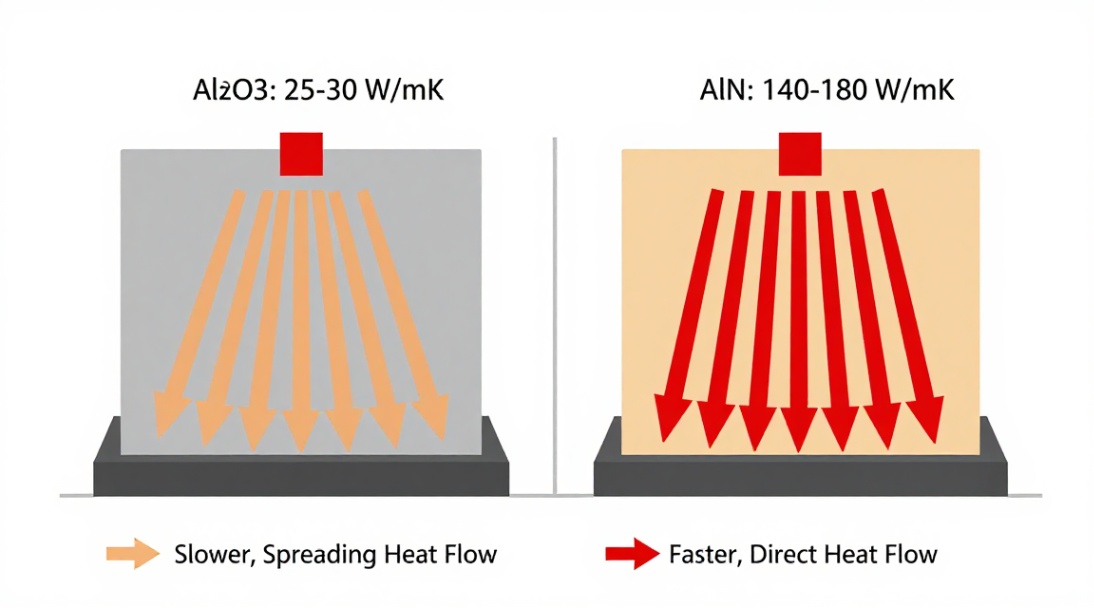
- Wins On: Thermal conductivity. It rivals metals while being an electrical insulator. Critical for high-power electronics substrates.
- Loses On: Mechanical strength, wear resistance, and it’s significantly more expensive than alumina.
- User Feedback: “We use AlN only for LED packaging and RF modules. For standard electronic substrates, 99.5% Al2O3 is the cost-effective choice.”
The Aluminum Oxide Ceramic Decision Matrix: Your Cheat Sheet
Stop overthinking. Use this list.
Choose Aluminum Oxide Ceramic IF:
- Your priority is cost-effectiveness for high-volume parts.
- You need excellent electrical insulation and high dielectric strength.
- Wear resistance and hardness are your top concerns (e.g., seal faces, nozzles, cutting tool inserts).
- You require good biocompatibility for medical devices (implants, dental components).
- You’re working in high-temperature environments as a refractory material, but below 1700°C.
- You need a stable, inert material for chemical processing equipment.
Look Elsewhere IF:
- You face severe mechanical impact or tensile stress (Consider Zirconia).
- Your application involves thermal cycling above 1000°C (Consider Silicon Carbide Ceramic or Silicon Nitride Ceramic).
- Heat spreading is the primary function (Consider Aluminum Nitride Ceramic).
- You need extreme light weight (Consider porous specialized forms).
The Hard Truth About Limitations
Alumina isn’t magic. It’s brittle. Its fracture toughness is low. You cannot design with it like you design with steel. You must design to put it in compression, avoid sharp corners, and understand that it has zero ductility. This is why precision engineering and proper grading (from 85% for refractories to 99.5%+ for critical electronics) are non-negotiable. A poorly designed alumina part will fail. A well-designed one will outlast everything else in the system.
The Final Call: Stop Experimenting and Start Standardizing
The data is in. The field reports are unanimous. For the vast majority of industrial applications-wear parts, electrical insulators, semiconductor processing tools, precision guides-aluminium oxide ceramic provides the optimal balance of performance, reliability, and cost. The pursuit of exotic materials like boron nitride ceramic or boron carbide ceramic is often a solution in search of a problem, reserved for truly niche applications like specialized coatings for crucibles.
Here is your action plan:
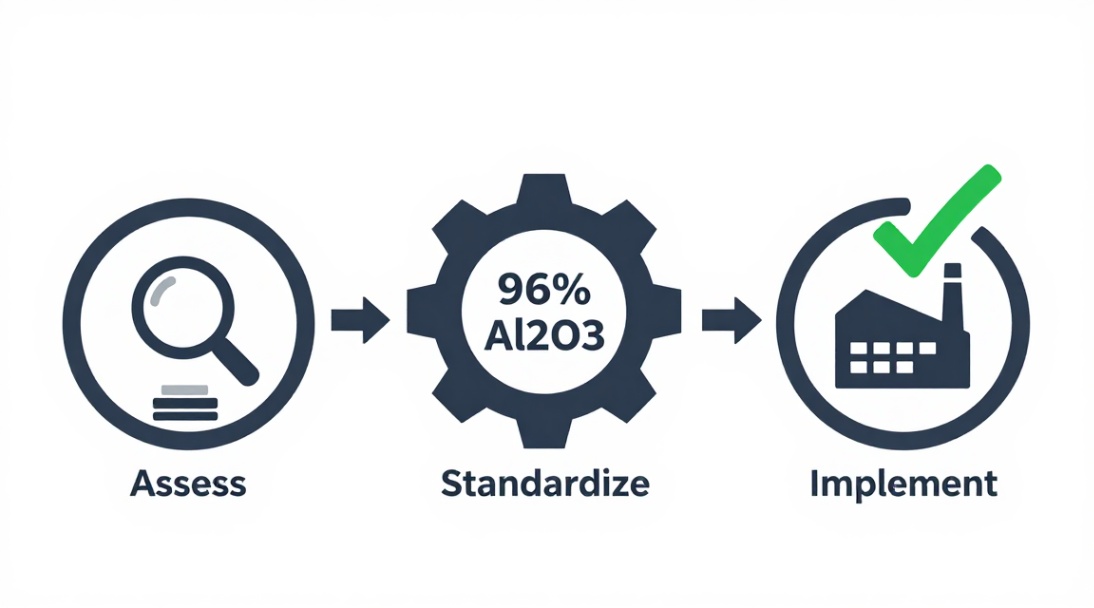
- Audit your current components. Are you using an over-engineered ceramic where 96% alumina would suffice?
- Demand samples. Test high-purity alumina against your current material. The wear data and cost savings will speak for themselves.
- Partner with a specialist. Do not buy alumina ceramic from a generalist supplier. Work with a fabricator who understands the nuances of sintering, finishing, and design for brittleness.
The industry’s secret isn’t a secret. It’s the unglamorous, supremely reliable block of aluminum oxide sitting in a thousand machines, working flawlessly until the end of time. Your next project should use it.
Suppiler
Synthetic-chemical focus on the research and development, production and sales of ceramic products, serving the electronics, ceramics, chemical and other industries. Since its establishment in 2015, the company has been committed to providing customers with the best products and services, and has become a leader in the industry through continuous technological innovation and strict quality management.
Our products includes but not limited to Aluminum Nitride, Aluminum Oxide, Boron Carbide, Boron Nitride, Ceramic Crucible, ect. If you are interested in any type of these, please feel free to contact us.