Next-Generation Ceramics: Unlocking Superior Properties for Industry

Your Expert Guide to Engineering Ceramics
Let’s settle the debate. For high-performance wear, electrical insulation, and biocompatibility, aluminum oxide ceramic is the default champion. It offers the best balance of properties and value across countless applications. But is it the right material for your specific project? The answer depends on your priorities. We will cut through the marketing noise and compare alumina against its main competitors. You will leave with a clear checklist to make a confident, informed decision.
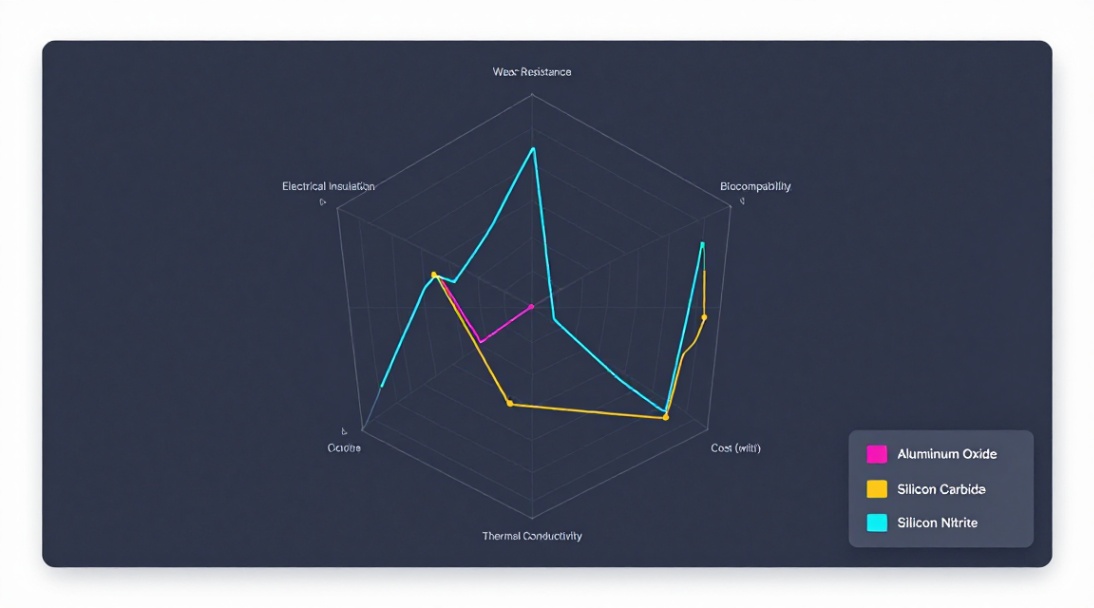
The Core Competitor: Aluminum Oxide Ceramic (Alumina)
Think of aluminum oxide ceramic as the reliable workhorse of the technical ceramics world. It forms from densely sintered alpha-alumina crystals. This structure provides exceptional hardness, rivaling many steels, and superb resistance to abrasion. Its key strength lies in outstanding electrical insulation, even at high temperatures, and excellent chemical inertness. For decades, engineers have trusted it for seals, wear plates, cutting tool inserts, and critical substrates in electronics. Its manufacturing process is well-established, making it one of the most cost-effective advanced ceramics available.
Side-by-Side Ceramic Comparison
Choosing a ceramic is about trade-offs. The table below provides a direct, objective comparison to spotlight these compromises. This is your quick-reference decision matrix.
| Material | Key Strengths | Key Weaknesses | Ideal Use Case | Cost & Manufacturability |
|---|---|---|---|---|
| Aluminum Oxide Ceramic | High hardness, excellent electrical insulator, superb wear resistance, biocompatible, chemically inert. | Lower fracture toughness than zirconia, moderate thermal conductivity. | Wear components, electrical insulators, lab equipment, cutting tools, biomedical implants. | Most cost-effective; wide range of standard forms (tubes, rods, plates). |
| Zirconia (ZrO2) | Extremely high fracture toughness, high strength, good wear resistance. | Lower hardness than alumina, susceptible to low-temperature aging in some grades. | Applications requiring impact resistance: precision balls, valves, scissors, kitchen knives. | Higher material and processing cost than alumina. |
| Silicon Carbide (SiC) | Exceptional thermal conductivity, extreme hardness, maintains strength at very high temperatures (~1600°C). | More expensive, challenging to machine to tight tolerances post-sintering. | High-temperature furnace components, wear parts in extreme environments, advanced armor. | Premium cost; machining often requires diamond grinding. |
| Boron Nitride (BN) | Excellent thermal conductivity, natural lubricity, easy machinability, non-wetting to molten metals. | Lower mechanical strength and hardness than oxide or carbide ceramics. | Thermal management substrates, release agents, crucibles for special metals. | Very high cost; specialized applications justify the price. |
What Users Are Saying: Real-World Feedback
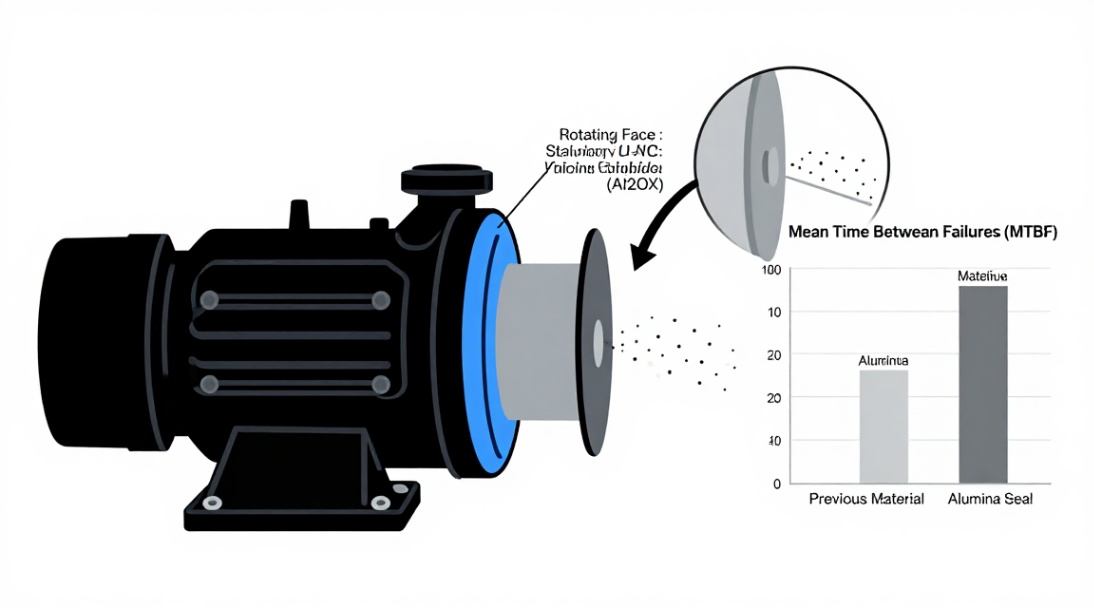
Community forums and industry discussions reveal consistent patterns. On platforms like Reddit and engineering groups, users frequently note that aluminum oxide ceramic “just works” for most general-purpose applications. A common sentiment: “For our pump seals that see constant abrasion and chemical exposure, switching to high-purity alumina components doubled our mean time between failures.” However, users pushing thermal limits often share their switch to silicon carbide. One engineer posted, “Our kiln furniture lifetime jumped from 6 months to over 3 years after moving from alumina to SiC setters.” The consensus is clear. Start your evaluation with alumina. Only move to zirconia, silicon nitride, or silicon carbide when your project demands a specific property alumina cannot provide.
Your Material Selection Checklist
Use this decision tree to guide your choice. Ask these questions in order.
- Is electrical insulation a primary requirement? If YES, aluminum oxide ceramic is your best starting point. Consider high-purity grades (99.5%+ Al2O3) for critical electronics.
- Will the part face significant mechanical impact or thermal shock? If YES, evaluate zirconia for its toughness or silicon nitride ceramics for their thermal shock resistance.
- Is dissipating heat a critical function? If YES, look beyond oxides. Silicon carbide or boron nitride ceramic are superior choices for thermal management.
- What is your budget for raw material and finishing? Aluminum oxide ceramic offers the lowest entry cost. Silicon carbide and boron nitride command premium prices.
Remember the inherent limitation of all ceramics: brittleness. Successful design involves mitigating this through proper geometry, avoiding sharp corners, and using compliant mounting.
The Final Recommendation
The data points to a clear winner for most scenarios. Aluminum oxide ceramic delivers unmatched versatility and value. Its proven performance in wear, insulation, and biomedical applications makes it the default engineering ceramic. Do not overcomplicate your project. For standard wear plates, insulators, liners, and components requiring chemical purity, the choice is straightforward. Specify aluminum oxide ceramic. Ready to finalize your design? Consult with a specialist ceramic manufacturer today. Submit your drawings for a formal quote on custom alumina components. Their engineering team will advise on the optimal grade, finish, and tolerance to ensure your project’s success.
Suppiler
Synthetic-chemical focus on the research and development, production and sales of ceramic products, serving the electronics, ceramics, chemical and other industries. Since its establishment in 2015, the company has been committed to providing customers with the best products and services, and has become a leader in the industry through continuous technological innovation and strict quality management.
Our products includes but not limited to Aluminum Nitride, Aluminum Oxide, Boron Carbide, Boron Nitride, Ceramic Crucible, ect. If you are interested in any type of these, please feel free to contact us.