Next-Generation Ceramics: Unlocking Superior Properties for Industry

The Unseen Foundation
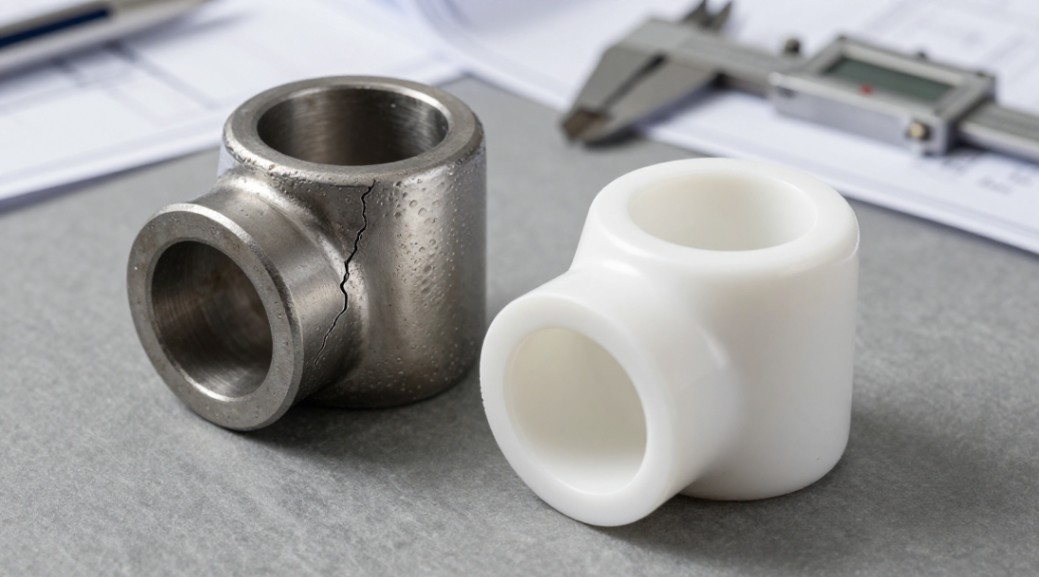
Years ago, I was called to troubleshoot a failing seal in a high-pressure chemical pump. The replacement, a gleaming white component, had failed in weeks, not years. The client used a standard stainless steel alloy. The culprit was microscopic chloride stress corrosion. I recommended a simple change: a sleeve machined from 99.5% aluminum oxide ceramic. That sleeve ran for over a decade without maintenance. That single experience cemented my view. Aluminum oxide, or alumina, isn’t a miracle material. It’s a logical solution to predictable problems of wear, heat, and corrosion.
Core Properties and Industrial Logic
What defines aluminum oxide ceramic?
Aluminum oxide ceramic (Al2O3) is a polycrystalline inorganic material. It forms via the sintering of alumina powder at high temperatures. Its dominance stems from a balanced property portfolio, not a single superlative. High hardness (approaching 2000 HV), excellent electrical insulation, and robust chemical inertness combine with relatively low cost and proven manufacturability. This balance makes it the default engineering ceramic.
Where is its primary industrial use?
Its applications follow a clear logic. Wear resistance drives use in pump seals, textile guides, and cutting tool inserts. Electrical insulation underpins its role in spark plug insulators, electronic substrates, and high-voltage feedthroughs. Chemical inertness specifies liners for pipes, valves, and labware. You find it wherever abrasion, corrosion, or electrical failure threaten metal or polymer components.
How does its electrical insulation perform?
Exceptional. Its high dielectric strength and volume resistivity make it ideal for isolating circuits. This property, combined with good thermal conductivity, creates the perfect substrate for power electronics. Heat dissipates while current remains confined. For high-frequency applications, its low dielectric loss is critical. It’s the bedrock of thick and thin film hybrid circuits.
What about high-temperature performance?
Alumina maintains mechanical integrity and insulation properties at continuous temperatures exceeding 1500°C. This makes it suitable for thermocouple sheaths, furnace tubes, and heating element insulators. However, for extreme thermal shock resistance, materials like silicon nitride ceramic or mullite ceramic are often superior choices.
Material Comparisons and Selection Rationale
How does it compare to zirconia?
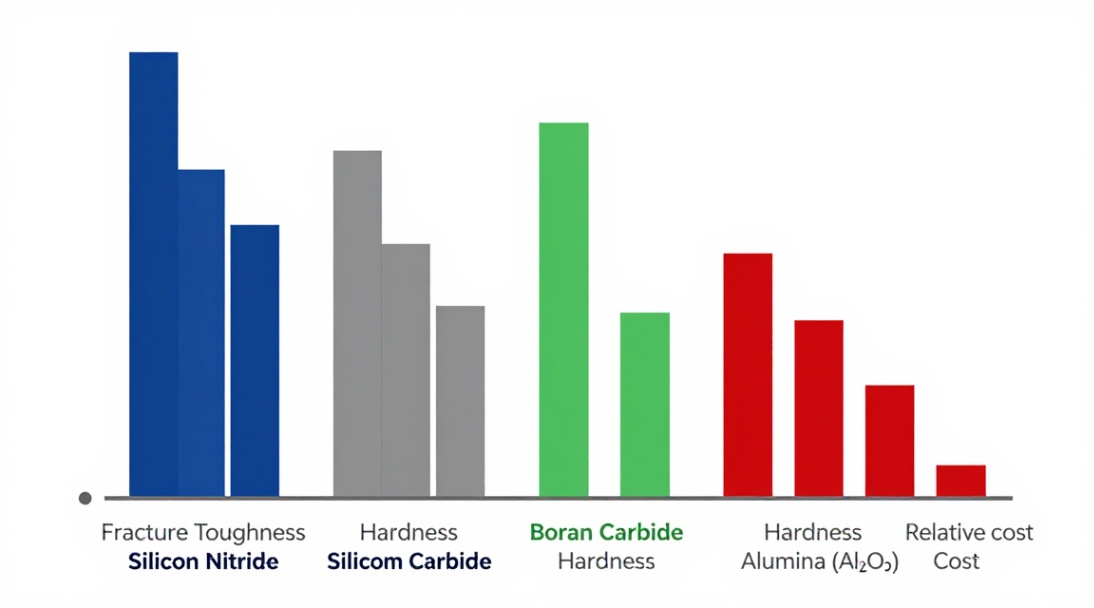
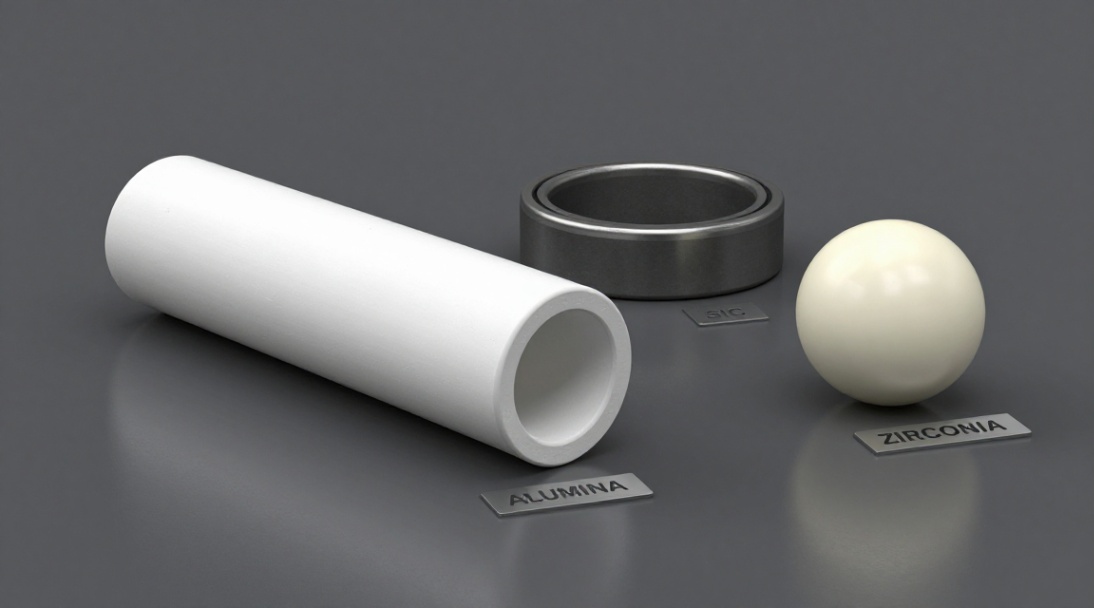
Zirconia offers higher fracture toughness, making it better for applications requiring impact resistance, like knife blades or biomedical implants. Alumina provides superior hardness and wear resistance at a lower cost. For a sliding seal, alumina typically wins. For a joint bearing subject to shock loads, zirconia may be the logical choice.
How does it compare to silicon nitride or silicon carbide?
This is a key engineering decision. Silicon nitride ceramic has vastly better fracture toughness and thermal shock resistance, ideal for turbocharger rotors or welding nozzles. Silicon carbide ceramic, in its various forms like reaction-sintered or pressureless sintered, offers higher thermal conductivity and extreme hardness. For lightweight armor, boron carbide ceramic is the benchmark. Alumina occupies a middle ground: less expensive, highly wear-resistant, and electrically insulating where the others are often conductive.
What are the key design considerations?
Understand its limitations. Alumina is brittle. Design to avoid tensile stress concentrations. Use compressive loading. Account for its lower thermal shock resistance compared to silicon nitride ceramic. Specify the correct purity grade-96% for mechanical parts, 99.5%+ for electrical or corrosive uses. Tolerances are tighter than metal; diamond grinding is standard. The manufacturing process defines the final properties.
Trends and Advanced Applications
Where is alumina evolving?
Two trends are clear. First, functionalization through advanced coatings and surface treatments. A special coating for boron nitride ceramic crucibles is one example; similar surface engineering enhances alumina’s performance in specific environments. Second, integration into multi-material systems. We see alumina components bonded to metals or polymers, creating hybrid parts that leverage the ceramic’s surface properties with a substrate’s toughness.
What is its role in medical or armor systems?
In medicine, high-purity, highly polished alumina is bioinert. It’s the historical material of choice for femoral heads in hip replacements, valued for its wettability and wear resistance against polyethylene. In armor, alumina tiles are a cost-effective front plate in composite systems, fracturing incoming projectiles before a backing material like boron nitride ceramic or fiber composite absorbs the energy. It’s a workhorse, not a niche player.
What does the future hold?
The future isn’t about replacing alumina with exotic ceramics. It’s about refining it. We will see narrower property distributions through powder processing advances. Additive manufacturing will enable complex monolithic geometries previously impossible to mold or machine. The development of alumina matrix composites, potentially with nano-reinforcements, will push its toughness and thermal limits. The goal is to extend its logical application envelope.
The Logical Choice for Your Application
The data is unequivocal. For cost-effective wear protection, electrical isolation, and corrosion resistance, aluminium oxide ceramic remains the first rational choice. Its decades of proven performance are not an accident. They are the result of a unique property balance. Before you specify a more expensive silicon carbide ceramic or a tougher zirconia, you must ask a simple question: do I truly need those premium properties, or will the alumina workhorse suffice? In my two decades, the answer is often alumina.
Do not leave material selection to chance. You need a component that performs. Submit your application parameters-load, temperature, chemical environment, required lifespan-for a formal engineering review. We will provide a data-backed material recommendation and a manufacturable design. Contact our engineering team today to initiate the consultation.
Suppiler
Synthetic-chemical focus on the research and development, production and sales of ceramic products, serving the electronics, ceramics, chemical and other industries. Since its establishment in 2015, the company has been committed to providing customers with the best products and services, and has become a leader in the industry through continuous technological innovation and strict quality management.
Our products includes but not limited to Aluminum Nitride, Aluminum Oxide, Boron Carbide, Boron Nitride, Ceramic Crucible, ect. If you are interested in any type of these, please feel free to contact us.