Next-Generation Ceramics: Unlocking Superior Properties for Industry

Frustrated by Failure?
You meticulously design a high-performance pump. Then, the sealing faces wear out after six months. You specify an insulator for a furnace, and it cracks under thermal shock. Your production line grinds to a halt, again. The culprit is often a material chosen for one key trait that fails spectacularly in another. You need something that doesn’t compromise. You need the fundamental clarity of what aluminum oxide ceramic is, and where it truly excels.
The Uncompromising Definition
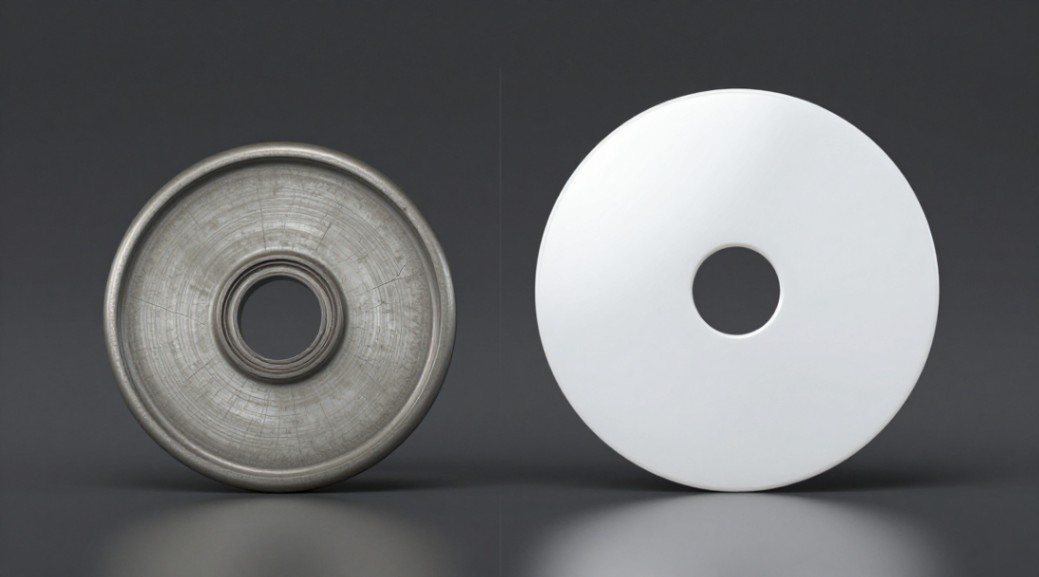
Forget vague terms. Aluminum oxide ceramic is not just a “hard material.” It is a synthetically engineered, polycrystalline solid formed primarily from the chemical compound Al2O3. We create it by compacting fine alumina powder and firing it at extreme temperatures-a process called sintering. This fuses the particles into a dense, monolithic structure that is fundamentally different from the raw powder or single-crystal sapphire. This manufacturing core grants it its identity.
Its Unbeatable Trifecta of Properties
Most materials offer a single standout feature. Aluminium oxide ceramic delivers a critical trio simultaneously. This is its real power.
1. The Hardness and Wear Armor
With a hardness near that of silicon carbide ceramic, it resists abrasion relentlessly. Think of sandpaper blasting against a surface. Steel erodes. Aluminium oxide ceramic endures. This makes it the undisputed choice for wear parts: seal rings, liners, cutting tool inserts, and guide rollers.
2. The Electrically Inert Barrier
While aluminium nitride ceramic specializes in moving heat, and silicon carbide ceramic can be made conductive, standard alumina is an excellent electrical insulator. It doesn’t just resist current; it maintains this insulation at high temperatures. This inherent property is why it forms the backbone of electronic substrates, spark plug insulators, and sensor housings.
3. The Chemically Immune Shield
Expose it to most acids, alkalis, and molten metals. It remains inert. Unlike metals that corrode or polymers that degrade, alumina’s strong ionic bonds reject chemical attack. This stability is paramount in biomedical implants, labware, and components for chemical processing.
The Grade Determines the Mission
Not all alumina is equal. The alumina content percentage is the master control knob.
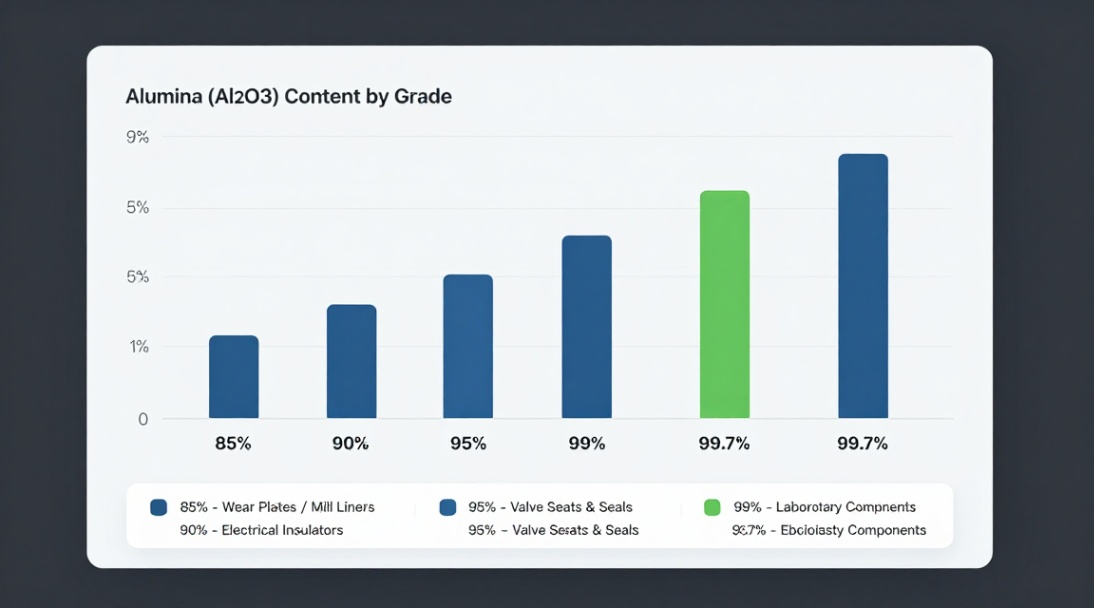
- 99.5%+ Alumina: Maximum performance. Highest hardness, best wear resistance, superior thermal conductivity. Use it for the most demanding technical applications, semiconductor processing components, and high-performance bearings.
- 92-96% Alumina: The industrial workhorse. An optimal balance of properties, cost, and machinability. This grade dominates in wear parts, electrical insulators, and textile guides.
- 85% and below: Often blended with other oxides like silica to form mullite ceramic structures. These grades offer enhanced thermal shock resistance for certain refractory applications.
Where Other Ceramics Step In (and Alumina Steps Aside)
Alumina is not a universal solution. Smart engineers know its limits and choose alternatives when the problem shifts.
Need extreme fracture toughness and strength for a ballistics plate or hip implant? Zirconia is superior. Require the ultimate thermal conductivity for a high-power electronic substrate? That’s the domain of aluminium nitride ceramic. Fighting abrasive slurry at very high temperatures? Silicon carbide ceramic, especially reaction-sintered silicon carbide ceramics, may be better. For non-wetting crucibles for molten metals, a special coating for boron nitride ceramic crucibles is the answer. Alumina shines where you need its specific combination of hardness, electrical insulation, and chemical stability at a reasonable cost.
The Design Reality: It’s Not Steel
You cannot treat it like metal. This is the most common engineering mistake. Aluminium oxide ceramic is inherently brittle. It has high compressive strength but low tensile strength. You must design to avoid tensile stress concentrations. Use generous fillets. Employ compliant metal interfaces. Avoid press fits. Anticipate its lower thermal expansion compared to steel. These aren’t drawbacks; they are the design rules for unlocking its potential.
The Next Evolution: From Bulk to Precision
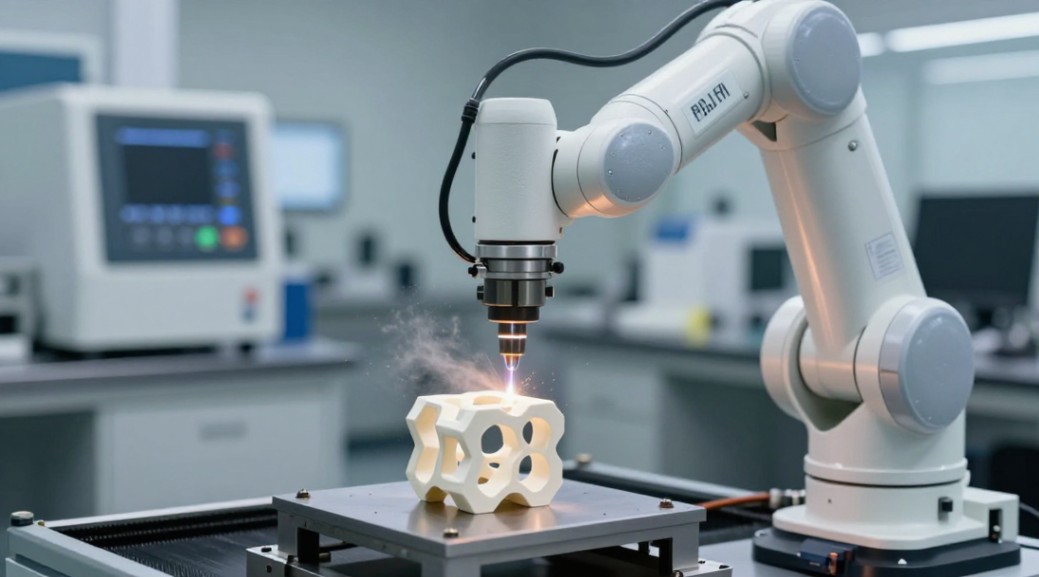
The future of aluminium oxide ceramic isn’t just about being a chunk of inert material. Advanced manufacturing like laser machining and precision grinding allows for intricate, net-shape components for micro-fluidics and medical devices. As a raw material, its role in next-generation abrasives and advanced refractory linings continues to grow. It’s becoming an enabling platform for tighter tolerances and more complex geometries.
Stop Guessing. Start Specifying.
The path forward is simple. First, define your core problem: is it wear, electrical isolation, or chemical attack? Second, audit the secondary demands: temperature, thermal shock, and mechanical loading. If the trifecta of hardness, insulation, and chemical stability aligns, aluminum oxide ceramic is your baseline. Then, select the grade that matches your performance threshold. Finally, engage with a fabricator who understands ceramic design principles from the start. Don’t retrofit a metal design. Design for the ceramic from the first sketch. That’s how you build something that doesn’t fail.
Suppiler
Synthetic-chemical focus on the research and development, production and sales of ceramic products, serving the electronics, ceramics, chemical and other industries. Since its establishment in 2015, the company has been committed to providing customers with the best products and services, and has become a leader in the industry through continuous technological innovation and strict quality management.
Our products includes but not limited to Aluminum Nitride, Aluminum Oxide, Boron Carbide, Boron Nitride, Ceramic Crucible, ect. If you are interested in any type of these, please feel free to contact us.