Next-Generation Ceramics: Unlocking Superior Properties for Industry

Early in my career, a senior engineer pointed to a worn-out slurry pump impeller. It had failed in just three months, costing thousands in downtime. ‘What do we use next?’ I asked. He held up a simple, milky-white ceramic component. ‘This is alumina,’ he said. ‘Trust it.’ We installed the aluminum oxide ceramic wear plate. Two years later, it was still running. That moment cemented my belief in this remarkable material. It’s not flashy. It just works. And it’s behind the scenes in more places than you realise.
What Exactly Is Aluminum Oxide Ceramic?
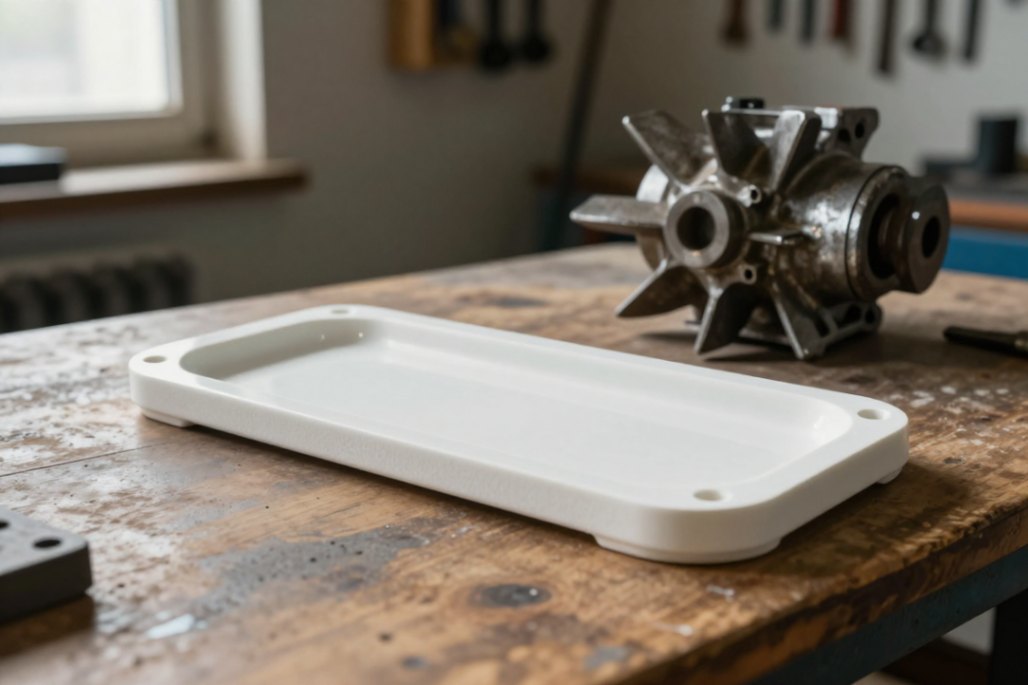
Aluminum oxide ceramic, universally known as alumina ceramic, is an industrial workhorse. Its chemical formula is Al₂O₃. We create it by pressing and sintering high-purity aluminum oxide powder into incredibly dense, hard components. Think of it as the foundation of technical ceramics. Its reputation hinges on three pillars: extreme hardness (second only to diamonds and boron carbide), superb electrical insulation, and excellent thermal conductivity. These properties make it indispensable.
The Power of Purity: From 85% to 99.9% Alumina
Not all alumina is created equal. Its performance scales directly with purity. A 96% alumina ceramic offers fantastic value for general industrial use. But when you push into advanced electronics or ultra-high vacuum systems, you need 99.5% or 99.9% purity. The higher the purity, the better the dielectric strength, corrosion resistance, and thermal properties. The trade-off is cost and machinability. Here’s how the grades break down:
| Purity Grade | Key Characteristics | Typical Applications |
|---|---|---|
| 85% – 92% Al₂O₃ | Good mechanical strength, cost-effective, easier to machine. | General wear parts, thread guides, textile components. |
| 96% – 99% Al₂O₃ | High hardness, excellent wear and corrosion resistance. | Industrial seals, pump plungers, cutting tool inserts, ballistics. |
| 99.5% – 99.9% Al₂O₃ | Superior electrical insulation, high thermal conductivity, extreme chemical purity. | Semiconductor wafer handling, medical implants, high-vacuum components. |
Where Aluminum Oxide Ceramic Shines: Core Applications
This material doesn’t seek the spotlight; it solves problems. Its applications are a masterclass in practical engineering.
The Workhorse of Industry
In any harsh environment where metal wears down, alumina steps in. It forms the linchpin of mechanical seals, slurry pump components, and wire drawing cones. Its chemical inertness means it laughs off acids and caustics that dissolve metals. This is its home turf.
The Heart of Electronics
Look inside any electronic device. The small, flat plate that carries a microchip? That’s an alumina substrate. Its high electrical resistivity and ability to dissipate heat make it perfect for this role. Without it, modern circuit miniaturization would stumble.
A Trusted Partner in Medicine
Alumina’s biocompatibility is legendary. It’s the material of choice for hip and knee joint replacements, dental implants, and bone screws. The body tolerates it well, and its wear resistance ensures these implants last for decades.
Containing the Inferno
As a refractory material, alumina lines furnaces and kilns that operate above 1500°C. It withstands thermal shock and maintains structural integrity where other materials would flow or vaporize.
How It’s Made: From Powder to Precision Part
Creating a reliable alumina component is a blend of art and controlled science. The process defines the final properties.
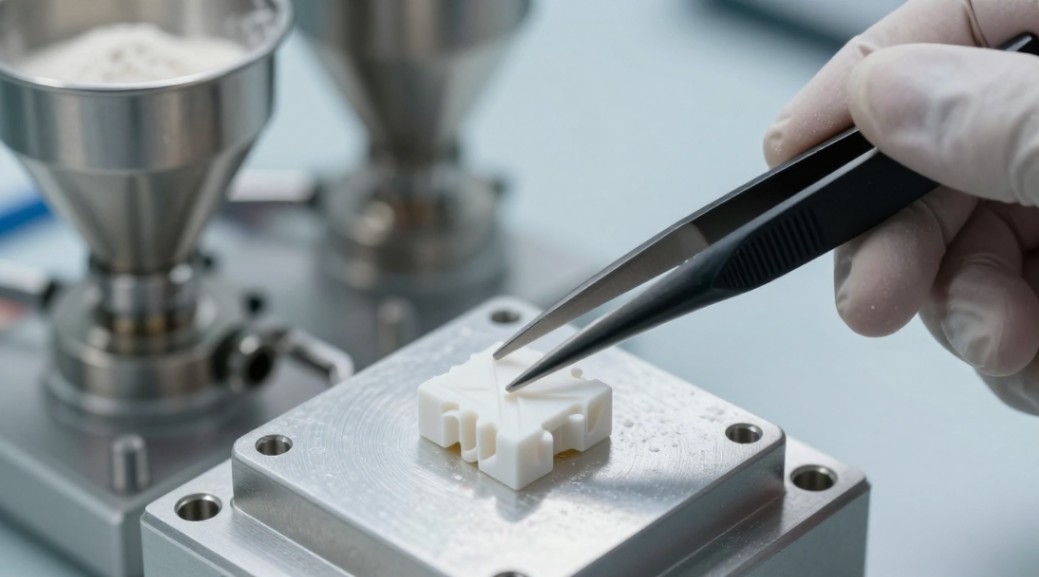
- Dry Pressing: Powder is compacted in a steel die at 50-100 MPa. Ideal for simple, high-volume shapes like tiles or simple substrates.
- Isostatic Pressing: Powder is sealed in a flexible mold and subjected to uniform hydraulic pressure of 100-300 MPa. This yields near-net-shape parts with uniform density and superior mechanical strength.
- Injection Molding: Powder is mixed with a polymer binder and injected into a mold. This allows for highly complex, intricate shapes. The binder is later removed in a carefully controlled burnout cycle before sintering.
The green (unsintered) part then enters a high-temperature furnace. Sintering typically occurs between 1600°C and 1800°C for several hours. The particles fuse, density increases dramatically, and the part shrinks by a predictable 15-20%. Final tolerances are achieved through diamond grinding, lapping, and polishing.
The Critical Choice: Aluminum Oxide vs. Other Advanced Ceramics
Alumina isn’t always the answer. Smart engineers select from a toolkit. I often see discussions online where the choice boils down to this. For instance, many users on forums like Reddit debate aluminium oxide ceramic vs. silicon nitride for bearings, or aluminium nitride vs. alumina for thermal management. The decision hinges on your priority: cost, thermal performance, or toughness. Let’s compare.
| Material | Key Advantages | Primary Limitations | Where It Wins Over Alumina |
|---|---|---|---|
| Aluminum Oxide (Al₂O₃) | Best cost-to-performance, excellent wear & corrosion resistance, superb electrical insulator. | Lower fracture toughness (brittle), lower thermal conductivity than some nitrides. | General wear parts, electrical insulation, cost-sensitive applications. |
| Silicon Carbide (SiC) | Exceptional thermal conductivity, extreme hardness, maintains strength at very high temperatures. | More expensive, more difficult to machine and sinter. | High-temperature kiln furniture, abrasive water jet nozzles, advanced heat exchangers. |
| Silicon Nitride (Si₃N₄) | Highest fracture toughness, excellent thermal shock resistance, good high-temperature strength. | Significantly higher cost than alumina. | High-performance ball bearings, cutting tools for cast iron, automotive turbocharger rotors. |
| Aluminum Nitride (AlN) | Exceptional thermal conductivity (5-10x alumina), closely matched thermal expansion to silicon. | Very expensive, sensitive to moisture, lower mechanical strength. | High-power semiconductor substrates where heat dissipation is critical. |
The trend is clear. While alumina remains the default, demanding applications are pushing engineers toward specialized materials like reaction-sintered silicon carbide ceramics for ultimate wear or silicon nitride ceramics for unmatched toughness. For the most extreme temperatures, research into new systems like high-entropy oxides points to the future.
Navigating the Limitations and Making the Right Choice
Alumina’s Achilles’ heel is its brittleness. It has low fracture toughness. Don’t drop it on a hard floor. Complex shapes are also challenging and expensive to machine; diamond tooling is mandatory. Always design with generous radii and avoid sharp corners.
When selecting a material, ask these questions:
- What is the primary failure mode? (Wear? Corrosion? Thermal shock?)
- What is the operating environment? (Temperature, chemicals, electrical fields?)
- What are the precision requirements? (Can it be net-shaped, or does it need grinding?)
- What is the budget? (Alumina often wins here.)
Your Next Step: From Insight to Application
Understanding aluminum oxide ceramic is one thing. Applying it correctly is another. The gap between theory and a successful, long-lasting component is filled with practical expertise. This is where partnership matters.
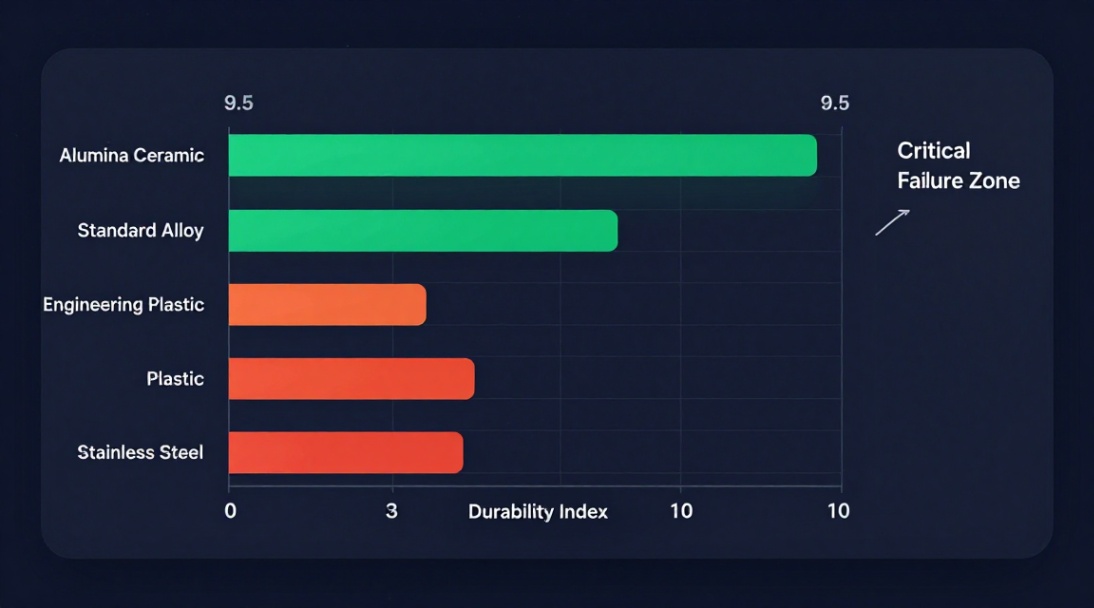
If your project involves wear, corrosion, high-temperature insulation, or any environment that eats through metals, you need to evaluate alumina. Don’t guess. Don’t compromise with a substandard material that will fail prematurely. The data and trends point to engineered ceramics as the solution for next-generation durability.
I strongly recommend you consult with a specialist who can translate your application needs into the exact grade and manufacturing process. For over two decades, I’ve guided teams through this selection process. To move forward, request a detailed material properties datasheet and a technical consultation. Share your application parameters-load, temperature, medium, and lifespan requirement. Let’s build something that lasts. Contact our technical team now for a free application review.
Suppiler
Synthetic-chemical focus on the research and development, production and sales of ceramic products, serving the electronics, ceramics, chemical and other industries. Since its establishment in 2015, the company has been committed to providing customers with the best products and services, and has become a leader in the industry through continuous technological innovation and strict quality management.
Our products includes but not limited to Aluminum Nitride, Aluminum Oxide, Boron Carbide, Boron Nitride, Ceramic Crucible, ect. If you are interested in any type of these, please feel free to contact us.