Next-Generation Ceramics: Unlocking Superior Properties for Industry

A Pragmatist’s Material
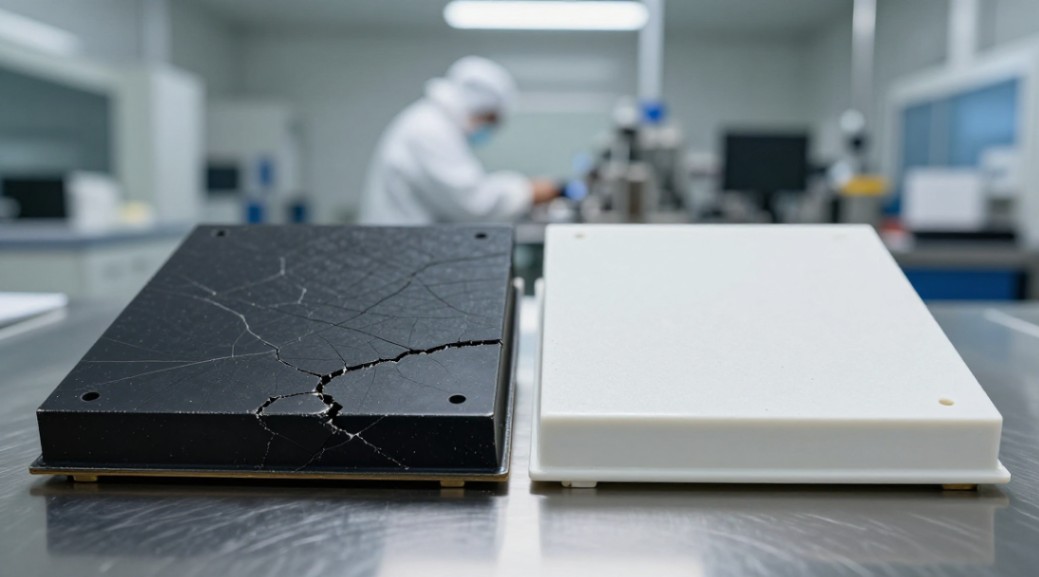
Twenty-three years ago, I received a frantic call. A semiconductor manufacturer’s process was failing. Their aluminum nitride ceramic heater plates, chosen for high thermal conductivity, were warping and cracking after just months of service. We replaced them with 99.5% aluminum oxide ceramic. Those same plates operated flawlessly for over a decade. The initial cost was lower, but the real victory was eliminating unscheduled downtime. That experience cemented a fundamental truth: material selection isn’t about chasing the latest specs. It’s about matching inherent properties to the brutal realities of an application. Aluminum oxide ceramic, or alumina, masters this balance. This analysis explains why.
The Core Composition: Why Al2O3 Works
Aluminium oxide ceramic is a technical material primarily composed of alpha-phase aluminum oxide (Al2O3) crystals bonded through high-temperature sintering. Its performance stems from strong ionic-covalent bonds. Engineers do not choose it for a single outstanding property. They select it for a reliable combination of high hardness, excellent wear resistance, good electrical insulation, and chemical inertness. It performs consistently across a punishing range of conditions.
The Grade Dictates the Application
Not all alumina is equal. Purity and microstructure dictate performance. The industry standardizes around key grades, each a tool for a specific job.
| Grade | Al2O3 Purity | Key Characteristics | Primary Application Domains |
|---|---|---|---|
| 96% Alumina | 96% | Cost-effective, excellent mechanical strength and wear resistance. | Industrial wear parts (nozzles, liners, seals), thread guides, cutting tool substrates. |
| 99.5% Alumina | 99.5% | Superior surface finish, higher corrosion resistance, excellent high-frequency electrical properties. | Semiconductor wafer processing components, critical pump seals, high-performance electrical insulators and substrates. |
| 99.9% Alumina | 99.9% | Exceptional purity for hostile chemical and plasma environments, ultra-high electrical resistivity. | Advanced semiconductor chamber components, analytical instrument parts, specialized medical implants. |
Manufacturing: From Powder to Performance
Properties are unlocked during fabrication. Dry pressing forms simple, high-volume shapes like tiles and substrates. Isostatic pressing applies uniform pressure from all directions, creating complex, near-net-shape parts with isotropic strength. Injection molding produces intricate, small components like electronic insulators or labware. Each step-forming, sintering, finishing-must be controlled with precision. A flaw in the green body becomes a failure point in the finished ceramic.
The Objective Comparison: Alumina vs. The Field
Informed selection requires honest comparison. Aluminum oxide ceramic is not a universal solution. It exists within a spectrum of advanced technical ceramics, each with a distinct profile.
| Material | Relative Cost | Key Advantage vs. Alumina | Typical Use-Case Where It Wins |
|---|---|---|---|
| Aluminum Oxide Ceramic | Low | Best overall cost-to-performance ratio, proven reliability. | Wear plates, electrical insulators, seal rings, laboratory crucibles. |
| Silicon Carbide Ceramic | High | Far superior thermal conductivity and oxidation resistance. | High-temperature heat exchangers, kiln furniture, demanding wear parts in oxidizing atmospheres. |
| Aluminium Nitride Ceramic | Very High | Exceptional thermal conductivity with electrical insulation. | High-power electronic substrates and packages where heat dissipation is critical. |
| Zirconia (TZP) | Medium-High | Extremely high fracture toughness and strength (transformation toughening). | Precision bearings, cutting blades, biomedical implants requiring mechanical robustness. |
Limitations and Design Imperatives
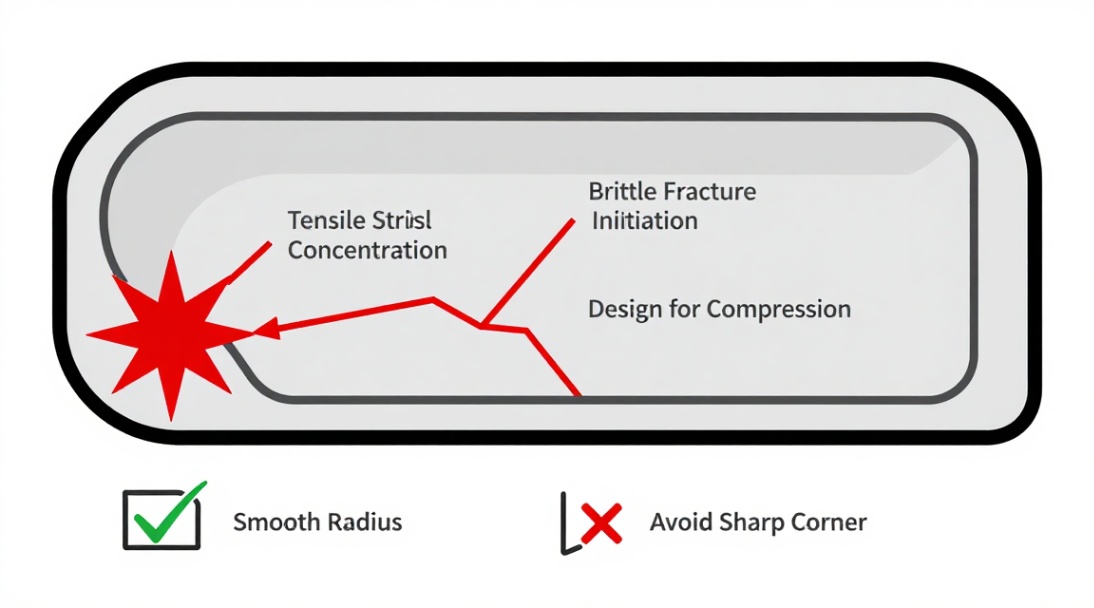
Ignore these constraints at your peril. Alumina’s primary weakness is brittleness. It has low fracture toughness compared to metals or zirconia. Design must avoid tensile stress concentrations. Sharp corners are failure points. Complex internal geometries are difficult to machine post-sintering. Always design for ceramic from the start; do not simply substitute a metal part with a ceramic one. Dimensional tolerances for as-sintered parts are typically ±0.5% to ±1%. Tighter tolerances require diamond grinding, which increases cost significantly. A well-designed alumina component uses its compressive strength and avoids its tensile fragility.
The Surface Finish Spectrum
Post-processing defines final functionality. As-fired surfaces have a roughness (Ra) of ~0.8-1.5 µm, suitable for many wear applications. Diamond grinding achieves Ra 0.2-0.4 µm for sealing surfaces. Lapping and polishing can produce optical finishes with Ra < 0.05 µm, essential for semiconductor components or low-friction guides. The choice directly impacts performance and cost.
Selecting the Right Alumina: A Data-Driven Framework
Use this framework to specify material. First, define the primary failure mode you need to prevent. Is it wear, corrosion, electrical breakdown, or thermal shock? Second, establish your environmental limits: maximum temperature, chemical exposure, and required electrical properties. Third, determine mechanical load type: pure compression, bending, or impact. Fourth, specify your surface finish and tolerance requirements. This process leads you to the correct grade. Consult standards like ASTM F2098 for biocompatibility or MIL-I-10 for electrical insulation. Reference manufacturer datasheets for precise property values, not textbook ranges. Properties vary with grain size and sintering aids.
Consider surface engineering for extreme cases. For instance, a special coating for boron nitride ceramic crucibles might be applied to alumina to enhance metal separation. The substrate provides structural integrity; the coating provides specific surface functionality.
The Verdict on Value
Aluminum oxide ceramic does not seek headlines. It delivers decades of silent, reliable service. For applications where consistent wear resistance, electrical insulation, and chemical stability are paramount, its long-term total cost of ownership is often unbeatable. Newer materials like silicon carbide-bonded silicon nitride ceramics or reaction-sintered silicon carbide ceramics excel in more niche, extreme thermal roles. But for the vast middle ground of industrial challenges, alumina remains the default, rational choice. It is the workhorse ceramic because it works. When your design calls for a material that must simply endure, specify alumina, design for its limits, and trust its history.
If your project involves abrasive slurries, corrosive media, or high-voltage insulation, aluminum oxide ceramic warrants a primary review. The most effective next step is to consult with a component manufacturer early in the design phase. Provide them with your operational parameters and failure mode analysis. They can advise on optimal grade, manufacturing route, and design-for-ceramic principles to ensure your alumina solution achieves its full potential.
Suppiler
Synthetic-chemical focus on the research and development, production and sales of ceramic products, serving the electronics, ceramics, chemical and other industries. Since its establishment in 2015, the company has been committed to providing customers with the best products and services, and has become a leader in the industry through continuous technological innovation and strict quality management.
Our products includes but not limited to Aluminum Nitride, Aluminum Oxide, Boron Carbide, Boron Nitride, Ceramic Crucible, ect. If you are interested in any type of these, please feel free to contact us.