Next-Generation Ceramics: Unlocking Superior Properties for Industry

Navigating a Ceramic Selection Dilemma
Early in my career, a project lead tasked our team with specifying a material for a critical wear plate. It demanded exceptional hardness, electrical insulation, and resilience in a 500°C environment. We debated metals and polymers, but they all fell short in one key area. I recalled a senior engineer’s advice: “When multiple extreme properties converge, think ceramics.” Specifically, we needed to think about aluminum oxide ceramic. The challenge was navigating its grades and alternatives. Here’s the systematic process we developed, refined over two decades of application.
The Foundational Properties of Aluminum Oxide Ceramic
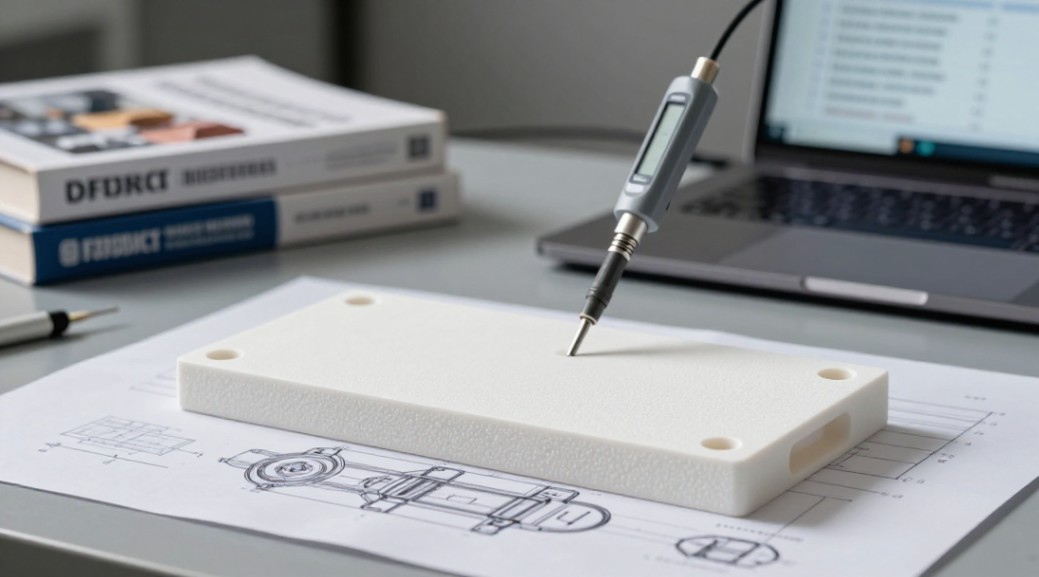
Understanding aluminium oxide ceramic, commonly called alumina, starts with its composition. It is a crystalline material derived from aluminium oxide (Al2O3). This simple chemistry yields a suite of extreme properties. The material exhibits exceptional hardness, ranking just below diamond and boron carbide ceramic. Its mechanical strength is high, particularly in compression. Thermally, alumina offers excellent resistance, typically operating up to 1700°C. It is a superb electrical insulator with high dielectric strength, a property that often excludes metals from consideration.
Step 1: Define Your Non-Negotiables
Begin with a brutally honest assessment. List every functional requirement. Mechanical load? Thermal shock profile? Chemical exposure? Electrical potential? For our wear plate, non-negotiables were wear resistance (hardness), continuous 500°C operation, and complete electrical isolation. If your primary need is thermal conductivity for a heat sink, aluminium nitride ceramic becomes a contender. If resistance to molten metals is critical, consider zirconia. Clarify this list first.
Step 2: Select the Correct Alumina Grade
Not all alumina is equal. The purity level dictates performance. This choice directly impacts cost and capability.
- High-Purity Alumina (≥99.5%): This grade offers the best properties-superior hardness, highest temperature capability, and excellent corrosion resistance. Use it for semiconductor components, high-performance wear parts, and advanced biomedical implants.
- Standard Alumina (92-99%): A workhorse material. It balances good mechanical properties with significantly lower cost. Ideal for general industrial wear plates, electrical insulators, and cutting tool substrates.
A common report from Ceramic Industry Magazine notes that over 70% of technical ceramic components use standard grades (92-99% purity) due to this optimal cost-performance balance.
Step 3: Compare Against Key Ceramic Alternatives
Alumina is not always the answer. Use this objective comparison to validate your choice. The data is based on typical, commercially available grades.
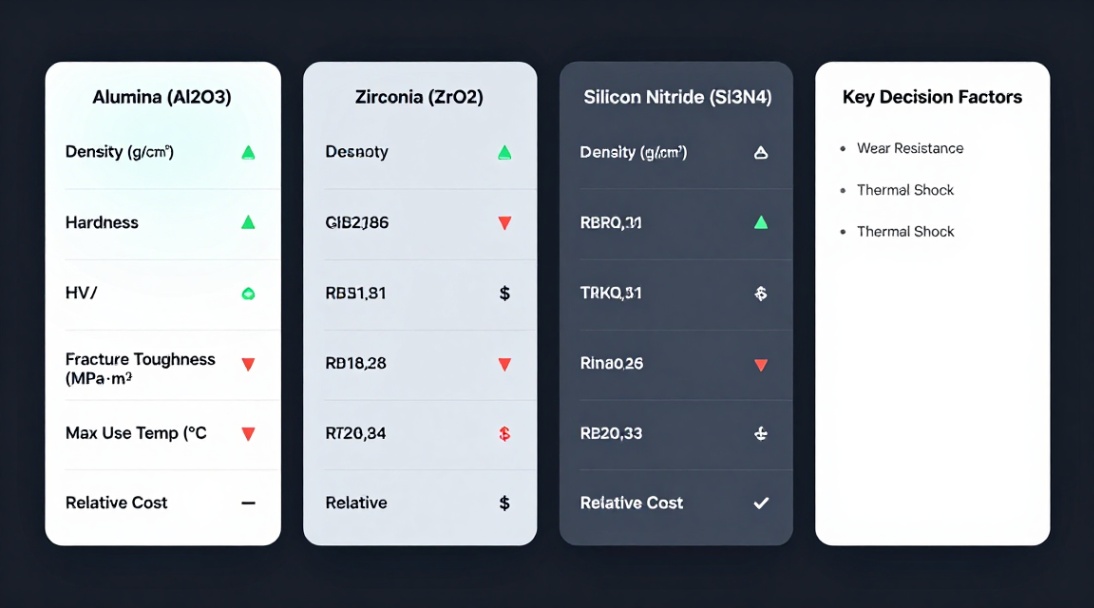
| Material | Key Strength | Key Limitation vs. Alumina | Primary Application Niche |
|---|---|---|---|
| Aluminum Oxide (Alumina) | Best overall property balance, cost-effective | Lower fracture toughness than zirconia | Wear parts, electrical insulators, biomedical |
| Zirconia (ZrO2) | Extremely high fracture toughness & strength | Lower hardness, higher cost, thermal aging concerns | Medical implants, cutting blades, precision parts |
| Silicon Carbide (SiC) | Superior thermal conductivity & wear resistance | More expensive, harder to machine | High-temp kiln furniture, abrasives, seals |
| Silicon Nitride (Si3N4) | Excellent thermal shock & fracture toughness | Highest cost among common engineering ceramics | High-performance bearings, cutting tools |
| Aluminum Nitride (AlN) | Exceptional thermal conductivity (insulator) | Lower mechanical strength, sensitive to moisture | Electronic substrates & heat sinks |
Step 4: Understand Manufacturing and Machining Constraints
Alumina components are typically formed via powder pressing and then sintered at high temperature. Near-net-shape forming is critical because machining hardened aluminium oxide ceramic is difficult and expensive. Diamond-grinding wheels are mandatory. Internal holes, tight tolerances, and sharp edges increase cost exponentially. Dr. Elena Rossi, a materials processing expert, often states, “Design for manufacturability in ceramics is not a suggestion; it’s a prerequisite for economic viability.” Involve your ceramic supplier early in the design phase.
Step 5: Specify Surface Finish and Tolerances Pragmatically
Surface finish requirements directly drive cost. A lapped or polished finish is necessary for sealing surfaces or low-friction applications. For many wear components, an as-fired or ground surface is sufficient. Be realistic. Specify the tightest tolerance only on critical dimensions. Allow wider tolerances elsewhere to control cost. Remember, ceramics are not malleable like metals; they cannot be bent or adjusted after sintering.
Advantages, Limitations, and Future Outlook
Compared to metals, alumina offers superior hardness, wear resistance, corrosion resistance, and high-temperature performance while remaining an electrical insulator. Compared to plastics, it is harder, more thermally stable, and dimensionally stable. Its primary limitations are brittleness (low fracture toughness) and difficult machinability.
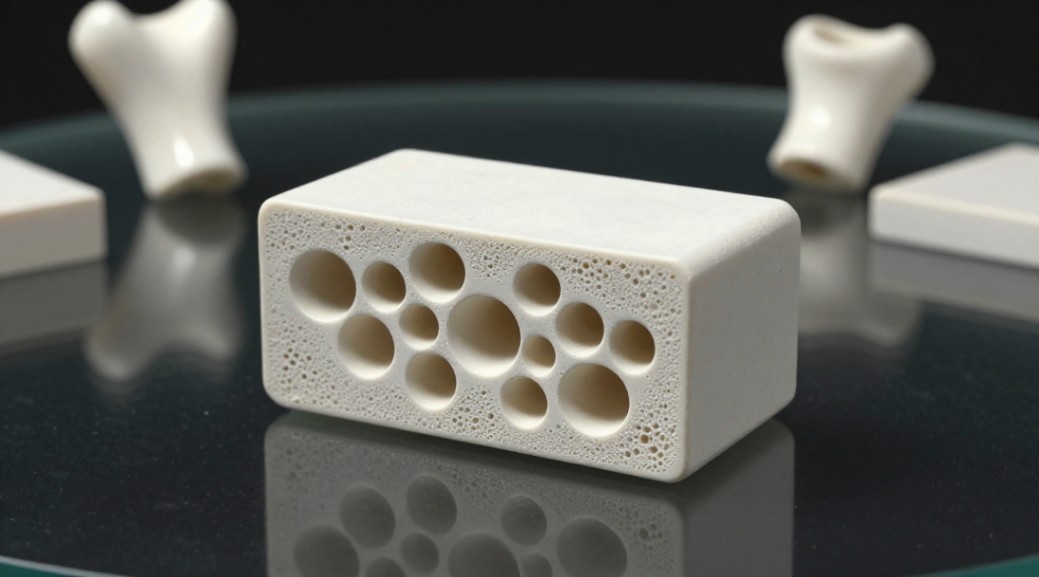
Future trends point towards advanced composites, like alumina-toughened zirconia, and refined coatings. Nanostructured alumina grades are emerging for enhanced mechanical properties. In biomedical fields, controlled porosity alumina scaffolds for bone ingrowth represent a significant advancement beyond solid implants.
Your Next Action
This guide provides a framework. Your next step is application-specific. Draft a formal specification document using the steps outlined. Then, engage with a reputable technical ceramic fabricator. Present your non-negotiables, proposed grade, and initial design. Their feedback on manufacturability will be invaluable. This collaborative, informed approach is how successful ceramic components are born.
Suppiler
Synthetic-chemical focus on the research and development, production and sales of ceramic products, serving the electronics, ceramics, chemical and other industries. Since its establishment in 2015, the company has been committed to providing customers with the best products and services, and has become a leader in the industry through continuous technological innovation and strict quality management.
Our products includes but not limited to Aluminum Nitride, Aluminum Oxide, Boron Carbide, Boron Nitride, Ceramic Crucible, ect. If you are interested in any type of these, please feel free to contact us.