Next-Generation Ceramics: Unlocking Superior Properties for Industry

The Alumina Nightmare: You’re Probably Doing It Wrong
You just scrapped an expensive aluminum oxide ceramic component. The seal face cracked under thermal cycling. Your grinding wheel glazed over, ruining the surface finish. The substrate for your high-power circuit delaminated. Sound familiar? You’re not alone. For decades, engineers have treated Al2O3 like a magic dust-hard, wear-resistant, insulating. They throw it at any problem involving heat or abrasion. This is a mistake. The industry’s default reliance on ‘generic alumina’ is why so many projects fail. This guide isn’t about theory. It’s a step-by-step battle plan for winning with this finicky, unforgiving, yet indispensable material.
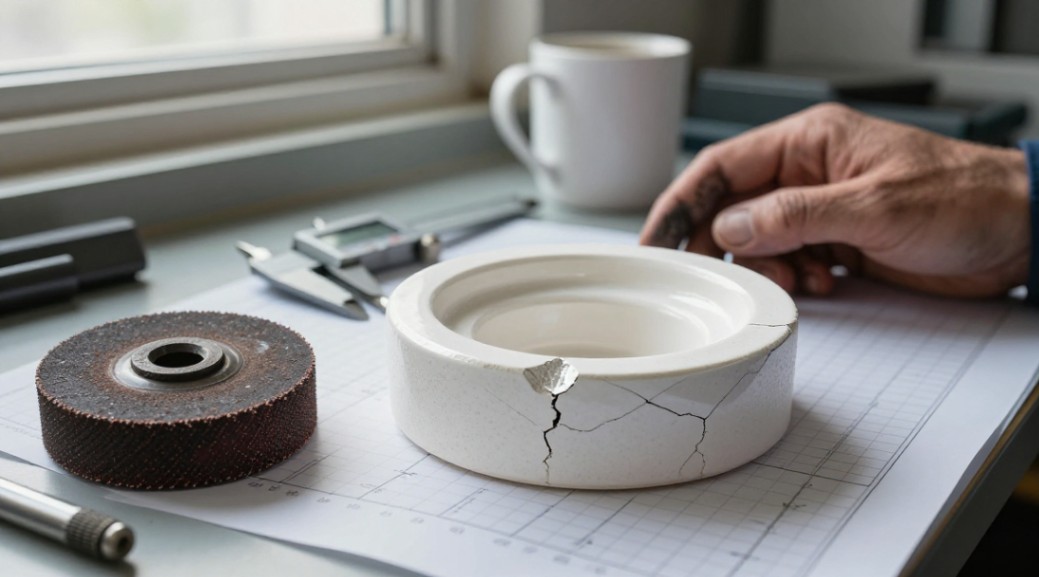
Step 1: Abandon Generic Thinking. Define Your Real Enemy.
Before you even look at a spec sheet, you must diagnose the primary failure mode your part will face. Is it pure abrasion? Thermal shock? Chemical attack? This choice dictates everything that follows. Picking the wrong grade is the root cause of 80% of alumina failures.
The Brutal Truth: Alumina vs. The Competition
Aluminum oxide ceramic is not the hardest. It’s not the toughest. It’s not the best thermal conductor. Its power is in its balance and commercial availability. Use this table to see where it truly wins-and where you should use something else.
| Material | Key Strength | Key Weakness vs. Alumina | When to Choose Over Alumina |
|---|---|---|---|
| Aluminum Oxide (Al2O3) | Best cost/performance balance, excellent electrical insulation, good wear resistance. | Lower fracture toughness, moderate thermal conductivity. | Your default for wear plates, insulators, substrates, sleeves. |
| Silicon Carbide Ceramic | Superior thermal conductivity, extreme hardness. | More expensive, electrically conductive, harder to machine. | High-heat-exchange applications, armor, severe abrasion. |
| Silicon Nitride Ceramic | Exceptional fracture toughness and thermal shock resistance. | Significantly higher cost, complex sintering. | High-reliability bearings, turbine components, metal forming. |
| Zirconia (ZrO2) | Highest toughness of common oxides, ‘metallic’ wear. | Lower hardness, potential long-term aging in moist environments. | Precision knives, biomedical implants, components needing impact resistance. |
| Aluminum Nitride Ceramic | Exceptional thermal conductivity for an insulator. | Very expensive, sensitive to moisture during processing. | High-power electronic substrates where electrical insulation AND heat sinking are critical. |
Reddit forums and engineering communities are littered with posts like, ‘My alumina feed tube shattered.’ The response is often, ‘Should have used silicon nitride.’ That table is your first filter. Use it.
Step 2: Grade Selection is a War of Purity and Process
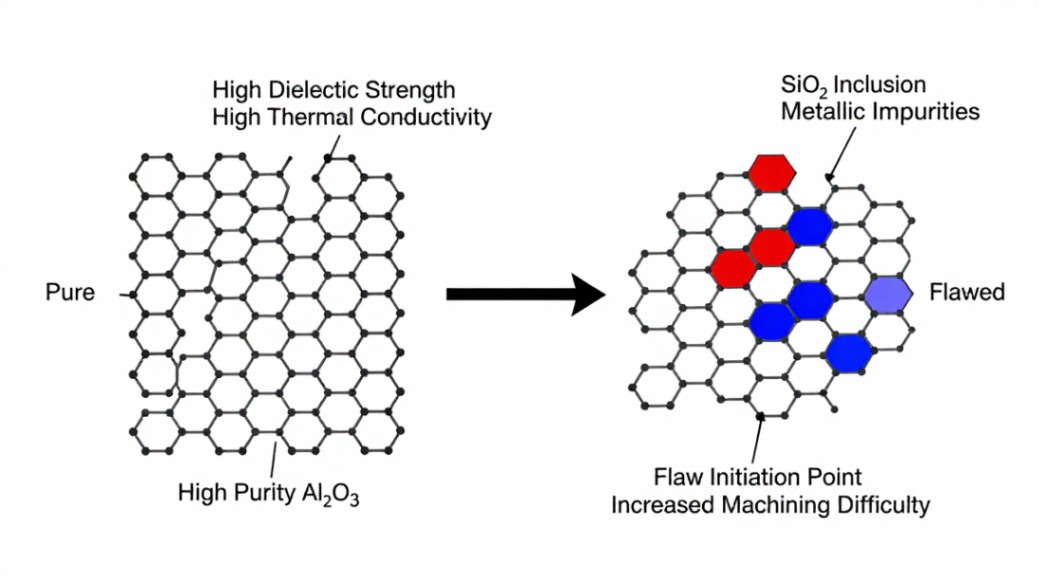
You’ve chosen Al2O3. Now, the real work begins. ‘96% alumina’ and ‘99.5% alumina’ are different universes. The impurities and grain structure dictated by the manufacturing process are what you’re actually buying.
Decoding the Manufacturing Maze
Dry Pressing: Fast, cheap. For simple, high-volume shapes like tiles or simple insulators. Density and strength are lower. Don’t use it for critical structural parts.
Isostatic Pressing: Uniform pressure from all sides. This yields near-net-shape parts with superior, isotropic properties. This is your go-to for complex, high-performance components like pump seals or labware. The density is higher. The cost is higher.
Injection Molding: Allows for incredibly complex, small, detailed geometries-think intricate thread guides or microfluidic components. The catch? High tooling cost and a lengthy binder removal process that can introduce defects if not perfectly controlled.
The purity level directly ties to key properties. This isn’t marketing; it’s physics.
| Purity Level | Key Characteristics | Typical Applications | What You Sacrifice |
|---|---|---|---|
| 96% Al2O3 | Workhorse grade. Good mechanical strength, excellent cost-effectiveness. The silica/calcia-based glassy phase aids sintering. | Wear plates, grinding media, thread guides, industrial insulators. | Dielectric strength, chemical purity, maximum hardness. |
| 99.5% Al2O3 | High purity. Superior electrical insulation, higher hardness, better corrosion resistance. More refractory, requiring higher sintering temps. | Electronic substrates, semiconductor chamber parts, critical seal faces, high-temperature furnace components. | Cost. It is significantly more expensive to produce and machine. |
| 99.9% Al2O3 | Ultra-high purity. Used where ionic contamination is unacceptable. Exceptional dielectric properties. | Medical implants (dental, orthopedic), advanced semiconductor processing, analytical labware. | Everything. Cost skyrockets. Machining becomes a specialist art. |
Step 3: Machining is Where Dreams Go to Die (If You’re Unprepared)
Sintered aluminum oxide ceramic is harder than most metals. You cannot ‘cut’ it. You abrade it. This requires diamond. Everything else is a waste of time and money.
- Diamond Grinding: Use resin-bonded diamond wheels. Coolant is non-negotiable. It prevents thermal shock and removes abrasive debris. Use high spindle speeds and low, consistent feed rates. Rushing here creates micro-cracks that will fail later.
- Diamond Drilling & Cutting: For through-holes or slicing, use diamond-coated core drills or diamond blade saws. Again, flood coolant. Peck drill for deep holes to clear swarf.
- Lapping & Polishing: For achieving optical finishes or ultra-tight tolerances on seal faces. Use progressively finer diamond abrasive slurries on a cast iron or ceramic lap plate. This is a slow, meticulous process.
The chatter you hear on machine shop floors? ‘We lost 3 out of 10 parts during grinding.’ The cause is almost always one of three things: incorrect diamond grit specification, inadequate coolant flow, or an attempt to remove too much material in one pass. Treat it like glass, not steel.
Step 4: Application-Specific Survival Guides
Wear Parts (Liners, Nozzles, Guides)
Here, hardness and density are king. Choose a fine-grained, high-density 96% or 99% alumina from isostatic pressing. Ensure the mating surface is as smooth as possible to prevent point loading. Design with generous radii-sharp corners are stress concentrators and will chip. Forget about tensile strength; design for compression.
Electrical & Electronic Substrates/Insulators
This is the domain of high-purity (99.5%+) alumina. The critical metrics are dielectric strength, volume resistivity, and surface finish. The manufacturing process must control porosity and impurities meticulously. Post-firing metallization (like thick-film printing) requires a specific surface roughness profile. Your ceramic supplier and your circuit printer must be in sync.
Biomedical Implants (Dental, Orthopedic)
This isn’t just ceramic; it’s a biocompatible device. You must use medical-grade, ultra-high-purity (99.9%+) alumina with a controlled microstructure (e.g., BIOLOX® type). The surface finish and geometry are critical for osseointegration and wear performance. Every batch requires full traceability and biological certification. Do not cut corners here.
The Inescapable Limitation and The Future
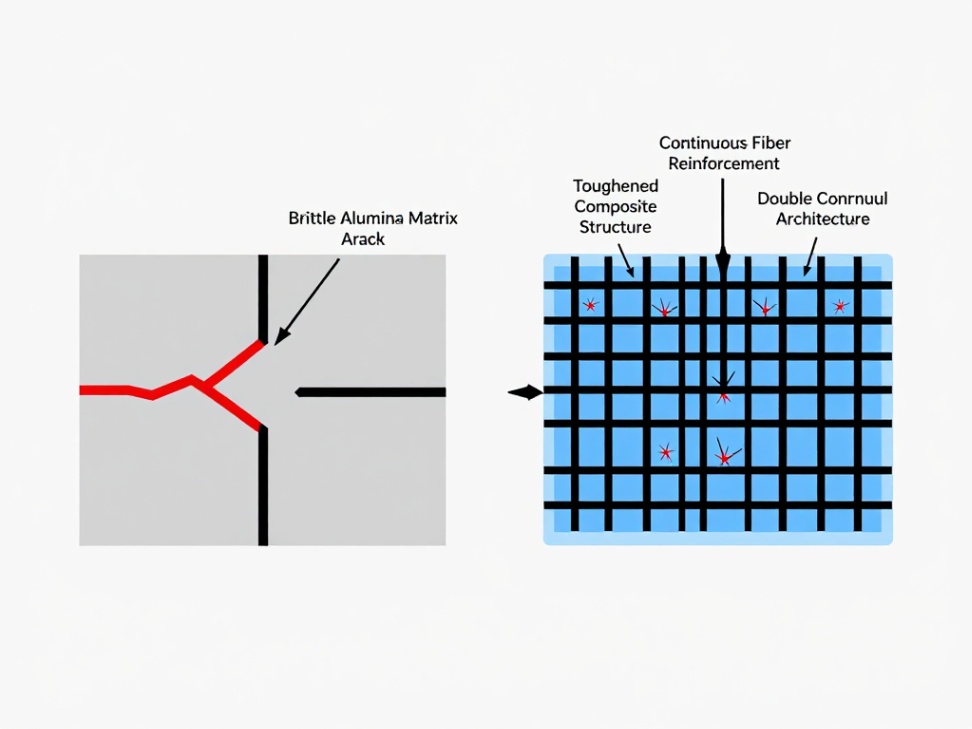
Alumina’s Achilles’ heel is brittleness and mediocre thermal shock resistance. You must design around this. Avoid constrained thermal expansion. Use compliant mounting. The future, as seen in cutting-edge research on ultra-high temperature ceramic matrix composites (UHTCMCs), involves reinforcement. Imagine embedding continuous fibers within alumina-not unlike rebar in concrete-to boost fracture toughness from a typical 3-5 MPa·m¹/² to over 15 MPa·m¹/². Advanced strategies like slurry infiltration for ‘double continuous structures’ are pushing this into reality, allowing tougher ceramic matrices at lower sintering temperatures. For now, your job is to respect alumina’s limits while exploiting its formidable strengths.
Your Next Move: Prototype with Purpose
Stop guessing. Stop using generic specs. Take your defined failure mode from Step 1 and source 2-3 material samples from reputable suppliers. Specify the purity and desired process (e.g., ‘99.5% Al2O3, isostatically pressed’). Test them under accelerated conditions that mimic your actual application. The small cost of prototyping pales in comparison to the cost of a field failure. For critical electrical or medical applications, this isn’t a suggestion-it’s the only professional path forward.
Suppiler
Synthetic-chemical focus on the research and development, production and sales of ceramic products, serving the electronics, ceramics, chemical and other industries. Since its establishment in 2015, the company has been committed to providing customers with the best products and services, and has become a leader in the industry through continuous technological innovation and strict quality management.
Our products includes but not limited to Aluminum Nitride, Aluminum Oxide, Boron Carbide, Boron Nitride, Ceramic Crucible, ect. If you are interested in any type of these, please feel free to contact us.