Next-Generation Ceramics: Unlocking Superior Properties for Industry

Aluminum Oxide Ceramic: The Baseline for Engineering Ceramics
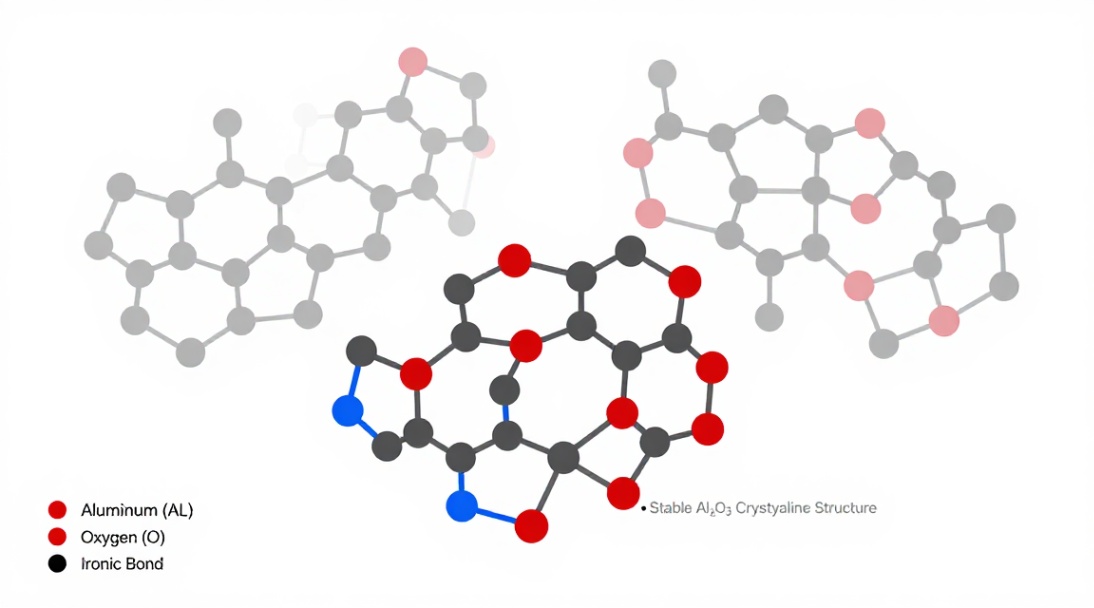
Aluminum oxide ceramic (Al2O3), or alumina, is the most widely used advanced ceramic. It provides a dependable, cost-effective combination of hardness, electrical insulation, and chemical inertness. For engineers choosing a ceramic material, alumina often serves as the baseline for comparison against more specialized alternatives. Its performance is defined by a stable crystalline structure of aluminum and oxygen atoms. This structure delivers consistent results across diverse applications.
Core Properties and How They Drive Application
Alumina’s material properties are its resume. Its high hardness (typically 9 on the Mohs scale) and excellent wear resistance make it ideal for industrial components like seals, bushings, and liners in abrasive environments. The material exhibits high compressive strength but relatively lower flexural strength compared to some peers. Its electrical insulating capabilities are exceptional, with high dielectric strength, making it the dominant choice for electronic substrates and insulating components in high-voltage systems.
Thermal and Chemical Stability
Alumina maintains structural integrity at high temperatures, though its thermal conductivity is moderate. This makes it suitable for furnace components and thermal insulators. Its true strength lies in chemical inertness. Alumina resists attack from strong acids, alkalis, and molten metals. This corrosion resistance is crucial for laboratory instrument components, crucibles, and wear parts in chemical processing.
Comparative Analysis: Alumina vs. Other Advanced Ceramics
Selecting the right ceramic requires a direct comparison. Alumina is the generalist. Specialized ceramics offer peak performance in one area, often at a higher cost.
Versus Silicon Carbide and Silicon Nitride Ceramics
For extreme wear and thermal conductivity, silicon carbide ceramics excel. Reaction-sintered silicon carbide ceramics offer excellent corrosion resistance, while recrystallized silicon carbide ceramics handle very high temperatures. Silicon nitride ceramic provides superior fracture toughness and thermal shock resistance, ideal for demanding mechanical applications like bearings. Alumina wins on cost and electrical insulation.
Versus Zirconia and Boron-Based Ceramics
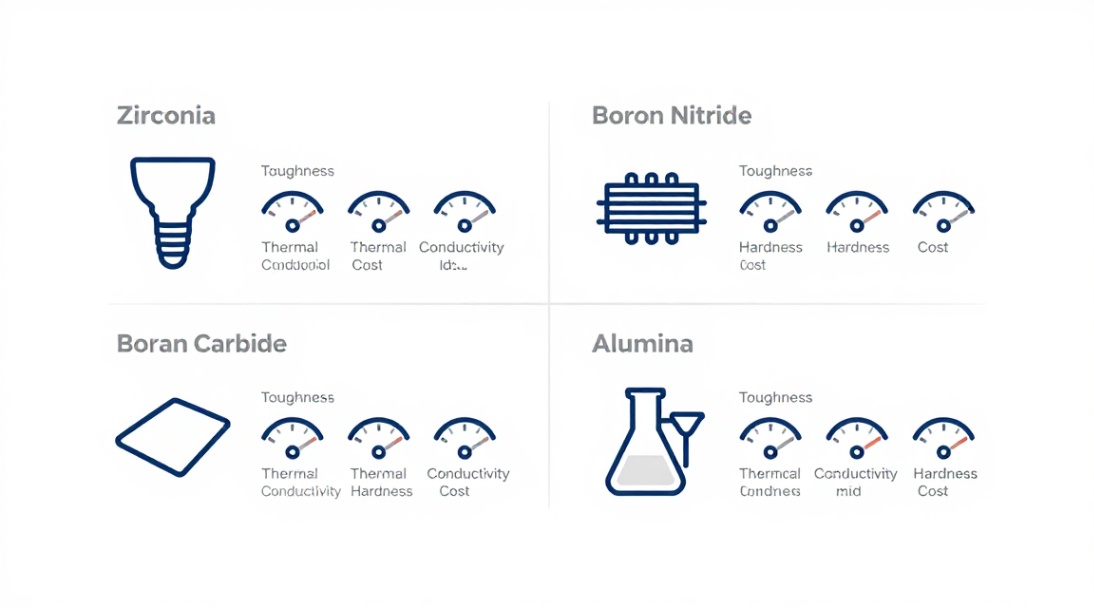
Zirconia offers dramatically higher fracture toughness and can be engineered for strength, making it a candidate for biomedical implants where mechanical stress is a concern. Boron nitride ceramic is a superior thermal conductor and easily machinable, but it is softer. Boron carbide ceramic is one of the hardest known materials, used for armor, but it is brittle and expensive. Alumina provides a reliable midpoint.
Grading and Manufacturing: The Devil in the Details
Not all alumina is equal. The purity level defines its capabilities. Standard 96% alumina offers a robust balance for most industrial applications. High-purity 99.5% or 99.8% alumina delivers significantly improved electrical properties, higher temperature resistance, and better corrosion resistance, but at a higher cost. The manufacturing process, typically powder compaction followed by sintering, dictates the final density and performance. Higher purity and finer powders yield denser, stronger components.
Applications in Industry and Beyond
Alumina’s versatility is proven in the field. In electronics, it forms the backbone of substrates and circuit carriers. In medical technology, its biocompatibility makes it suitable for certain implants and surgical tools. Industrial applications are vast: pump seals, wear plates, thread guides, and cutting tool inserts. Users on engineering forums like Reddit frequently highlight its reliability for custom components in prototyping, where its predictable behavior reduces development risk. One machinist noted, “For a tough, off-the-shelf insulator or wear part, 96% alumina is my first stop. It’s the workhorse.”
The Selection Verdict
Choose alumina ceramic when you need a proven, economically viable material with high hardness, excellent electrical insulation, and broad chemical resistance. It is the default choice for insulating substrates, industrial wear components, and chemically inert labware. Consider silicon nitride ceramic or zirconia for applications requiring higher fracture toughness and thermal shock resistance. Look to silicon carbide ceramic for ultimate wear resistance and thermal conductivity.
For custom components, consult with a specialist who can navigate the trade-offs between alumina grades and alternative materials like mullite ceramic or quartz ceramic. They can assess whether a special coating for boron nitride ceramic crucibles or a different material system entirely is warranted for your specific thermal and mechanical loads.
Suppiler
Synthetic-chemical focus on the research and development, production and sales of ceramic products, serving the electronics, ceramics, chemical and other industries. Since its establishment in 2015, the company has been committed to providing customers with the best products and services, and has become a leader in the industry through continuous technological innovation and strict quality management.
Our products includes but not limited to Aluminum Nitride, Aluminum Oxide, Boron Carbide, Boron Nitride, Ceramic Crucible, ect. If you are interested in any type of these, please feel free to contact us.