Next-Generation Ceramics: Unlocking Superior Properties for Industry

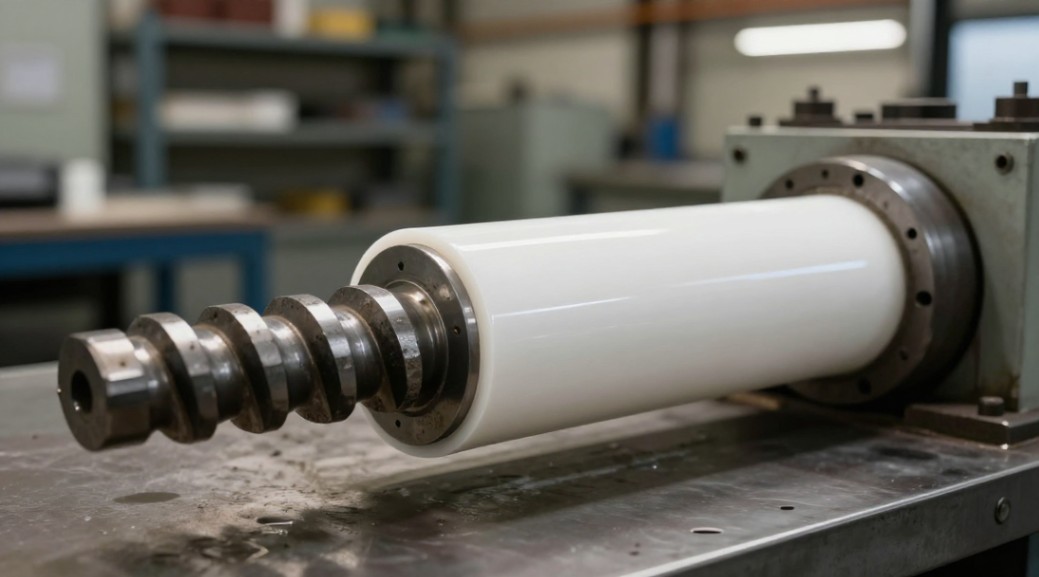
Twenty years ago, I stood on a factory floor watching a production line falter. An extruder screw wore down prematurely, causing costly downtime every six months. The team tried hardened tool steel, then tungsten carbide. The results were marginal. Then we prototyped a liner made from high-purity aluminum oxide ceramic. That component ran for over four years without measurable wear. The line’s efficiency soared. This was my first visceral lesson in the transformative power of a material often hidden in plain sight.
Beyond Chemistry: The Anatomy of a High-Performance Ceramic
Commonly called alumina, aluminum oxide ceramic (Al₂O₃) is a sintered, polycrystalline material. Its performance derives not from the oxide alone, but from the density and microstructure achieved during manufacturing. Unlike monolithic metals, its properties are anisotropic and heavily influenced by grain size, porosity, and phase purity. This granular control allows engineers to specify a material tailored for specific mechanical, thermal, or electrical loads.
Core Properties: Why Alumina is Chosen
Alumina’s value proposition rests on a unique combination of properties no single metal or polymer can match.
Mechanical and Wear Dominance
Its exceptional hardness (second only to diamond and boron carbide among practical materials) provides outstanding abrasion resistance. This makes it the default choice for wear plates, slurry pump seals, and cutting tool inserts. However, this hardness comes with a well-understood trade-off: inherent brittleness. It lacks the fracture toughness of metals or even advanced ceramics like zirconia or silicon nitride. In impact-heavy applications, this limitation is non-negotiable.
Thermal and Electrical Insulation
Alumina is a premier electrical insulator with high dielectric strength. This property, combined with its ability to be formed into complex, flat shapes, cemented its role as the substrate of choice for thick-film and thin-film electronic circuits. Its thermal conductivity, while lower than that of aluminum nitride or silicon carbide, is sufficient for many applications. More critically, it retains its strength and insulation properties at temperatures exceeding 1500°C, a regime where metals soften and polymers vaporize.
Chemical Inertness
In corrosive chemical processing environments, aluminum oxide ceramic parts outlast stainless steel by orders of magnitude. It resists attack from strong acids, molten metals, and oxidizing atmospheres. This inertness also underpins its biocompatibility, enabling its use in medical implants like hip joint bearings and dental roots.
The Purity Paradigm: Selecting the Right Alumina Grade
Not all alumina is equal. The single most critical specification is purity, which directly dictates performance and cost. The choice is rarely about “best,” but about “optimal for the application.”
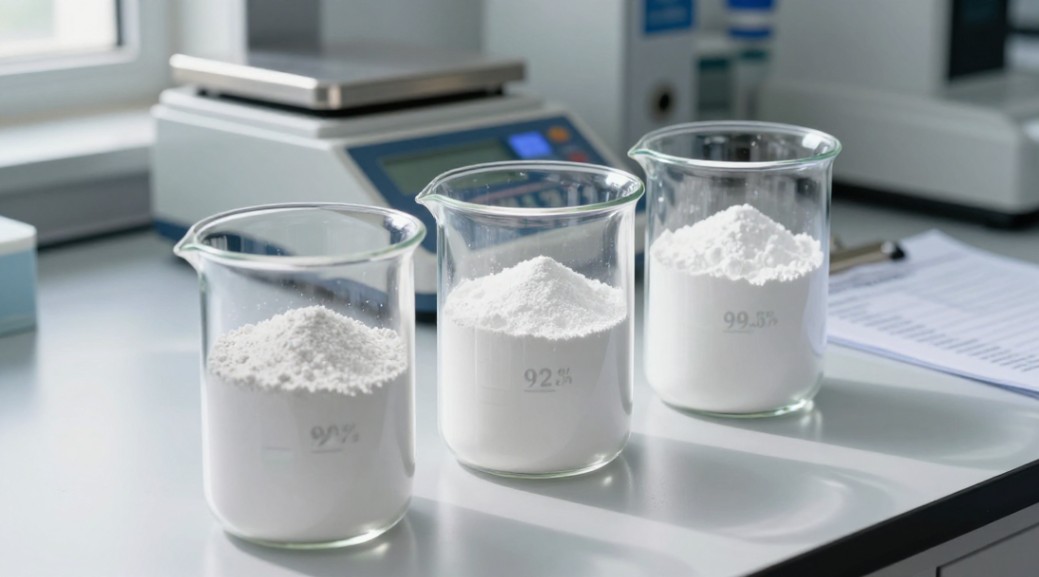
| Property / Grade | 96% Alumina (Standard) | 99.5% Alumina (High Purity) | 99.9% Alumina (Ultra-High Purity) |
|---|---|---|---|
| Primary Composition | 96% Al₂O₃, 4% SiO₂, MgO (sintering aids) | >99.5% Al₂O₃, trace additives | >99.9% Al₂O₃, minimal impurities |
| Key Advantage | Cost-effective, excellent mechanical strength | Superior wear resistance, higher thermal conductivity | Highest electrical insulation, best corrosion resistance, optical clarity |
| Typical Applications | Wear tiles, thread guides, general industrial insulators | High-performance pump seals, advanced electronic substrates, armor tiles | Semiconductor process components, medical implants, laser tubes |
| Surface Finish Limit | Ra ~0.4 µm (16 µin) | Ra ~0.1 µm (4 µin) | Ra < 0.05 µm (2 µin), can be polished to optical grade |
| Trade-off Consideration | Slight decrease in corrosion resistance in harsh chemistries | Higher cost, more demanding sintering process | Significant cost premium, potentially more brittle in very thin sections |
The industry trend is shifting toward higher purity grades for advanced applications. On engineering forums like Reddit, users frequently discuss this trade-off. One mechanical designer noted, “We switched from 96% to 99.5% for our plasma etch chamber parts. The upfront cost doubled, but our mean time between failures (MTBF) increased by 300%. For us, it was a clear ROI win.” Another user working in wear parts countered, “For bulk abrasive blasting nozzles, 96% alumina is the sweet spot. The ultra-hard 99.5% grade is more brittle here and can chip on impact, negating its wear advantage.” This feedback highlights the nuanced selection process.
Manufacturing and Finishing: The Path from Powder to Part
The properties we specify are unlocked during manufacturing. The dominant process is pressureless sintering of shaped powder compacts. Finishing is equally critical. Diamond grinding achieves tight tolerances, while lapping and polishing can produce surfaces with roughness values below 0.1 µm. For extreme wear applications, specialized coatings like special coating for boron nitride ceramic crucibles are sometimes applied to alumina to enhance non-wetting characteristics, but this is an exception, not the rule.
The Competitive Landscape: Alumina Among Advanced Ceramics
Alumina doesn’t exist in a vacuum. Engineers constantly evaluate it against other technical ceramics. Its strength is its balance and cost-effectiveness.
| Ceramic Material | Key Advantage Over Alumina | Typical Use Case Where It Replaces Alumina | Primary Trade-off |
|---|---|---|---|
| Aluminum Nitride (AlN) | ~10x higher thermal conductivity | High-power LED substrates, RF/microwave packages | Higher cost, lower mechanical strength |
| Silicon Nitride (Si₃N₄) | Superior fracture toughness, thermal shock resistance | High-speed bearing balls, cutting tools for cast iron | Complex/expensive manufacturing, lower hardness |
| Zirconia (ZrO₂) | Extremely high fracture toughness, metallic-like wear | Medical implants (hip joints), precision knives, wear guides | Lower hardness, potential phase instability at very high temps |
| Silicon Carbide (SiC) | Higher thermal conductivity, exceptional chemical & thermal stability | Kiln furniture, mechanical seals for aggressive media, bulletproof armor | Higher cost, more difficult to machine post-sintering |
Strategic Material Selection: A Pragmatic Framework
Selecting aluminum oxide ceramic is a systematic decision. Follow this logic.
- Define the Primary Failure Mode: Is it abrasive wear, corrosion, electrical breakdown, or thermal fatigue? Alumina excels against abrasion and insulation failure.
- Quantify the Environment: Temperature, chemical exposure, and stress type (continuous vs. impact). Alumina’s weakness is impact.
- Evaluate the Cost-Benefit: Compare total lifecycle cost, not just piece price. Factor in downtime, replacement labor, and lost production.
- Prototype and Validate: Always test in the actual environment. A controlled pilot run with instrumented alumina ceramic wear parts can provide definitive performance data, often revealing secondary benefits like reduced product contamination.
Alumina ceramic is not a revolutionary new material. It is a foundational, deeply understood engineering ceramic. Its enduring relevance lies in its predictable performance, manufacturability, and irreplaceable property set. For engineers wrestling with wear, heat, or electrical isolation, it remains a first-tier contender. The next step is application-specific analysis. Begin with a clear definition of your operating environment and dominant stress factors. This clarity will guide you to the correct material, whether it’s a cost-effective 96% alumina wear plate or an ultra-pure 99.9% substrate enabling the next generation of semiconductors.
Suppiler
Synthetic-chemical focus on the research and development, production and sales of ceramic products, serving the electronics, ceramics, chemical and other industries. Since its establishment in 2015, the company has been committed to providing customers with the best products and services, and has become a leader in the industry through continuous technological innovation and strict quality management.
Our products includes but not limited to Aluminum Nitride, Aluminum Oxide, Boron Carbide, Boron Nitride, Ceramic Crucible, ect. If you are interested in any type of these, please feel free to contact us.