Next-Generation Ceramics: Unlocking Superior Properties for Industry

My First Encounter with Aluminum Oxide Ceramic That Changed Everything
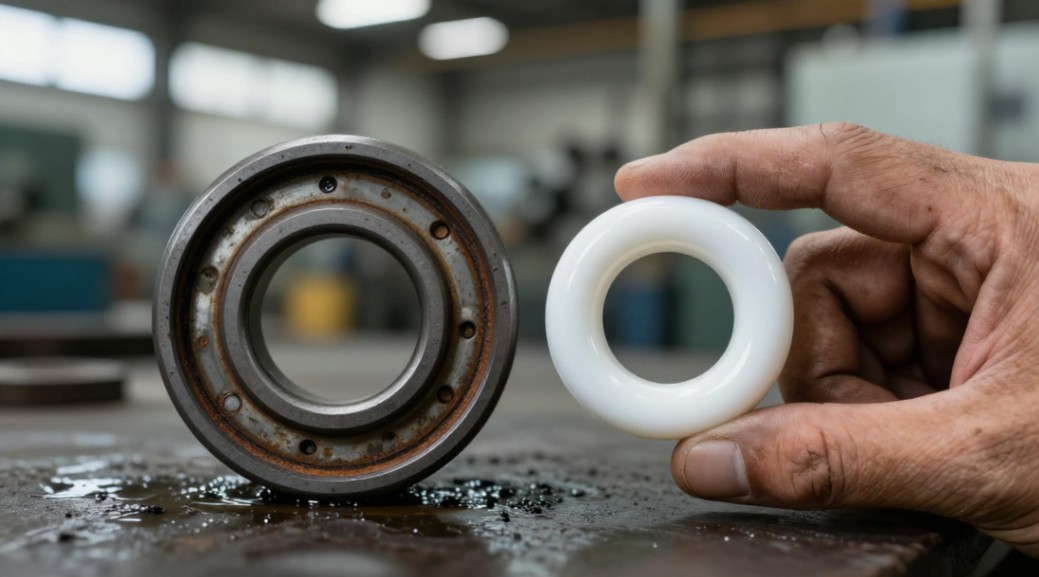
Years ago, I watched a production line stop dead. A steel bearing race had worn out after only three weeks. The replacement cost was high. The downtime was worse. A senior engineer walked over, handed me a small white ring, and said, “Try this.” It was an aluminum oxide ceramic component. That ring ran for eighteen months without measurable wear. That moment taught me something crucial: choosing the right ceramic is not about guesswork. It is about following a clear, logical process. This guide will walk you through that process, step by step, so you can achieve similar results in your own work.
1. Understand the Basics of Aluminum Oxide Ceramic First
Before you pick a grade or a process, you need to know what you are working with. Aluminum oxide ceramic has the chemical formula Al2O3. It is often called alumina. Think of it as the workhorse of the technical ceramic world. It offers a balanced combination of hardness, electrical insulation, and chemical resistance. It is not the toughest ceramic, nor the most expensive. It is the reliable choice for thousands of applications.
1.1. Key Physical Properties That Matter
- Hardness: It is extremely hard. It resists scratching and abrasive wear better than most metals and many other ceramics.
- Wear resistance: This is its superpower. In sliding or abrasive environments, it outlasts steel by factors of ten or more.
- Electrical insulation: It is an excellent electrical insulator. This makes it ideal for electronic substrates and high-voltage components.
1.2. Thermal Properties You Cannot Ignore
- High melting point: Over 2000°C. It stays stable where metals would melt.
- Low thermal expansion: It does not change size much with temperature. This means parts stay accurate when heated.
- Good thermal conductivity: Not as good as aluminum nitride ceramic or silicon carbide ceramic, but adequate for many heat-dissipation tasks.
If you need extreme thermal conductivity, look at aluminum nitride. If you need maximum toughness, consider zirconia ceramic. But for a balance of properties at a reasonable cost, aluminum oxide is your starting point.
2. Choose the Right Purity Grade for Your Application
This is the first practical decision you will make. Purity dramatically affects performance. Do not assume the highest purity is always best. It costs more and can be harder to process.
2.1. The Three Common Purity Grades
- 96% alumina: The standard workhorse. Good mechanical strength, decent wear resistance, and the lowest cost. Perfect for general wear parts and insulators. I use this for 80% of my non-critical components.
- 99.5% alumina: Higher purity means better chemical resistance and electrical insulation. I specify this for electronic substrates and components in mildly corrosive environments.
- 99.9% alumina: The premium grade. Exceptional chemical inertness, optical translucency, and very low electrical leakage. This is for demanding applications like lamp envelopes, medical implants, and semiconductor process parts. But be ready to pay a premium.
My rule of thumb: Start with 96% for mechanical parts. Only move to higher purity if you have a specific need for chemical resistance, insulation, or optical clarity.
3. Understand the Manufacturing Methods Step by Step
How you shape the ceramic powder determines the final part’s quality and cost. Do not pick a method without considering your geometry and volume.
3.1. Pressing
Step one: Fill a steel die with alumina powder. Step two: Apply high pressure. Step three: Eject the compacted shape. This is fast and cheap for simple, flat parts like substrates and discs. The limitation is shape complexity. You cannot make undercuts or deep holes easily.
3.2. Isostatic Pressing
This is my go-to for more complex shapes. First, seal the powder in a flexible rubber bag. Next, apply equal pressure from all sides using a liquid. The result is a more uniform density. The part is then machined to final shape in the “green” (unsintered) state. This method handles rods, tubes, and blocks with internal features.
3.3. Sintering
This is where the magic happens. The pressed part is heated in a furnace to just below its melting point. The particles fuse together. The part shrinks uniformly. The final result is a dense, hard ceramic. Never skip the sintering profile. Ramping temperature too fast causes cracks. Cooling too fast creates internal stress. Follow the powder supplier’s recommendation exactly.
4. Surface Finishing: Grinding, Lapping, and Polishing
After sintering, your part is extremely hard. You cannot machine it with conventional tools. You need diamond abrasives. This step is critical for precision components.
4.1. Grinding
Use a diamond grinding wheel to remove material and create flat surfaces or precise outer diameters. Go slow. Use coolant. Aggressive grinding creates micro-cracks that weaken the part.
4.2. Lapping
For tight flatness and surface finish, lapping is essential. Place the part on a rotating metal plate charged with diamond slurry. The abrasive action removes microscopic high spots. You will achieve surface finishes down to 0.1 microns Ra.
4.3. Polishing
If you need optical surfaces or lowest friction, polish after lapping. Use finer diamond grit (1 micron or less) on a soft pad. This step is time-consuming. Only do it where the application demands it, such as for seal faces or optical windows.
Remember: Polishing a large area is expensive. Plan your design to minimize polished surfaces.
5. Common Applications and Why They Work
Now we apply the theory. Here is where aluminum oxide ceramic truly shines.
5.1. Cutting Tools
Insert tips for machining hard steels and cast iron. The high hardness and wear resistance let you run at higher speeds than carbide. The limitation is toughness. Avoid interrupted cuts. For that, you might need silicon nitride ceramic instead.
5.2. Electronic Substrates
Thin, flat alumina plates act as the base for thick-film and thin-film circuits. The electrical insulation is excellent. The thermal conductivity is good enough for most power electronics. If you need better heat dissipation, switch to aluminum nitride ceramic.
5.3. Wear-Resistant Components
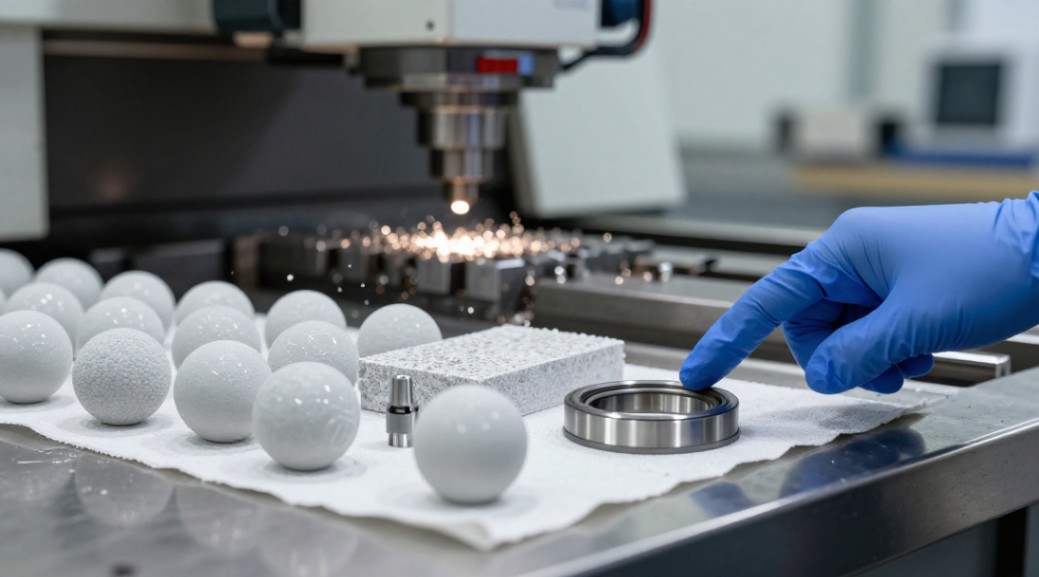
Seal faces, bearing balls, nozzles, and pump liners. I have seen alumina outlast tungsten carbide in many slurry-handling applications. The chemical inertness means no corrosion. The hardness means no erosion.
5.4. Medical Implants
High-purity alumina is biocompatible. It is used in hip joint balls and dental implants. The low wear rate and chemical stability mean it lasts decades inside the body.
6. Compare Aluminum Oxide to Other Ceramics Honestly
Do not fall into the trap of thinking one ceramic rules them all. Each has strengths and weaknesses.
6.1. Aluminum Oxide vs. Zirconia Ceramic
- Toughness: Zirconia wins. It is tougher and can handle impact better.
- Temperature: Aluminum oxide wins above 800°C. Zirconia degrades faster at high temperatures.
- Cost: Aluminum oxide is significantly cheaper.
- Recommendation: Use zirconia if impact resistance is the primary concern. Use aluminum oxide for cost-sensitive, high-temperature, or wear-dominated applications.
6.2. Aluminum Oxide vs. Silicon Carbide Ceramic
- Hardness: Silicon carbide is harder. It is the king of abrasion resistance.
- Thermal conductivity: Silicon carbide is much higher. It is better for heat sinks.
- Fabrication: Aluminum oxide is easier to form and sinter. Reaction-sintered silicon carbide ceramics and pressureless sintered silicon carbide ceramics require more controlled processes.
- Cost: Aluminum oxide is lower cost.
- Recommendation: Use silicon carbide for extreme wear, high thermal flux, or chemical environments where alumina dissolves (e.g., strong alkalis). Use aluminum oxide for general-purpose wear and insulation.
6.3. Other Ceramics in the Family
You might also encounter mullite ceramic for thermal shock resistance, quartz ceramic for low thermal expansion, boron carbide ceramic for extreme hardness and lightweight armor, and boron nitride ceramic for high-temperature electrical insulation and lubricity. I recommend special coating for boron nitride ceramic crucibles if you are handling molten metals. But that is a topic for another day.
7. Acknowledge the Limitations and How to Work Around Them
Aluminum oxide is not perfect. Be honest about where it falls short.
7.1. Brittleness
It is a ceramic. It will break if you hit it hard enough. You cannot thread a ceramic part directly. You must use metal inserts or adhesive bonding for assembly. Design for compressive loads, not tensile or impact loads.
7.2. Difficulty Machining Post-Sintering
Once fired, you can only remove material with diamond. This is slow and expensive. The solution is to get the shape as close to final as possible in the green state. Use near-net-shape forming methods like injection molding or isostatic pressing. Avoid secondary machining whenever you can.
8. A Simple Step-by-Step Decision Process You Can Follow Today
Let me give you a clear path. Use this checklist for your next project.
- Define the operating environment. What temperature, what chemicals, what loads?
- Determine the required properties. Hardness? Electrical insulation? Thermal conductivity?
- Select the purity grade. Start with 96% and upgrade only if needed.
- Choose the manufacturing method. Pressing for simple shapes, isostatic pressing for complex ones.
- Plan the finishing. Grind only where necessary. Lap and polish only for critical surfaces.
- Consider alternatives. If toughness matters more, try zirconia. If heat dissipation is critical, try silicon carbide or aluminum nitride.
- Test a prototype first. Do not skip this. Run the part in your actual environment before committing to production.
I have seen teams save months of development time by following this simple sequence. You can too.
Your Next Step: Put This Knowledge into Action
You now have a clear, logical framework for working with aluminum oxide ceramic. Stop reading and start applying. Pick one component you are currently designing. Run it through the decision process above. If you find yourself stuck on a specific property trade-off, do not hesitate to test a small batch. That is how real expertise is built — by doing, not by theorizing.
If you need a partner who can supply high-quality aluminum oxide ceramic components in any grade, with precise surface finishing and fast delivery, reach out to a reliable manufacturer. They can help you turn this framework into a finished part that performs. That is the goal. That is success.
Suppiler
Synthetic-chemical focus on the research and development, production and sales of ceramic products, serving the electronics, ceramics, chemical and other industries. Since its establishment in 2015, the company has been committed to providing customers with the best products and services, and has become a leader in the industry through continuous technological innovation and strict quality management.
Our products includes but not limited to Aluminum Nitride, Aluminum Oxide, Boron Carbide, Boron Nitride, Ceramic Crucible, ect. If you are interested in any type of these, please feel free to contact us.