Next-Generation Ceramics: Unlocking Superior Properties for Industry

1. The Surprising Flaw in Most Aluminum Oxide Ceramic Specifications
A 96% alumina part fails in a thermal cycle that a 99.5% part survives ten times over. That single number—the purity percentage—separates a reliable component from a field failure. Engineers routinely overspecify or underspecify aluminum oxide ceramic because they treat all grades as interchangeable. They are not. The difference is measurable, repeatable, and financially significant.
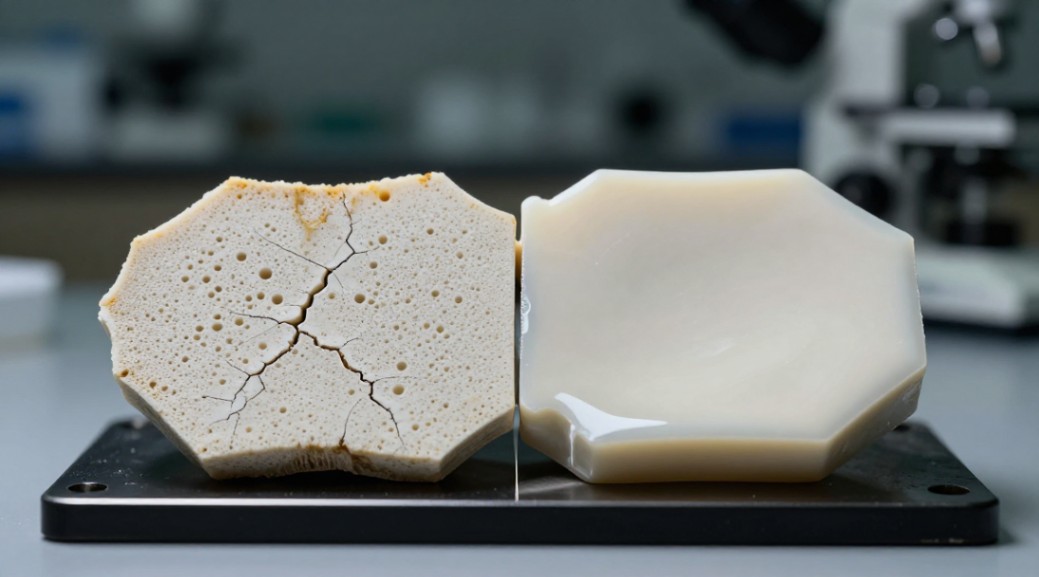
Aluminum oxide ceramic, chemically written as Al₂O₃, sits at 9 on the Mohs hardness scale. Only diamond cuts it. That hardness drives its use in grinding wheels, cutting tools, and armor. But hardness alone misleads. A grinding wheel made from 96% alumina costs less but wears faster. A 99.5% alumina seal handles higher pressure but costs more to manufacture. The right choice depends on the environment, not on a table of numbers.
Consider this: a pump seal in a chemical processing line sees corrosive slurry at 200°C. A 96% alumina seal fails within 500 hours due to grain boundary attack. Switch to 99.5% alumina, and that same seal runs past 2000 hours. The initial cost difference is 30%. The replacement labor and downtime savings? Ten times that. Data-driven material selection eliminates surprise failures.
2. Thermal Conductivity and Thermal Shock: The Real Differentiators
Most engineers assume ceramic means brittle. That is only half the story. Aluminum oxide ceramic conducts heat at 20–30 W/mK—far better than stainless steel. That thermal conductivity allows rapid heat dissipation in cutting tool inserts. A tool that runs 100°C cooler lasts twice as long. Yet thermal shock resistance depends on more than conductivity. It depends on purity, grain size, and porosity.
Reaction-sintered silicon carbide ceramics and recrystallized silicon carbide ceramics outperform alumina in extreme thermal shock. But for moderate cycles—a furnace liner cycling from 400°C to 100°C—aluminum oxide ceramic remains the economical champion. Silicon carbide-bonded silicon nitride ceramics handle higher stress, but at four times the cost. The logic is simple: match the material to the thermal envelope, not to the marketing brochure.
3. Electrical Insulation: Not All Alumina Insulates Equally
Aluminum oxide ceramic provides electrical insulation with dielectric strength exceeding 15 kV/mm. That makes it indispensable for spark plug insulators, high-voltage bushings, and microwave windows. But impurities ruin dielectric properties. A 96% grade contains glassy phases at grain boundaries that leak current under high frequency. Pressureless sintered silicon carbide ceramics or aluminum nitride ceramic offer better thermal conductivity for power modules. Yet for cost-sensitive isolation, 99% alumina remains the baseline.
The dielectric loss tangent increases with temperature. At 300°C, a 99.5% alumina part shows 0.0002 loss; a 96% grade shows 0.001. That difference is critical for RF applications. Engineers who ignore purity face unexpected signal attenuation.
4. Grinding, Cutting, and Abrasion: Where Hardness Dominates
Aluminum oxide ceramic dominates grinding wheels and abrasive grains because it self-sharpens. As the grain breaks down, fresh cutting edges expose. Silicon carbide ceramic wears faster on steel. Boron carbide ceramic is harder but costs five times more. For production grinding of hardened steel, aluminum oxide ceramic provides the best cost-per-part ratio.
Cutting tool inserts made from aluminum oxide ceramic cut cast iron at speeds exceeding 500 m/min. They do not react with iron, so built-up edge formation reduces. That chemical inertness extends tool life. However, they lack the toughness of tungsten carbide. For interrupted cuts—where shock loading occurs—silicon nitride ceramic performs better. The decision tree is clear: continuous cut? Use alumina. Interrupted cut? Use silicon nitride.
5. Structural Ceramics: Armor, Seals, and Bearings
Ballistic-grade aluminum oxide ceramic stops armor-piercing rounds by transferring kinetic energy into brittle fracture. A 10 mm tile of 99.5% alumina stops a 7.62 mm bullet. Silicon carbide ceramic stops it with 8 mm, but costs more. Boron carbide ceramic stops it with 6 mm but is very expensive. The military chooses based on weight constraints, not hardness alone.
Mechanical seals and bearings in chemical pumps rely on aluminum oxide ceramic for corrosion resistance. Hydrofluoric acid attacks glassy phases in 96% alumina. Hot isostatic pressing (HIP) eliminates pores, creating a dense microstructure that resists chemical attack. Special coating for boron nitride ceramic crucibles extends life in molten metal handling, but alumina itself handles most acids except hydrofluoric and hot concentrated alkali. Corrosion testing before specification saves millions in warranty claims.
6. Biocompatibility: The Hidden Advantage in Medical Implants
Aluminum oxide ceramic is biocompatible. The body does not reject it. Hip replacement heads made from 99.9% alumina articulating against polyethylene wear at 0.1 mm per decade. That is ten times better than metal-on-polyethylene. The ceramic surface is hydrophilic, promoting fluid film lubrication. Zirconia-toughened alumina now offers higher fracture toughness, but pure alumina remains the gold standard for radiographic visibility—it shows up clearly on X-rays because of its density.
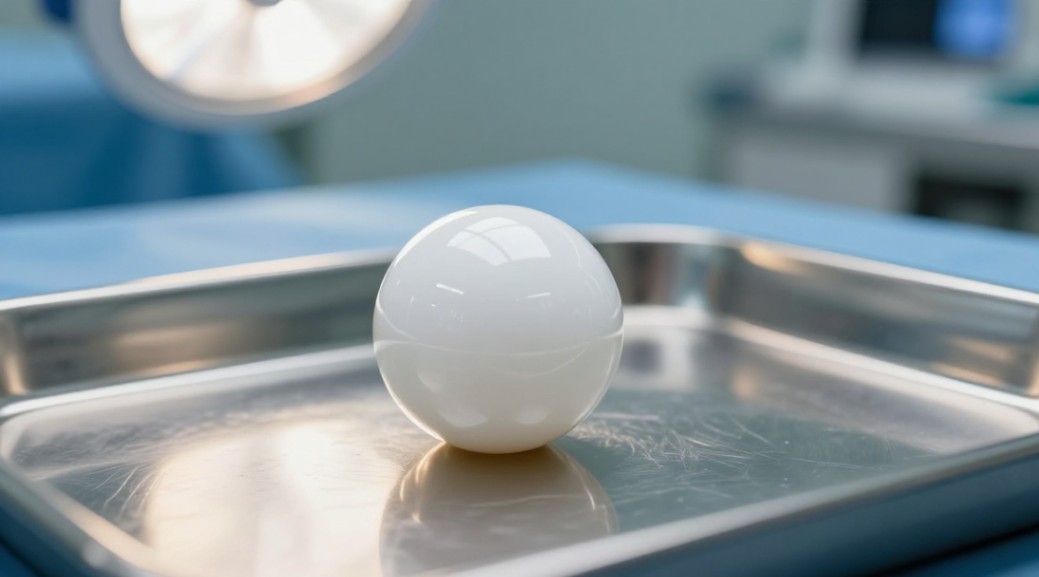
Dental implants use mullite ceramic and alumina blends for aesthetic translucency. Strength requirements for dentistry are lower than for hips. But the principle holds: alumina provides inertness and wear resistance that polymer alternatives cannot match. Regulatory approval for medical-grade alumina is well-established, reducing time to market for device manufacturers.
7. Manufacturing Processes: Pressing, Sintering, and HIP
Aluminum oxide ceramic parts start as powder. Dry pressing creates green bodies for simple shapes. Isostatic pressing produces complex geometries. Sintering at 1600–1800°C causes densification. Shrinkage is 15–20%, requiring precision in mold design. Hot isostatic pressing (HIP) applies argon gas pressure at temperature, eliminating residual porosity. The result: near-theoretical density and improved mechanical properties.
Pressureless sintered silicon carbide ceramics require different atmospheres—argon or nitrogen. Quartz ceramic and other specialties demand controlled heating rates. For aluminum oxide ceramic, the processing window is forgiving, which is why it remains the volume leader among advanced ceramics. But grading the powder—controlling particle size distribution—determines final grain size. Coarse grains reduce strength. Fine grains increase wear resistance. The processor must know the application.
8. Grade Selection: 96% versus 99% versus 99.5%
96% alumina: Good for low-cost applications where thermal shock is mild. Contains glass binder that limits maximum temperature to 1400°C. Wear resistance is 70% of 99.5% grade. Use for unsealed heating elements, low-wear guides, and general insulation.
99% alumina: Moderate purity. Suitable for structural applications with moderate thermal cycling. Dielectric properties improve over 96%. Cost is 20% higher than 96% grade.
99.5% alumina: Near-theoretical density. No glass phase. Corrosion resistance is maximal. Thermal shock resistance is double that of 96% grade. Use for semiconductor process parts, high-vacuum seals, and medical implants. Cost is 50% higher than 96% grade, but lifecycle savings justify it.
9. Why You Should Test Before Specifying
Data sheets list typical values. Real environments introduce variables: temperature gradients, chemical concentrations, mechanical loads. A 96% alumina part might pass every standard test and fail in application because of a minor impurity in a coolant. Run a prototype. Measure wear rate under actual conditions. Compare against aluminum nitride ceramic for heat dissipation or silicon carbide ceramic for hardness. Only direct testing under your process conditions reveals the truth.
We have seen companies replace alumina with boron nitride ceramic crucibles for molten aluminum handling, then switch back because of contamination issues. We have seen silicon nitride outperform alumina in reciprocating wear, only to fail due to thermal gradient cracking. Do not assume one ceramic fits all. Test, measure, then decide.
10. Your Next Step: Stop Speculating. Start Sourcing Certified Material.
You now understand the trade-offs: purity versus cost, thermal shock versus conductivity, hardness versus toughness. The wrong grade costs you in downtime, rejects, and warranty claims. The right grade delivers predictable performance.
We manufacture aluminum oxide ceramic components from 96% to 99.9% purity, with full dimensional certification and batch traceability. Our engineers help select the grade for your grinding, sealing, or insulating application. Request a sample set for your specific environment. Test it against your current solution. See the difference in wear rate and cycle life.
Contact us today to start your qualification process. The data will speak for itself.
Suppiler
Synthetic-chemical focus on the research and development, production and sales of ceramic products, serving the electronics, ceramics, chemical and other industries. Since its establishment in 2015, the company has been committed to providing customers with the best products and services, and has become a leader in the industry through continuous technological innovation and strict quality management.
Our products includes but not limited to Aluminum Nitride, Aluminum Oxide, Boron Carbide, Boron Nitride, Ceramic Crucible, ect. If you are interested in any type of these, please feel free to contact us.