Next-Generation Ceramics: Unlocking Superior Properties for Industry

The Hard-Learned Lesson
The engineer held the fractured part in his hand, a $12,000 prototype now useless. “It’s just ceramic,” he’d said weeks earlier. “How hard can it be?” The answer, etched into the cracked 99.5% alumina ring, was brutally expensive. His team assumed the material’s legendary hardness guaranteed success. They ignored thermal expansion, mismatched it with steel, and watched it shatter on the first thermal cycle. This story isn’t unique. On forums from Reddit to engineering hubs, the same tale repeats: smart people making basic, catastrophic mistakes with aluminium oxide ceramic. They treat it like a commodity. It’s not. It’s a precision tool that punishes ignorance. Let’s walk through the minefield so you don’t become the next cautionary tale.
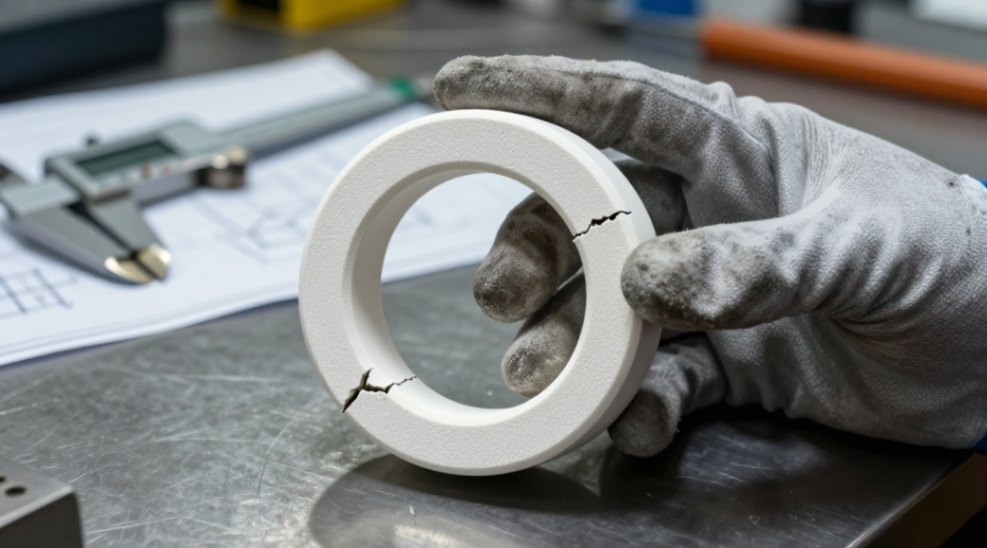
Mistake 1: Confusing Hardness with Invincibility
Yes, aluminum oxide ceramic is hard. It scratches steel. Its wear resistance outperforms most metals. This is its siren song. Engineers see a datasheet listing a Mohs hardness of 9 and think they’ve found a universal solution. This is where the trouble starts. Hardness is not toughness. While alumina excels in abrasion resistance, its Achilles’ heel is brittle fracture and low tensile strength. Slamming a alumina tile onto a concrete floor to “test” it is a fool’s errand. I’ve seen designers specify it for high-impact components, only to face catastrophic failure. The material’s primary crystal structure, alpha-Al2O3 or corundum, provides that hardness but demands respect for its limitations. For applications involving point loads or shock, you must look at composites or other advanced ceramics like silicon carbide ceramic or silicon nitride ceramic, which offer better fracture toughness.
Mistake 2: Ignoring the Thermal Shock Grenade
This is the silent killer. Aluminum oxide ceramic has a high melting point and good thermal conductivity. Logic suggests it handles heat well. This logic is dangerously incomplete. The real enemy is rapid temperature change. Alumina’s moderate thermal expansion coefficient and brittleness make it susceptible to thermal shock. Pouring molten metal into a cold alumina crucible? You’re gambling. Quenching a hot alumina part? Expect cracks. I recall a user case where a furnace liner failed prematurely because the cycle rate was too aggressive. The thermal stresses built up, creating micro-cracks that led to a total structural collapse. The solution isn’t to avoid alumina in thermal applications-it’s brilliant for heating elements or insulating substrates-but to design for gradual thermal transitions. Sometimes, a mullite ceramic or a specially coated boron nitride ceramic crucible might be a more forgiving choice for extreme thermal cycling.
Mistake 3: Treating All Grades as Equal
“Alumina is alumina.” This phrase has cost companies millions. The spectrum from 85% to 99.99% purity isn’t just a number; it’s a complete redesign of material properties. 96% Al2O3 is a workhorse, offering a great balance of properties and cost for wear plates or seals. 99.5% Al2O3 provides superior hardness, higher temperature performance, and better corrosion resistance for critical semiconductor components. Choosing the cheaper 92% grade for a high-purity chemical process vessel is a direct path to contamination and failure. The sintering aids and microstructure differ wildly. This isn’t a place for compromise. You must match the grade to the exact mechanical, thermal, and electrical insulation characteristics required. Blindly picking a generic alumina is like using a wrench as a hammer. It might work once, but the damage will be evident.
Mistake 4: Overlooking Surface Finish & Design
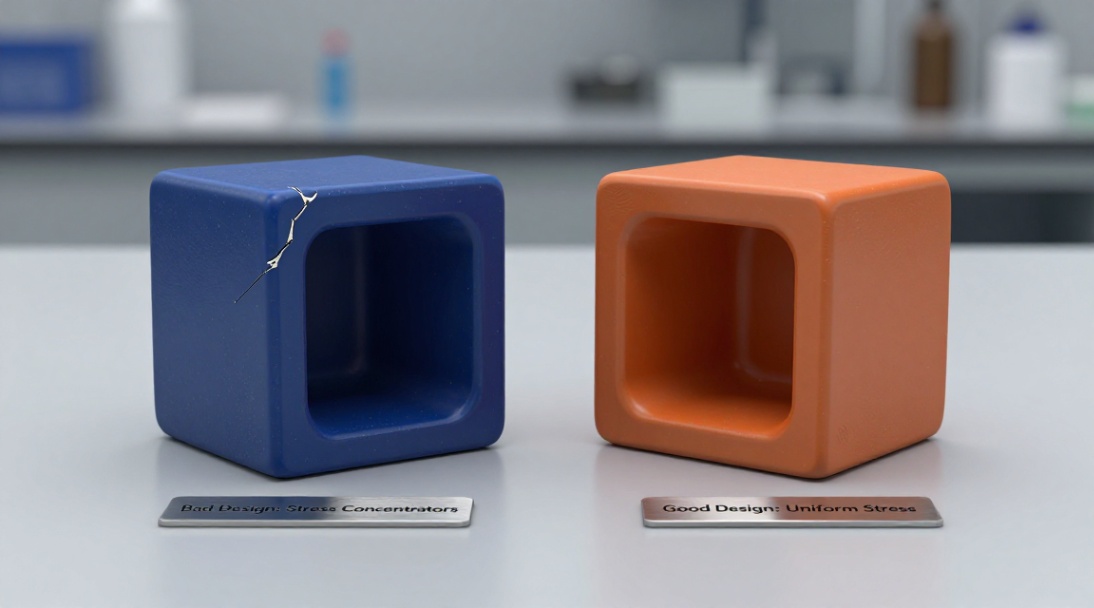
You cannot machine aluminum oxide ceramic like stainless steel. Its extreme hardness and brittleness demand diamond grinding and specific geometries. Sharp internal corners are stress concentrators-they will crack. Thin, unsupported sections will snap. I’ve reviewed countless failed parts where the design was simply copied from a metal component. It doesn’t work. The material dictates the design. You need generous radii, uniform wall thicknesses, and an understanding of how the ceramic will be ground. Furthermore, the as-sintered surface is not always the final answer. For tribological applications, the surface finish is critical. A poorly finished alumina seal will wear out its counterpart prematurely, despite the material’s inherent wear resistance. Precision here isn’t optional; it’s the defining factor between success and a box of expensive scrap.
Mistake 5: Assuming Perfect Chemical Inertness
Alumina’s chemical inertness is remarkable, but it has enemies. It laughs at most organic solvents and resists oxidation. However, hydrofluoric acid, phosphoric acid, and hot, concentrated caustics will attack it. In one documented failure, an alumina pump liner dissolved in a hot phosphate solution because the engineer assumed “ceramic = chemically inert.” For severely corrosive environments, boron carbide ceramic or reaction-sintered silicon carbide ceramics often provide broader resistance. You must know your chemical environment down to the ppm level and temperature. Don’t rely on brochure-level claims.
The Path Forward: Stop Experimenting
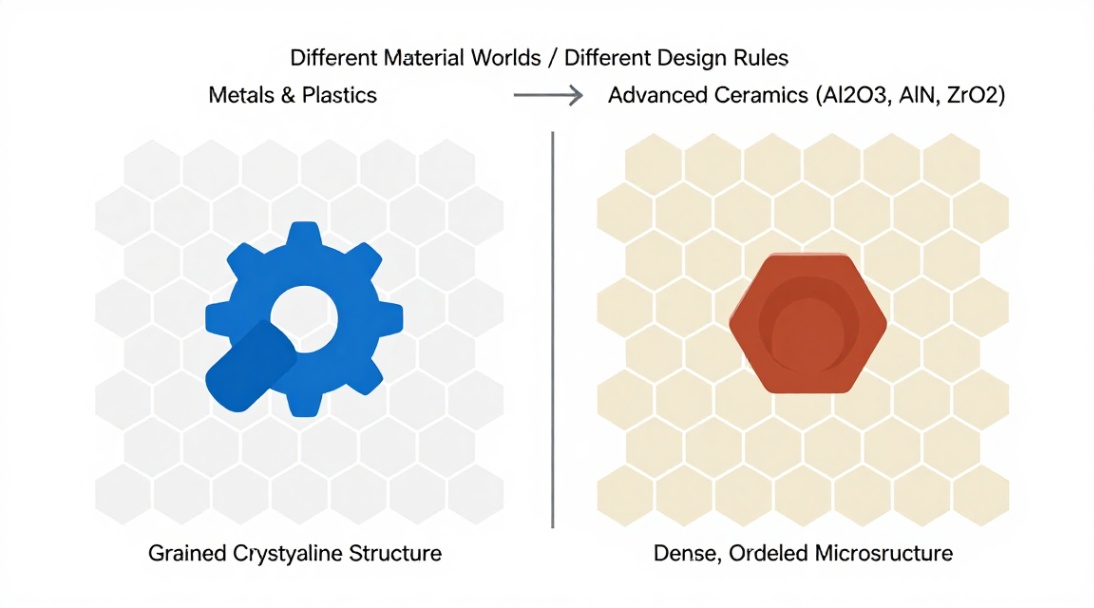
The era of trial-and-error with advanced ceramics is over. The risks are too high, the timelines too tight. The common thread in these failures is a knowledge gap. Engineers are experts in metals and plastics, but the powder processing and sintering world of ceramics like aluminium oxide, aluminum nitride ceramic, and zirconia follows different rules. You wouldn’t design a gearbox without understanding metallurgy. Don’t specify a ceramic component without understanding its world.
Your Next Step is Clear
This isn’t a theoretical discussion. Your project is on the line. The cost of failure isn’t just the part; it’s downtime, redesign cycles, and missed opportunities. You need a partner who speaks the language of grain boundaries and sintering profiles, not just a material supplier. You need someone who can look at your application and tell you, bluntly, if alumina is right or if you should consider pressureless sintered silicon carbide ceramics for better toughness. Stop guessing. Stop risking. Book a direct consultation with our ceramic engineering team now. Send us your drawings and operating parameters. We’ll conduct a no-obligation failure mode analysis and grade recommendation within 48 hours. Let our 20+ years of hard-won experience be your shortcut to success. Click here to start the conversation and secure your project’s foundation.
Suppiler
Synthetic-chemical focus on the research and development, production and sales of ceramic products, serving the electronics, ceramics, chemical and other industries. Since its establishment in 2015, the company has been committed to providing customers with the best products and services, and has become a leader in the industry through continuous technological innovation and strict quality management.
Our products includes but not limited to Aluminum Nitride, Aluminum Oxide, Boron Carbide, Boron Nitride, Ceramic Crucible, ect. If you are interested in any type of these, please feel free to contact us.