Next-Generation Ceramics: Unlocking Superior Properties for Industry

Aluminium Oxide Ceramic: A Deceptively Simple Powerhouse
A study published in the Journal of the American Ceramic Society found that nearly 40% of premature ceramic component failures are not due to material flaws, but to design and application errors. Aluminum oxide ceramic (Al2O3), or alumina, is the workhorse of the technical ceramics world. Its widespread availability and excellent properties make it a go-to choice. But this familiarity breeds costly complacency. I’ve spent decades helping engineers navigate these hidden traps. Let’s walk through the common mistakes so you can sidestep them completely.
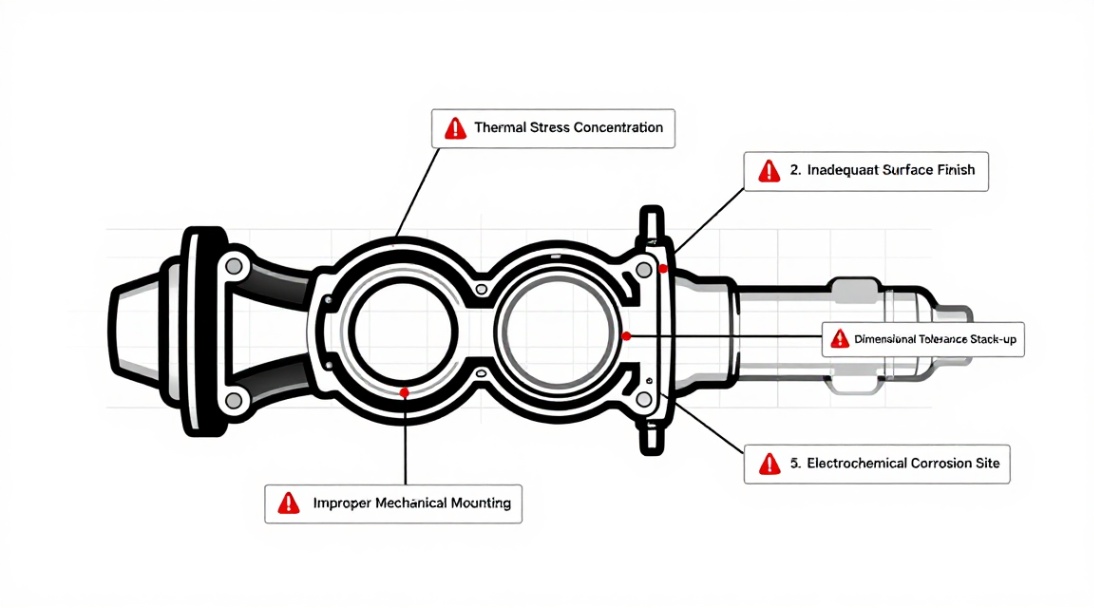
5 Alumina Pitfalls You Must Avoid
1. Ignoring Its True Nature: It’s a Ceramic, Not a Metal
This is the root of most failures. Designers treat alumina like a simple metal replacement. It’s not. Its fundamental behavior is different.
What Not to Do:
- Designing without stress concentrators in mind. Sharp corners and sudden section changes are catastrophic. Alumina has very low fracture toughness compared to metals like steel. A tiny flaw or stress point is a crack waiting to happen. Always use generous radii and smooth transitions.
- Assuming it handles tensile stress like compressive stress. Alumina is fantastic in compression, but weak in tension. Your component should ideally be in a state of compression. Avoid designs that put thin sections under direct tensile or bending loads.
- Forgetting about thermal expansion mismatches. When bonding or assembling alumina with metals, you must calculate the coefficient of thermal expansion (CTE). Steel’s CTE is roughly 7x higher than alumina’s. This mismatch creates enormous stress upon heating or cooling, leading to cracking. Always use compliant layers or specially designed metal-ceramic brazes.
2. Assuming ‘Alumina’ Means One Universal Material
Requesting just ‘aluminium oxide ceramic‘ is like asking for ‘steel.’ The details define success.
What Not to Do:
- Using 96% purity for high-wear seals or electrical insulators. The 4% glassy silicate phase in standard 96% alumina softens at high temperatures and degrades electrical properties. For superior wear above 800°C or high-frequency insulation, you need 99.5% or 99.8% purity grades.
- Choosing the wrong grade for machining. The fine-grained structure of high-purity alumina (99.5%+) makes it harder and more wear-resistant, but also significantly more difficult and expensive to machine. If you need complex geometries, discuss this with your ceramic supplier early. Sometimes a coarser 96% grade is the more practical choice.
- Overlooking specialty formulations. Manufacturers can tailor alumina with additives like chromium oxide (for wear), or zirconia (for toughness). Don’t assume the standard stock is your only option.
3. Underestimating Thermal Shock Limitations
While aluminum oxide ceramic boasts excellent high-temperature stability, its thermal shock resistance is moderate. It can’t handle rapid temperature swings like silicon nitride ceramic or silicon carbide ceramic.
What Not to Do:
- Quenching a hot alumina part. This is a guaranteed way to hear the ‘ping’ of failure. Always allow for slow, controlled cooling.
- Designing heating elements or furnace parts with uneven heat distribution. Hot spots create differential expansion, leading to stress cracks. Ensure uniform heating or consider a material with higher thermal conductivity like aluminum nitride ceramic for electronic applications.
4. Misapplying It in Extreme Chemical or Abrasive Environments
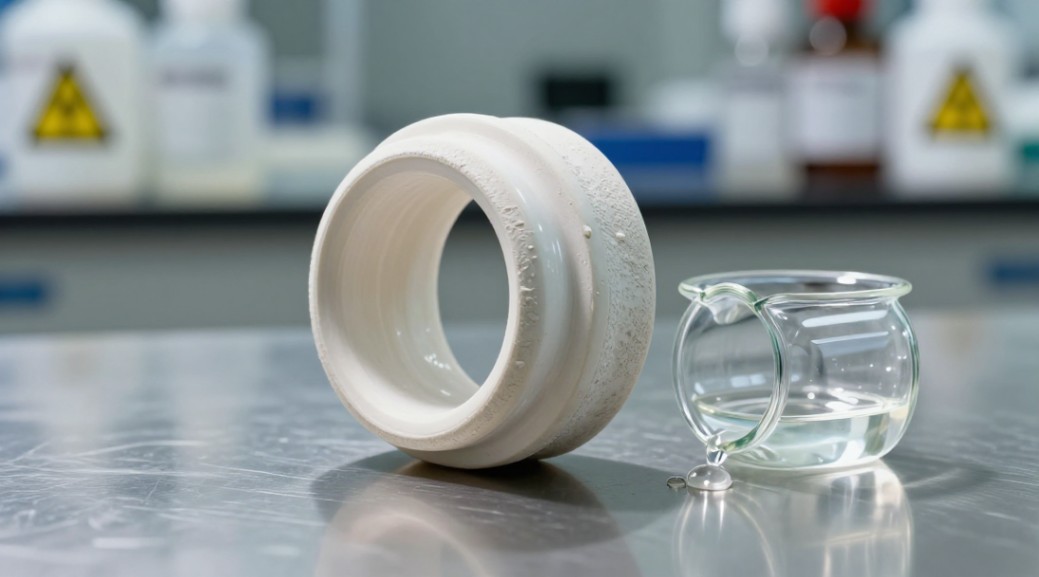
Alumina‘s chemical inertness and corrosion resistance are legendary, but they have limits.
What Not to Do:
- Using it with hot, concentrated hydrofluoric acid or phosphoric acid. These will attack and dissolve the alumina matrix. For such harsh chemistries, look to boron carbide ceramic or specialized coatings.
- Choosing it for ultra-high pressure sand slurry pumps. While good, alumina will wear faster than silicon carbide-bonded silicon nitride ceramics or boron carbide ceramic in these brutally abrasive conditions. Know the abrasion mechanism; for high-impact abrasion, tougher materials win.
- Using it in molten non-ferrous metal handling without a proper coating. Molten aluminum, for example, can wet and degrade alumina over time. For crucibles, a special coating for boron nitride ceramic crucibles is often a better solution for longevity.
5. Expecting Precision Without Proper Machining Protocols
You cannot machine alumina like brass. It requires diamond tooling and specific techniques.
What Not to Do:
- Using conventional metal-cutting tools. You will ruin the tools and the part. Diamond grinding wheels and drills are non-negotiable.
- Applying excessive pressure or feed rates. This generates heat and micro-cracks (subsurface damage) that weaken the part. Use high spindle speeds, light passes, and ample coolant.
- Neglecting post-machining inspection. Dye penetrant testing is essential for critical components to reveal any machining-induced cracks before they cause in-service failure.
Your Path to Success with Alumina
So, what should you do? My advice is simple: treat your ceramic supplier as a design partner from day one. Bring them your application’s full story: the loads, the temperatures, the chemicals, the mating materials, and the required tolerances. Let them guide you on the optimal purity, grade, and manufacturing process-whether it’s dry pressing, isostatic pressing, or injection molding.
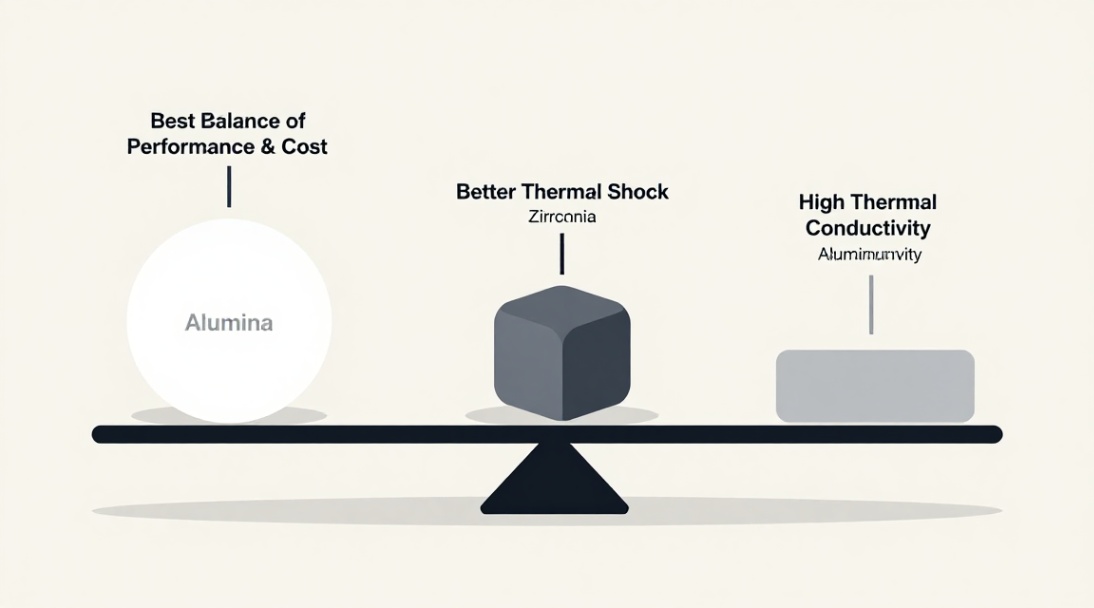
Compare aluminum oxide ceramic honestly against its peers. Need higher toughness? Zirconia might be better. Need better thermal shock? Look at silicon nitride. Need higher thermal conductivity? Aluminum nitride is king for electronics. Alumina is often the best balance of performance and cost, but it’s not always the singular answer.
By understanding these common traps, you move from hoping your design works to knowing it will. You leverage alumina’s true strengths-its exceptional hardness, electrical insulation, and chemical stability-while designing around its inherent ceramic limitations. That’s the mark of an expert designer.
Suppiler
Synthetic-chemical focus on the research and development, production and sales of ceramic products, serving the electronics, ceramics, chemical and other industries. Since its establishment in 2015, the company has been committed to providing customers with the best products and services, and has become a leader in the industry through continuous technological innovation and strict quality management.
Our products includes but not limited to Aluminum Nitride, Aluminum Oxide, Boron Carbide, Boron Nitride, Ceramic Crucible, ect. If you are interested in any type of these, please feel free to contact us.