Next-Generation Ceramics: Unlocking Superior Properties for Industry

Let me tell you about John. He’s a sharp engineer, and his team was designing a new high-temperature sensor housing. They needed electrical insulation, chemical resistance, and thermal stability. ‘Alumina!’ they said, almost in unison, reaching for their standard spec sheets for aluminum oxide ceramic. It seemed perfect. They designed it like metal, specified tight tolerances, and pushed it into production. The first prototype shattered during a routine thermal cycle test. Not a crack. A catastrophic failure. The project was delayed by months, and the budget bled. John’s story isn’t unique. I’ve seen it play out for twenty years. The truth is, aluminium oxide ceramic is a phenomenal material, but treating it like any other engineering component is the single biggest mistake you can make. Today, I want to walk you through the unspoken realities, the warnings we old-timers share over coffee, so you can leverage its brilliance without falling into the traps.
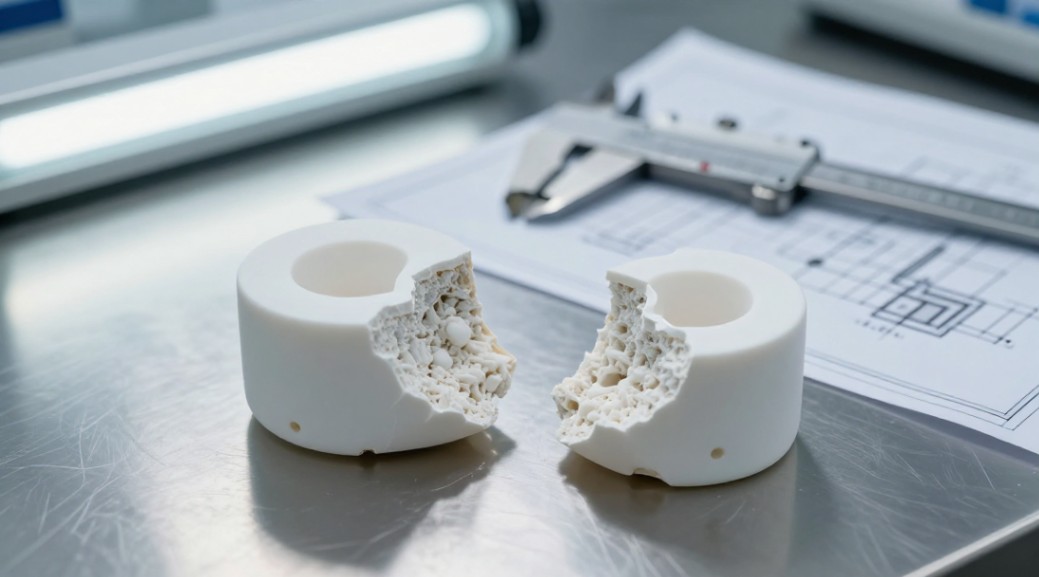
So, what is this material we’re talking about? At its core, aluminum oxide ceramic, or alumina (Al₂O₃), is a workhorse. It’s not the exotic newcomer on the block. Think of it as the reliable, steadfast foundation of the advanced ceramics world. Its properties are what make it so tempting and, simultaneously, so unforgiving if misapplied. We prize it for near-total electrical insulation, even at temperatures that would make most plastics vaporize. We rely on its exceptional hardness, second only to diamonds and a few materials like boron carbide ceramic, to create components that can abrade steel without wearing down themselves. Its chemical inertness means it laughs at harsh acids and caustic environments where metals corrode in days. And yes, its biocompatibility makes it a trusted name in medical implants, sitting silently in the human body for decades. But here is the first critical warning: do not let this impressive list of virtues blind you to its one defining flaw. It is brittle.
That brittleness is not a footnote. It is the headline. This is where I see the most expensive errors. You must never, ever design an alumina component as a direct replacement for a metal part without a complete redesign. Metal yields. Metal bends. Aluminum oxide ceramic does not. It stores stress like a coiled spring and releases it as a fracture. Sharp corners are stress concentrators-they are failure points waiting to happen. Always radius every edge. Avoid sudden changes in cross-section. Understand the load paths. This material demands respect for its mechanical personality. And then there’s machining. Once fired and sintered, alumina is harder than most tool steels. Machining challenges are severe. Diamond grinding is often the only option. If your design calls for complex, as-fired geometries, you must work closely with your ceramic supplier from the very first sketch. Trying to ‘machine it to fit’ later is a path to heartbreak and a pile of expensive scrap.
Choosing the Right Ally in a Crowded Field
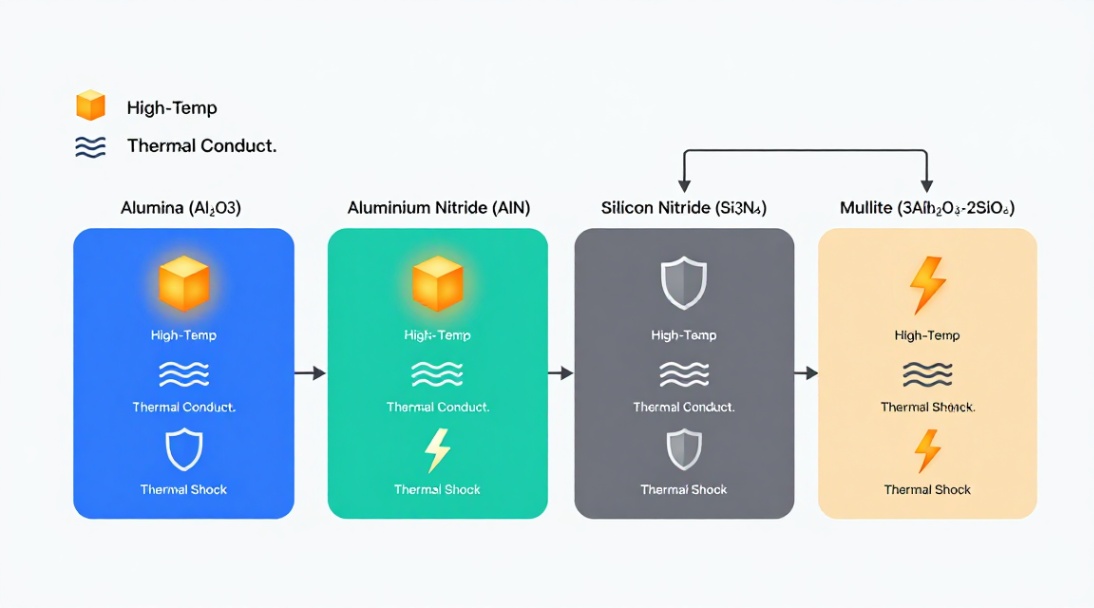
This brings me to another common pitfall: material selection in a vacuum. Alumina is not always the answer. The world of advanced ceramics is rich with specialists. Let’s talk about heat. Alumina handles high temperatures well, but if supreme thermal conductivity is your goal for a heat sink, you should be looking at aluminium nitride ceramic. For the ultimate in thermal shock resistance, where a part must survive rapid temperature swings from a furnace to a cold bench, silicon nitride ceramic or mullite ceramic might be your champion. Need extreme lightweight armor or abrasion resistance beyond alumina? Silicon carbide ceramic, in its various forms like reaction-sintered silicon carbide ceramics or pressureless sintered silicon carbide ceramics, enters the conversation. Even within the alumina family, you must choose wisely. A 99.5% pure grade offers superior properties but at a higher cost and with greater difficulty in sintering. A 96% alumina might be the perfect, more economical balance for a wear plate. The mistake is assuming ‘alumina’ is a single, universal solution.
The Silent Guardian: Where Alumina Truly Shines
When you do match it correctly to its mission, aluminum oxide ceramic performs like a silent, immortal guardian. In electronics, as a substrate, it provides the flawless, inert, and insulating stage upon which miniature circuits perform. In chemical processing, as a pump seal or valve component, it outlasts everything else, impervious to corrosion. In textiles, as a thread guide, it wears down the steel wire that runs over it. Its role in medicine is profound and personal-hip joint sockets, dental roots, bone spacers-all relying on its benign interaction with the body. These applications succeed because the designers understood the rules. They embraced its limitations and designed for its strengths. They didn’t fight its nature; they partnered with it.
Looking Ahead and Moving Forward Safely
The future is exciting. Research pushes the boundaries, like exploring ultra-high-temperature ceramics beyond 3000°C, but alumina’s position is secure. Innovations often come in the form of composites or tailored microstructures, tweaking its properties for specific fights. But the fundamental rules remain. So, what should you do? First, respect the material. Engage with it early. If you’re considering aluminum oxide ceramic for a component, start by asking about thermal expansion, stress points, and how it will be fabricated. Second, consult. Talk to an applications engineer who has seen a hundred failures and a thousand successes. Their insight is priceless. For some applications, especially where extreme thermal management or abrasion is the primary foe, exploring other materials like silicon carbide ceramic or even specialized tools like a special coating for boron nitride ceramic crucibles might be the smarter path. The goal isn’t to use alumina. The goal is to solve your problem reliably and elegantly. Let alumina be one of your trusted tools, not a source of unexpected failure. Design with its voice in mind, and it will serve you faithfully for a lifetime.
Suppiler
Synthetic-chemical focus on the research and development, production and sales of ceramic products, serving the electronics, ceramics, chemical and other industries. Since its establishment in 2015, the company has been committed to providing customers with the best products and services, and has become a leader in the industry through continuous technological innovation and strict quality management.
Our products includes but not limited to Aluminum Nitride, Aluminum Oxide, Boron Carbide, Boron Nitride, Ceramic Crucible, ect. If you are interested in any type of these, please feel free to contact us.