Next-Generation Ceramics: Unlocking Superior Properties for Industry

A Story from the Machine Shop
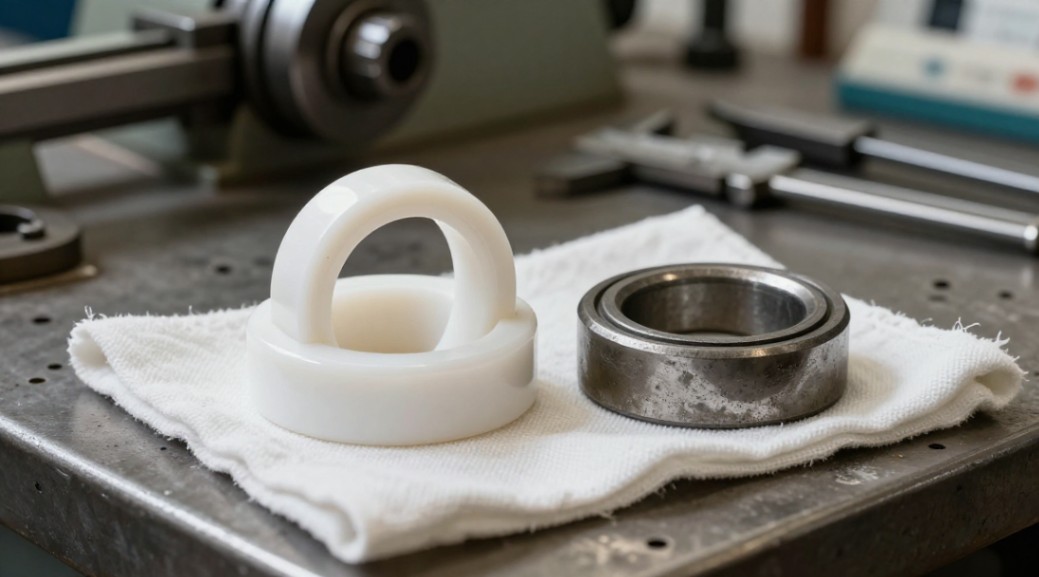
Early in my career, a client brought us a worn steel pump seal. They needed something that could handle a 24/7 slurry flow at 80°C. The abrasive particles were sandblasting the steel component into obsolescence every six weeks, causing costly downtime. Our team proposed a simple, cost-effective solution: a replacement seal made from 99.5% aluminum oxide ceramic. The client was skeptical-could a brittle ceramic really outperform steel? We installed it. Twelve months later, that same aluminum oxide ceramic seal remained in service with negligible wear. It wasn’t magic. It was a fundamental understanding of material properties applied to a real-world problem.
What Is Aluminium Oxide Ceramic? (Al2O3)
Alumina, or aluminum oxide ceramic (Al2O3), is a sintered polycrystalline material. It’s the most widely used technical ceramic. Its dominance stems from an excellent balance of high hardness, superb wear resistance, strong chemical inertness, and exceptional electrical insulation, all at a relatively accessible cost. While other ceramics like silicon carbide ceramic or zirconia may surpass it in specific metrics like thermal conductivity or fracture toughness, alumina’s reliable all-around performance makes it the default engineering choice for countless applications.
Core Properties: Why Alumina Works
Your design choices hinge on material data. For alumina, focus on these three pillars:
- Extreme Hardness & Wear Resistance: With a Vickers hardness typically between 1500-2000 HV, alumina outwears most metals by orders of magnitude. It resists abrasion from powders, fibers, and slurries. This is its primary calling card for industrial wear parts.
- Superior Electrical Insulation: Even at high temperatures, alumina maintains high resistivity and dielectric strength. This makes it the standard substrate for thick and thin film circuits, spark plug insulators, and high-voltage feedthroughs.
- Chemical & Thermal Stability: It is insoluble in water and highly resistant to attack by most acids, alkalis, and molten metals. Its melting point is 2054°C, allowing continuous use up to 1600°C in oxidizing atmospheres.
Grades and Manufacturing: Choosing the Right Alumina
Not all alumina is the same. Purity and process define its capabilities. The two most common grades are 96% and 99.5% (or 99.8%) alumina. The remaining percentage is typically a silica-based glassy phase that aids sintering. Higher purity (99.5%+) offers better chemical resistance, higher operating temperature, and superior electrical properties, but is slightly more difficult to machine. Manufacturing methods include:
- Dry Pressing: Cost-effective for high-volume, simple shapes like tiles or substrate blanks.
- Isostatic Pressing: Applies uniform pressure from all sides, producing components with highly consistent density and isotropic properties-critical for complex or high-reliability parts.
- Injection Molding: Enables intricate, net-shape geometries at high volumes, though with higher initial tooling costs.
Step-by-Step: How to Successfully Implement an Alumina Component
Failure often stems from treating ceramics like metals. Follow this process.
1. Define the Failure Mode and Environment
Is the part failing from abrasion, corrosion, thermal shock, or electrical breakdown? Quantify the environment: temperature cycles, chemical exposure, load type (impact vs. constant), and required surface finish. For example, in a corrosive high-temperature environment, 99.5% alumina may be mandated over the 96% grade.
2. Design for Ceramics, Not Metal
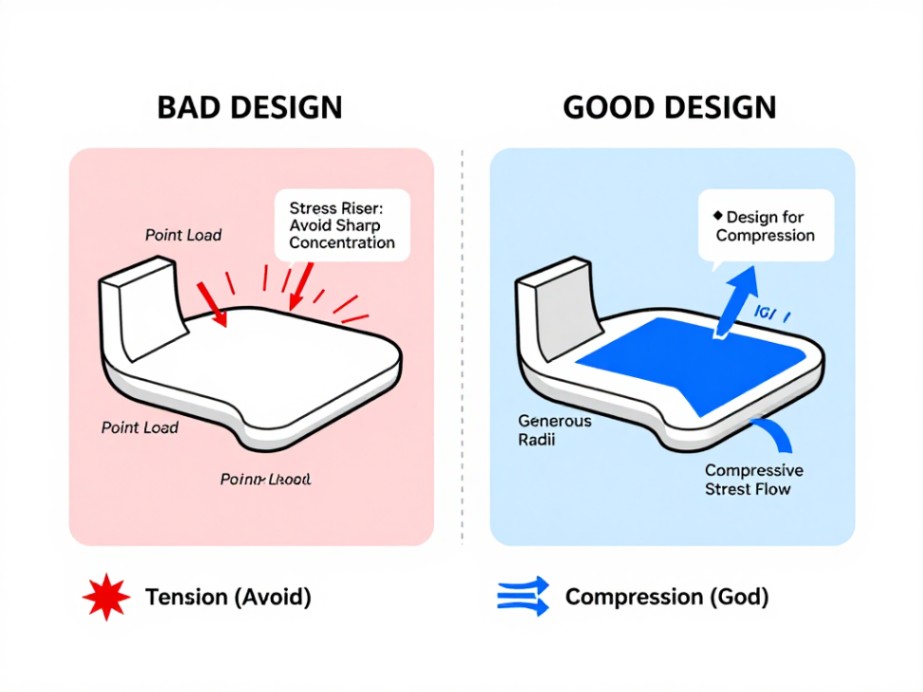
This is the most critical step. Aluminum oxide ceramic has high compressive strength but low tensile strength. Avoid sharp corners; use generous radii. Design to put the material into compression, not tension. Account for its brittleness-avoid point loads and use compliant mounting where possible. Tolerances should be as generous as function allows; achieving ±0.0005″ is possible but expensive.
3. Select the Appropriate Fabrication Route
Match the process to your quantity, complexity, and property needs. For a simple wear plate in low volume, start with a fully dense blank from isostatic pressing and then machine it. For 10,000 identical sensor housings, injection molding becomes economical. Discuss with your ceramic supplier early.
4. Understand and Specify Machining Requirements
Alumina is machined in the sintered, “green,” or “bisque” state. Sintered alumina requires diamond grinding. It is a slow, precise process. Specify the critical dimensions and surface finishes. A Ra of 4 microinches is standard for sealing surfaces; finer finishes are possible but cost more. Be aware that machined edges will have a slight chamfer. Many users on engineering forums like Reddit emphasise the need for clear, prioritized drawing callouts: “Dimension A is critical; Dimension B is for reference.” This directs the machinist’s effort.
5. Conduct Validation and Installation
Inspect first articles rigorously. Use a go/no-go gauge for critical bores. During installation, ensure all mounting surfaces are clean, flat, and free of debris. Use even torque on fasteners, preferably with a soft interface material like an annealed copper washer to distribute load. Never force-fit an alumina part.
Alumina vs. Other Engineering Materials
Alumina is not a universal replacement. Compare it dispassionately:
- Vs. Metals (Steel, Tungsten Carbide): Alumina wins on wear, corrosion, and high-temperature oxidation. It loses on toughness, impact resistance, and machinability. For pure abrasion without heavy impact, alumina is superior.
- Vs. Polymers (UHMwPE, PEEK): Alumina offers far higher temperature capability, hardness, and rigidity. Polymers excel in applications requiring flexibility, very low friction, or resistance to galling.
- Vs. Other Advanced Ceramics: Silicon nitride ceramic offers better thermal shock resistance and fracture toughness for bearings. Boron nitride ceramic is an excellent, machinable thermal conductor but soft. Silicon carbide ceramic has higher thermal conductivity and strength at very high temperatures but is more expensive. Zirconia is much tougher but softer and suffers from aging at certain temperatures.
Looking Forward: The Evolution of Alumina
Research continues to push boundaries. Composite forms, like alumina-titanium carbide (Al2O3-TiC), are standard for high-performance cutting tools. The field of ultra-high temperature ceramics (UHTCs) explores materials beyond 3000°C, but the fundamental principles of aluminum oxide ceramic-reliability, manufacturability, and cost-effectiveness-remain its enduring strength. Future advancements in areas like additive manufacturing and special coatings will further expand its capabilities, allowing for even more complex geometries and surface functionalities.
Your Next Step
Theoretical knowledge only goes so far. The best way to evaluate aluminium oxide ceramic for your application is with a tangible test. Partner with a reputable ceramic manufacturer who offers prototyping services. Provide them with your detailed operating environment and a drawing. Request a first article for functional testing under real, or simulated, conditions. This empirical approach, guided by the steps above, will definitively show if alumina is the robust, long-lasting solution your design requires.
Suppiler
Synthetic-chemical focus on the research and development, production and sales of ceramic products, serving the electronics, ceramics, chemical and other industries. Since its establishment in 2015, the company has been committed to providing customers with the best products and services, and has become a leader in the industry through continuous technological innovation and strict quality management.
Our products includes but not limited to Aluminum Nitride, Aluminum Oxide, Boron Carbide, Boron Nitride, Ceramic Crucible, ect. If you are interested in any type of these, please feel free to contact us.