Next-Generation Ceramics: Unlocking Superior Properties for Industry

The Surprising Data Point That Defines Modern Engineering
Did you know that over 80% of the world’s engineering ceramics used for wear resistance and insulation are aluminum oxide ceramic? Not silicon carbide or zirconia. This one material, commonly called alumina, forms the silent backbone of countless high-stakes applications. Its success hinges on a rare combination of properties available at a specific cost point. Let’s break down exactly why this workhorse material remains irreplaceable.
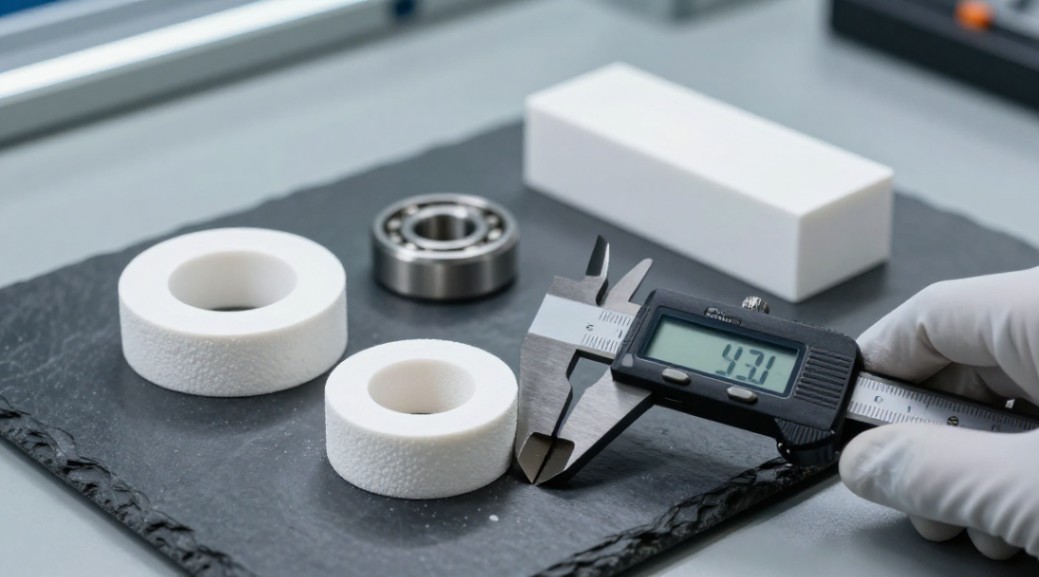
1. Demystifying Aluminum Oxide Ceramic: More Than Just a Hard White Material
At its core, aluminum oxide ceramic is a crystalline structure made by firing alumina powder at extreme temperatures. Its composition purity, typically ranging from 88% to over 99.9%, dictates its final performance. Think of it like a recipe: small changes in ingredients create vastly different results.
Core Properties and Their Real-World Impact
- Exceptional Hardness & Wear Resistance: Near that of diamond, alumina resists abrasion from particles, slurries, and friction. This makes it last for years where metals would fail in months.
- High Electrical Resistivity: It’s an excellent insulator, even at elevated temperatures. This property is non-negotiable for substrates and housings in electronics.
- Superior Chemical Inertness: It laughs at acids, alkalis, and molten metals. You can use an alumina crucible where a quartz ceramic or boron nitride crucible might degrade.
- Good Compressive Strength: It withstands immense crushing loads, perfect for heavy-duty bearings and seals.
- Moderate Thermal Conductivity: This is key. Unlike aluminum nitride ceramic, which excels at moving heat, alumina manages heat flow reliably without being a thermal short-circuit.
2. Where Logic Places Alumina: Its Dominant Applications
Material selection is a logical puzzle. Designers choose aluminum oxide ceramic not because it’s perfect, but because its balance solves their specific equation best.
Unrivaled in Wear and Abrasion
No other ceramic offers this hardness at this price. Applications are everywhere.
- Cutting Tools & Inserts: For machining cast iron and superalloys, alumina-based tools provide long life and high-speed capability.
- Seals, Bearings, and Liners: In pumps handling corrosive slurries or equipment in dusty environments, alumina components outlast steel tenfold.
- Textile Guides: High-speed fibers slide over alumina without wearing it down, preventing contamination.
The Heart of Electrical and Electronic Systems
Its insulating properties are legendary.
- Substrates & Packages for Microelectronics: The smooth, stable platform for semiconductor chips and circuits. Mullite ceramic is an alternative, but alumina is the standard.
- High-Voltage Insulators: From spark plugs to power transmission systems, it withstands electrical stress and arcing.
- Sensor Sheaths and Thermowells: Protects sensitive probes in harsh chemical and high-temperature processes.
A Trusted Partner in Biomedicine
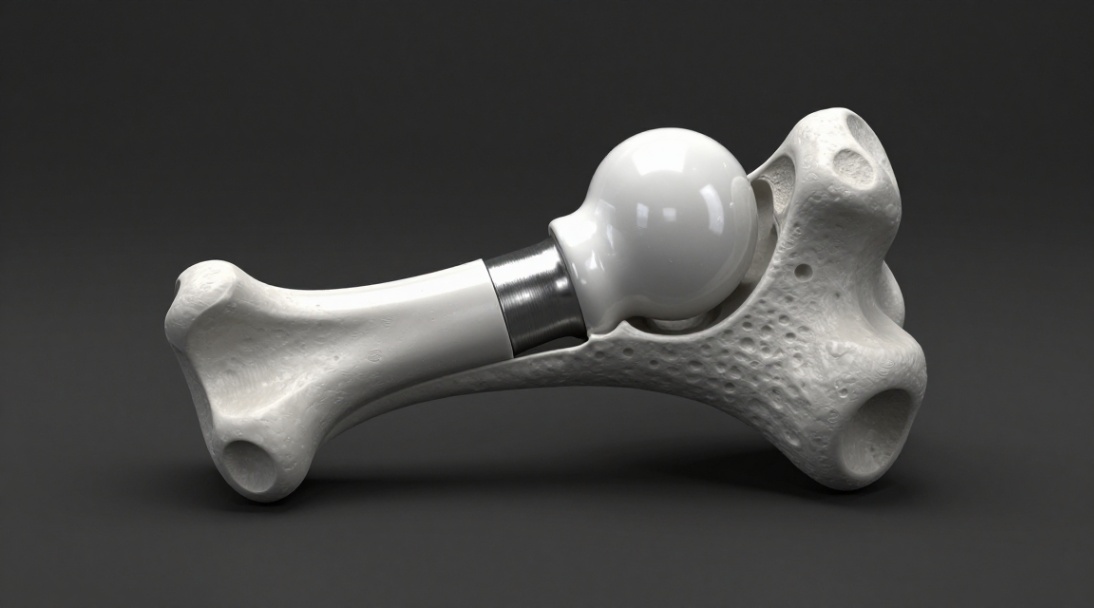
Its biocompatibility is proven. Alumina implants integrate with bone without causing adverse reactions, making it the material of choice for hip joint ball heads and dental implants where longevity is critical.
3. The Manufacturing Journey: From Powder to Precision Part
Performance is forged in the process. The dominant method is sintering.
- Powder Preparation: High-purity alumina powder is mixed with binders and formed. This can be through dry pressing, injection molding, or tape casting.
- Green Machining: The soft “green” body is machined to a near-net shape.
- Sintering: Parts are fired at 1600°C+. Particles fuse, the part shrinks predictably, and the dense, strong ceramic emerges.
- Finishing: Achieving final tolerances requires diamond grinding, lapping, or polishing. This step is costly but essential for precision.
4. The Logic of Choice: Alumina vs. Other Engineering Ceramics
Selection always involves trade-offs. Let’s reason through the alternatives.
- vs. Zirconia (ZrO2): Zirconia is tougher and stronger, but less hard and more expensive. Choose zirconia for components needing impact resistance (like scissors). Choose alumina for supreme wear and electrical needs.
- vs. Silicon Carbide (SiC): Silicon carbide ceramic has much higher thermal conductivity and excels in extreme temperature strength. Use SiC for advanced heat exchangers or armor plates. Use alumina where electrical insulation is paramount.
- vs. Silicon Nitride (Si3N4): Silicon nitride ceramic offers superb thermal shock resistance and fracture toughness. It’s ideal for high-performance bearings. Alumina wins on cost and availability for standard-duty roles.
- vs. Boron Nitride (BN): Boron nitride ceramic is a soft, machinable insulator with excellent thermal conductivity. It’s the specialist choice for non-wetting applications, often requiring a special coating for boron nitride ceramic crucibles. Alumina is your general-purpose, rugged workhorse.
5. Navigating Limitations: When Not to Choose Alumina
Honest evaluation prevents failure. Recognize its boundaries.
- Low Fracture Toughness: It can be brittle. Avoid it in applications with high tensile stress or severe impact loading unless expertly designed.
- Moderate Thermal Shock Resistance: Sudden, extreme temperature changes can cause cracking. Materials like silicon nitride or reaction-sintered silicon carbide ceramics handle this better.
- High Hardness = Machining Cost: Once sintered, you cannot machine it with conventional tools. All secondary processing requires diamond abrasives, adding cost. Design for near-net shape.
6. The Future: Smarter, Stronger, More Integrated
The evolution of aluminum oxide ceramic isn’t about reinventing it. It’s about refinement and integration.
- Nano-Structured Grades: Finer grain structures push strength and wear resistance even higher, competing with premium ceramics.
- Advanced Composites: Reinforcing alumina with other phases, like the concept behind silicon carbide-bonded silicon nitride ceramics, creates hybrids with tailored properties.
- Additive Manufacturing (3D Printing): Printing complex alumina geometries directly from CAD data is becoming viable, opening doors to previously impossible designs.
- Functional Surface Engineering: Applying tailored coatings or textures to alumina substrates will create multifunctional components—wear-resistant, insulating, and perhaps catalytic.
Your Next Logical Step
Understanding aluminum oxide ceramic gives you a powerful tool for solving engineering challenges. The key is to match its logical strengths to your specific need. If your project demands a hard, chemically inert, electrically insulating material that provides outstanding value, alumina is likely your answer. For applications needing extreme thermal management, consider exploring aluminum nitride ceramic. For the ultimate in wear and thermal conductivity under stress, look at pressureless sintered silicon carbide ceramics. Your material choice is the foundation of your design’s success.
Suppiler
Synthetic-chemical focus on the research and development, production and sales of ceramic products, serving the electronics, ceramics, chemical and other industries. Since its establishment in 2015, the company has been committed to providing customers with the best products and services, and has become a leader in the industry through continuous technological innovation and strict quality management.
Our products includes but not limited to Aluminum Nitride, Aluminum Oxide, Boron Carbide, Boron Nitride, Ceramic Crucible, ect. If you are interested in any type of these, please feel free to contact us.