Next-Generation Ceramics: Unlocking Superior Properties for Industry

The Night the Machining Line Stopped
I remember standing on a factory floor back in ’98. The line was down. A critical seal for a slurry pump had failed. In three hours. The previous part, a ‘hardened’ steel ring, looked like a melted glacier. The plant manager, a man named Frank, turned to me and asked, “What else is there?”. That moment was my first deep dive into the world of aluminum oxide ceramic. For Frank, it wasn’t an academic question. It was a choice that would save his quarter.
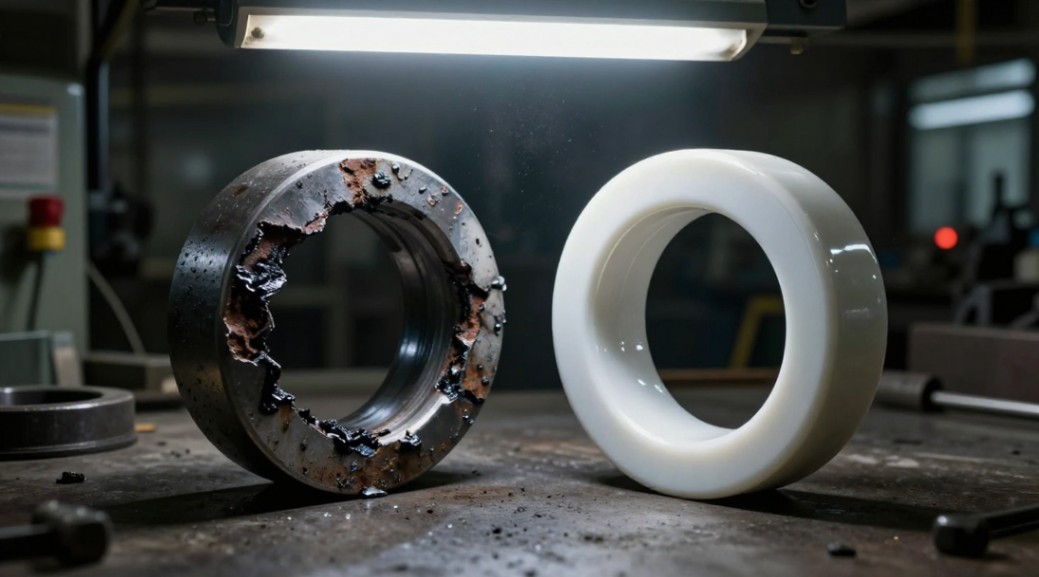
That day, we didn’t just pick a material. We picked a strategy. We picked a trade-off. Choosing the right engineered ceramic feels similar for many of you today. Is aluminum oxide ceramic the workhorse you need, or do you require the exotic toughness of something else? Let me guide you through that decision. We’ll look at the hard data and my decades of field experience.
1. The Alpha and the Omega: Understanding Alpha-Alumina (α-Al2O3)
Let’s get the science out of the way first. It’s simple. Aluminum oxide ceramic, in its most useful engineering form, is alpha-alumina. Picture a hexagonal crystal structure. It’s tight. It’s dense. Oxygen ions are packed together with aluminum ions filling the gaps. This arrangement is the source of its strength.
This crystal structure is why alumina is so incredibly hard. We’re talking 9 on the Mohs scale. Diamond is a 10. Nothing else comes close for a production-grade material. This translates directly to extreme wear resistance. For cutting tools and abrasives, it’s a top-tier choice.
1.1. The Raw Numbers You Need to Know
Here is a quick snapshot of the benchmark properties for a high-purity (99.5%+) aluminum oxide ceramic.
- Hardness: 1800-2000 Knoop (kg/mm²). It resists scratches and wear like few others.
- Melting Point: 2072°C (3762°F). Thermal stability is its middle name.
- Compressive Strength: 2000-4000 MPa. It can handle massive loads before crushing.
- Electrical Resistivity: >10^14 ohm-cm at room temperature. A stellar electrical insulator.
2. Alumina vs. The Challengers: Where It Wins and Where It Loses
You don’t make a choice based on one property. You balance a portfolio. Let’s stack aluminum oxide ceramic against its main rivals. These are the matchups I see every day.
2.1. Aluminum Oxide vs. Zirconia (ZrO2)
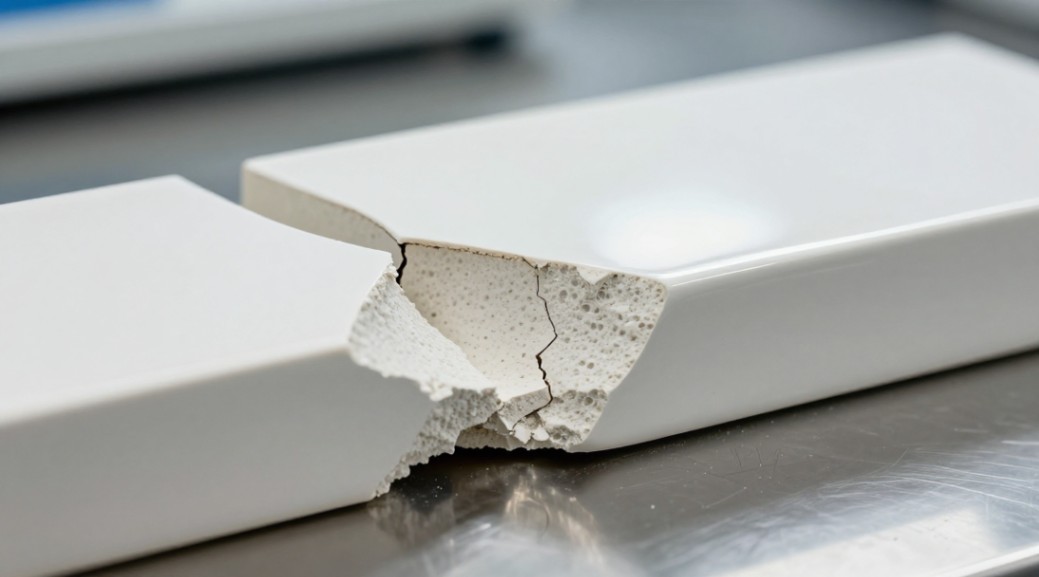
Zirconia gets a lot of hype. And rightly so. It has higher fracture toughness. Drop a zirconia part, and it might survive. Drop an alumina part, and it likely shatters. That is the primary trade-off.
Winner (Toughness): Zirconia. Winner (Hardness & Cost): Alumina. My Advice: For hip joint bearings, the biocompatibility of both is excellent. But for cost-sensitive wear parts that don’t face impact loads? Stick with alumina. It’s significantly cheaper.
2.2. Aluminum Oxide vs. Silicon Carbide (SiC)
This is a classic battle. Silicon carbide ceramic is harder. It also has much higher thermal conductivity. If you need to shed heat fast, SiC is your answer.
Winner (Thermal Conductivity & Hardness): Silicon Carbide. Winner (Cost & Manufacturing Ease): Alumina. My Advice: For mechanical seals in a pump handling hot acids, I have seen reaction-sintered silicon carbide ceramics outperform almost everything. But for a lower-temperature, general-purpose wear liner? Save your money. Alumina does the job.
2.3. Aluminum Oxide vs. Silicon Nitride (Si3N4)
Silicon nitride ceramic is a special material. It has an incredible combination of fracture toughness and thermal shock resistance. It can survive a red-hot quench into cold water.
Winner (Thermal Shock & Toughness): Silicon Nitride. Winner (Raw Cost & Availability): Alumina. My Advice: If your process involves rapid temperature cycling, look at silicon carbide-bonded silicon nitride ceramics or monolithic Si3N4. For steady-state operations up to 1600°C, alumina is your reliable workhorse.
2.4. Quick Look at Other Contenders
Some other materials appear in specific niches. Aluminum nitride ceramic is a specialist for electronics due to its high thermal conductivity and electrical insulation. Boron carbide ceramic is extremely hard and light, used in ballistic armor. Boron nitride ceramic is soft and machinable, often used in high-temperature crucible applications, and you might need a special coating for boron nitride ceramic crucibles to extend their life. Mullite ceramic and quartz ceramic offer good thermal shock resistance at a lower cost but lack the extreme hardness of alumina.
3. The Real-World Strengths (and One Big Weakness) of Alumina
Let’s talk about what I love about aluminum oxide ceramic.
3.1. The Thermal Guardian
That 2072°C melting point is not just a number. In refractory linings for furnaces, alumina stands guard. It doesn’t soften. It doesn’t react easily. It keeps the heat where it belongs.
3.2. The Electrical Sentinel
From spark plugs to electronic substrates, alumina is the insulator of choice. It keeps the current where it needs to go. It’s reliable. It’s predictable.
3.3. The Chemical Shield
Corrosion resistance is a massive plus. Alumina shrugs off most acids and alkalis. It doesn’t rust. It doesn’t oxidize further. In aggressive chemical environments, it outlasts metals by years.
3.4. The Cost-Effective Champion
This is the biggest point for most buyers. Aluminum oxide ceramic is the cheapest advanced ceramic. It is often an order of magnitude less expensive than silicon nitride ceramic or zirconia. That cost-effectiveness makes it the default solution for 80% of engineering problems.
4. The Manufacturing Process: How We Make It
Making a perfect alumina part is an art. You have several paths.
- Sintering: Press a powder into a shape, then heat it. The particles fuse. Simple, effective, and cost-efficient for high volumes.
- Hot Pressing: Apply heat and pressure simultaneously. This makes a denser, stronger part. It costs more. It is used for demanding applications.
- Injection Molding: Mix the ceramic powder with a plastic binder. Inject it into a mold. Burn out the binder. Sinter the ceramic. This is brilliant for complex shapes like small bushings or threaded components.
Pressureless sintered silicon carbide ceramics and recrystallized silicon carbide ceramics use similar thermal processes but exploit the unique properties of silicon carbide.
5. The Elephant in the Room: Machining Alumina
There is a catch. One big one. Machining aluminum oxide ceramic is incredibly difficult. Its extreme hardness is a double-edged sword. You cannot just slap it on a lathe with a steel tool. You need diamond grinding wheels. You need diamond drills. This adds cost. It adds lead time.
The lesson is simple: design your part to be ‘net shape’ or ‘near net shape’ from the mold. Avoid secondary machining. Your wallet will thank you.
6. Your Decision Framework: A Simple Test
Here is how I tell my clients to decide. Ask these three questions.
- Do I need extreme toughness or thermal shock resistance? If yes, look at zirconia or silicon nitride. If no, proceed.
- Do I need the absolute highest hardness or thermal conductivity? If yes, look at silicon carbide. If no, proceed.
- If you answered no to both above, then use aluminum oxide ceramic. It is the most cost-effective, reliable, and proven solution.
7. Getting Started: A Soft Guide to Your Next Step
I see you at this crossroads. You have the data. You have the framework. Now comes the easy part.
For a typical industrial application, I recommend starting with a 94% or 96% aluminum oxide ceramic. It has an excellent balance of properties and cost. If you need higher purity for electrical or chemical applications, go up to 99.5% or 99.9%.
Before you finalize your material, source a sample from a reputable supplier. Test it in your actual environment. Let the data confirm the theory. Many specialty ceramic fabricators offer prototype services. Take advantage of that. It is a small investment to ensure you are on the right path.
You have the knowledge now. I have no doubt you will make the right choice for your project. Trust the science. Trust the testing. And don’t be afraid to lean on the tried-and-true strengths of a classic material.
Suppiler
Synthetic-chemical focus on the research and development, production and sales of ceramic products, serving the electronics, ceramics, chemical and other industries. Since its establishment in 2015, the company has been committed to providing customers with the best products and services, and has become a leader in the industry through continuous technological innovation and strict quality management.
Our products includes but not limited to Aluminum Nitride, Aluminum Oxide, Boron Carbide, Boron Nitride, Ceramic Crucible, ect. If you are interested in any type of these, please feel free to contact us.