Next-Generation Ceramics: Unlocking Superior Properties for Industry

Have you ever faced an equipment failure where a critical component simply wore away to nothing, not from impact, but from the relentless, quiet abrasion of fine powders? Have you dealt with an electrical short in a high-power device, traced back to an insulator that failed under thermal stress? Perhaps you’ve watched a prototype metal part degrade rapidly in a corrosive chemical bath, forcing a complete redesign. These are the silent, costly failures that halt production lines, compromise medical devices, and derail R&D timelines. The common thread is a material reaching its operational limit. Often, the root cause isn’t a lack of strength or design ingenuity, but a fundamental mismatch between the material selected and the invisible, harsh realities of its operating environment. It’s in these demanding scenarios that a deep, rational understanding of aluminium oxide ceramic, or alumina, transitions from academic knowledge to a critical engineering imperative.
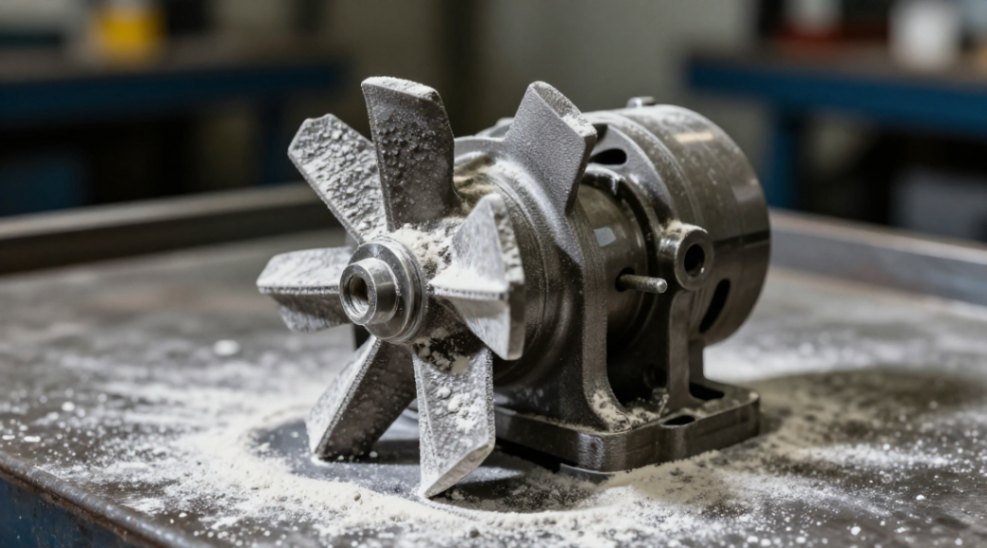
The logic for alumina’s dominance begins with its atomic architecture. At its core, aluminum oxide ceramic is a compound of aluminum and oxygen (Al₂O₃) bonded ionically and covalently into a dense, stable crystal lattice. This structure begets its defining trilogy of properties: exceptional hardness, superb electrical insulation, and robust thermal conductivity. The Vickers hardness of a high-purity grade can exceed 2000 HV, placing it firmly in the range of wear-resistant champions. Compare that to hardened tool steel, which might reach 800 HV. This hardness directly translates to an almost preternatural resistance to abrasion, making it the default choice for seal faces, pump liners, and guide rolls that face constant particulate assault. Its electrical resistivity is exceptionally high, typically >10¹⁴ Ω·cm, even at elevated temperatures. This insulation capability, combined with good thermal conductivity (around 30 W/m·K for 96% alumina), is the precise reason it underpins modern electronics. Semiconductor substrates and insulating housings must dissipate heat while preventing current leakage; alumina achieves this balance where polymers would overheat and metals would short-circuit.
From Powder to Performance: The Alumina Continuum
Raw potential is unlocked through processing. Alumina components start as fine, tailored powders. Engineers shape them through dry pressing for simple geometries, extrusion for long, uniform profiles, or injection molding for intricate, high-volume parts. The transformative step is sintering, where parts are fired at temperatures approaching 1800°C. During sintering, particles fuse, pores shrink, and the component densifies, gaining its final mechanical and thermal character. The resulting properties are not monolithic. They exist on a continuum defined primarily by purity. A 96% alumina ceramic offers an outstanding balance of strength, wear resistance, and cost-effectiveness for most industrial wear parts. Step up to 99.5% or 99.8% purity, and you gain measurable improvements in hardness, thermal conductivity, and surface finish possible through precision grinding and lapping. This high-purity version becomes essential for advanced medical implants like dental abutments and orthopedic joints, where biocompatibility and flawless surfaces are non-negotiable, or for the most demanding semiconductor processing components.
Material selection is an exercise in trade-offs. Alumina’s advantages over metals in corrosive environments and over plastics in thermal stability are clear. However, a purely logical assessment must also confront its limitations. Its chief weakness is brittleness, with a fracture toughness typically between 3-5 MPa·m¹/². It lacks the ductile “give” of a metal. This makes it sensitive to tensile stress concentrations and impact loading. Machining after sintering is difficult and expensive, requiring diamond-grit tools; design philosophy must emphasize “near-net-shape” fabrication to minimize secondary machining. For applications where thermal shock resistance is paramount, other ceramics like aluminum nitride (for superior thermal conductivity) or mullite (for lower thermal expansion) may be more rational choices. For extreme abrasion, silicon carbide or boron carbide offer greater hardness, albeit often at higher cost and with different electrical properties.
The Strategic Shift in Advanced Ceramic Design
Observing current trends in advanced ceramics reveals the evolutionary pressures acting on materials like alumina. The frontier is being pushed toward ever-more extreme environments. Research into oxide systems with melting points above 3000°C points to a drive for materials that can operate beyond the limits of today’s superalloys and conventional ceramics. Furthermore, the brittleness challenge is being met head-on through architectural innovation. The concept of continuous fiber reinforcement, creating ceramic matrix composites, is a direct response. By integrating fibers, engineers can elevate fracture toughness from the monolithic alumina range of 3-5 MPa·m¹/² to 10-20 MPa·m¹/² or higher, fundamentally altering the failure mode from catastrophic to graceful. Innovations like slurry infiltration strategies for creating ‘double continuous structures’ in ultra-high-temperature composites demonstrate how the industry is working to combine high ceramic content with lower processing temperatures and dramatically improved toughness. While these are often applied to more exotic matrices like silicon carbide-bonded silicon nitride or reaction-sintered silicon carbide, the principle informs the entire field: the future lies in composite and hybrid structures.
So, how does this logical framework translate to a practical engineering decision? Selecting aluminium oxide ceramic is not about finding a universal panacea. It is a targeted strategy. First, define the primary failure mode you are defending against. Is it wear? Corrosion? Electrical breakdown? Thermal degradation? If the answer is a combination of wear, electrical insulation, and high-temperature stability, alumina becomes a compelling candidate. Next, analyze the mechanical loading. Can the design avoid tensile stresses and sharp corners? Can it place the alumina component primarily in compression? Then, specify the required surface finish and tolerance. A standard as-sintered surface is vastly different from a mirror-lapped one; know which you need and budget accordingly. Finally, engage with a specialist fabricator early. Their expertise in the nuances of powder selection, binder systems, and sintering profiles is irreplaceable. They can guide you on whether a standard 96% alumina, a high-purity 99.5% grade, or even a tailored composite formulation is the most rational solution for your specific set of challenges. The goal is to make the material disappear into reliable, silent functionality, becoming the invisible champion that ensures your system simply works.
Suppiler
Synthetic-chemical focus on the research and development, production and sales of ceramic products, serving the electronics, ceramics, chemical and other industries. Since its establishment in 2015, the company has been committed to providing customers with the best products and services, and has become a leader in the industry through continuous technological innovation and strict quality management.
Our products includes but not limited to Aluminum Nitride, Aluminum Oxide, Boron Carbide, Boron Nitride, Ceramic Crucible, ect. If you are interested in any type of these, please feel free to contact us.