Next-Generation Ceramics: Unlocking Superior Properties for Industry

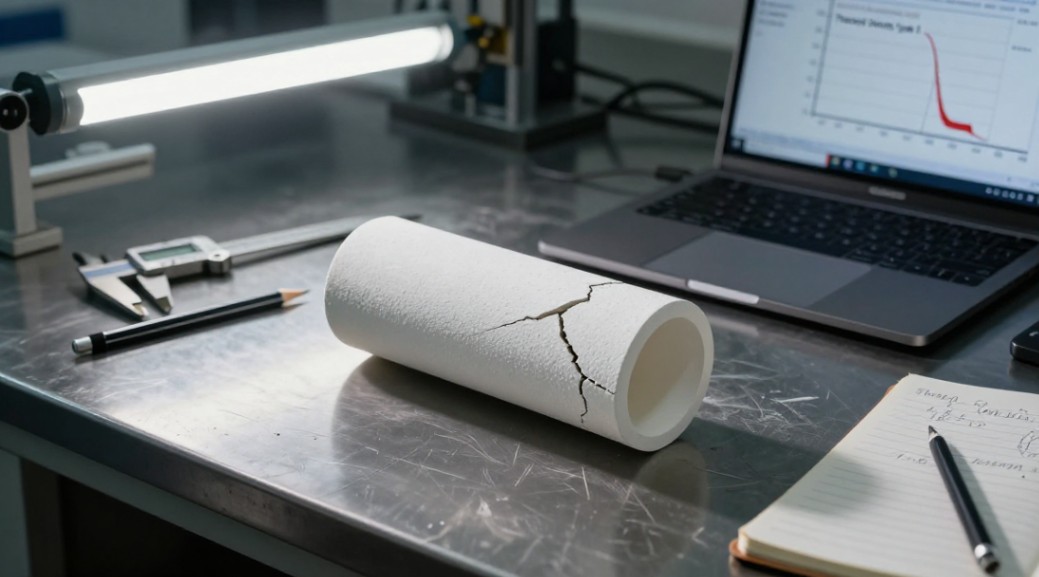
Twenty years ago, I watched a team spend six months developing a high-temperature sensor sheath. They chose the default: 99.5% aluminium oxide ceramic. The part was beautiful-dense, hard, and electrically perfect. It passed all lab tests. On the first day in the real furnace, under cyclic thermal shock, it cracked like an eggshell. The entire project timeline shattered with it. That failure taught me a brutal lesson: the industry’s blind trust in aluminum oxide ceramic as a universal solution is a dangerous, expensive myth. Let’s dissect why.
Your Aluminum Oxide Ceramic Questions, Answered with Blunt Logic
What exactly is aluminum oxide ceramic, and what makes it so common?
Aluminum oxide ceramic (alumina) is a synthetic material where aluminum and oxygen atoms bond into a rigid crystalline structure. It’s not mined; it’s engineered. Its dominance stems from a simple economic truth: it offers the best balance of performance and cost among technical ceramics. The raw materials (alumina powder) are abundant and relatively cheap to process compared to silicon nitride ceramic or boron carbide ceramic. Think of it as the “high-grade steel” of the ceramic world-versatile, reliable, but not always the optimal choice.
Is aluminium oxide ceramic the hardest or strongest ceramic available?
No. Not even close. This is a critical misconception. Alumina is very hard (good wear resistance), but ceramics like boron carbide ceramic and silicon carbide ceramic are significantly harder. Its fracture toughness (resistance to crack propagation) is modest. For pure strength and toughness under mechanical load, zirconia or silicon nitride ceramic are superior. Alumina wins on wear and hardness for its price point. Don’t spec it for impact resistance.
Why is alumina the go-to for electrical insulators?
Pure logic. It combines excellent dielectric strength with good thermal conductivity (for a ceramic). This is rare. Most good electrical insulators are also thermal insulators (like plastics). Alumina manages heat while blocking current. Furthermore, its surface can be metallized to create hermetic seals. Aluminum nitride ceramic has far higher thermal conductivity, but it’s more expensive and harder to process. For most applications, alumina’s balance is economically rational.
How does chemical resistance compare to other ceramics?
This is alumina’s silent superpower. Its chemical stability in harsh environments is exceptional. It resists attack from strong acids, molten metals, and corrosive gases far better than most metals and many other ceramics. This isn’t magic; it’s the stability of the aluminum-oxygen bond. For a crucible holding molten metal, alumina often outperforms more exotic options. However, it’s vulnerable to strong alkalis and hydrofluoric acid. Know your chemical enemy.
96% vs. 99.5% purity: Does it really matter?
It matters profoundly, and the choice is not about “better” but “appropriate.” The 3.5% difference is usually a glassy silicate phase that fluxes the sintering process.
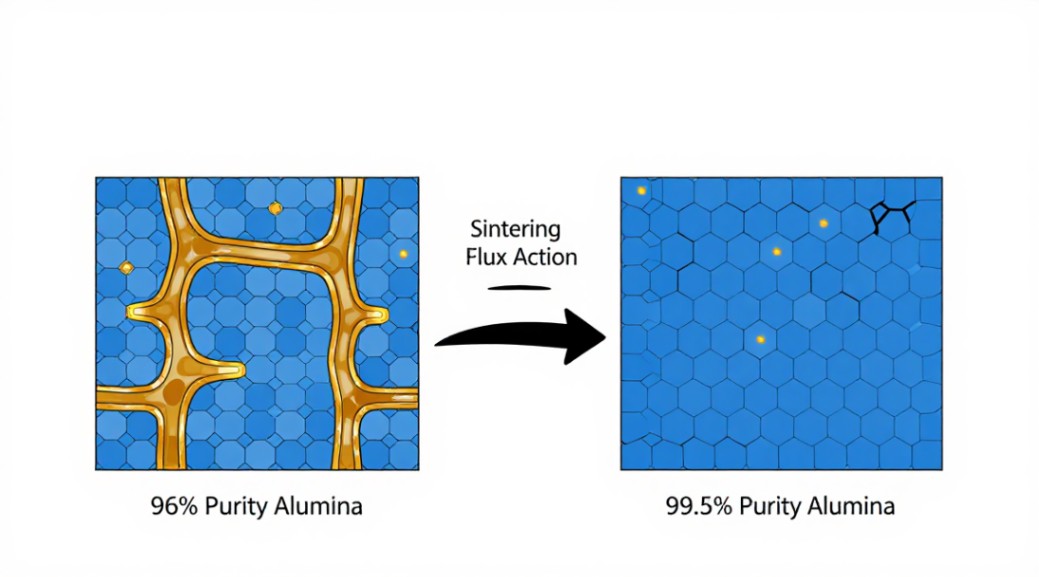
- 96% Alumina: Cheaper, slightly lower hardness and strength, but better thermal shock resistance. The glassy phase gives a little compliance. Use it for large, complex shapes in thermally cyclic environments.
- 99.5% Alumina: Higher purity means higher hardness, wear resistance, electrical resistivity, and corrosion resistance. It’s also more brittle. Use it for precision seals, high-wear liners, and critical electronic substrates where every property is maximized.
Choosing the wrong grade guarantees premature failure.
When should I NOT use aluminum oxide ceramic?
Use this checklist. If you answer YES to any point below, immediately evaluate an alternative like silicon nitride, zirconia, or silicon carbide ceramic.
- High Thermal Shock: Rapid temperature changes >200°C repeatedly? Alumina is prone to crack.
- Extreme Fracture Toughness: The part will see impact or high tensile stress. Alumina is brittle.
- Very High Thermal Conductivity Needed: For heat sinks, aluminum nitride ceramic is 5-10x better.
- Severe Abrasion with Impact: For sand-blast nozzles, boron carbide ceramic lasts exponentially longer.
- Ultra-High Temperature Structural Use (>1650°C): Alumina softens. Look to mullite ceramic or advanced composites.
What is the future for this “old” material?
Innovation isn’t about replacing alumina; it’s about enhancing and hybridizing it. The future lies in composites and coatings. Researchers are embedding nano-fibers to improve toughness, creating alumina-matrix composites with silicon carbide whiskers. The next frontier is ultra-high-temperature oxide systems, where a dense, continuous, and low-oxygen-permeability oxide layer is engineered onto alumina cores for extreme environments. Think of it as armor. Furthermore, functional surface treatments, akin to a special coating for boron nitride ceramic crucibles, are being adapted to make alumina surfaces non-wetting or catalytic.
The material isn’t dead. Our thinking about it must evolve.
Conclusion: How to Think Like a Ceramicist
Stop selecting materials from a catalogue based on a single property. Start with the failure mode. What will kill the part first? Heat? Crack propagation? Chemical erosion? Wear? Then work backwards. Aluminum oxide ceramic remains a powerhouse for wear plates, insulator bodies, corrosion-resistant liners, and biocompatible implants because it solves a specific set of problems cost-effectively. It is not a universal warrior. Your next step is to pressure-test your design assumptions. If your application involves severe thermal cycling, for example, the solution path may lead you to test a composite approach or a different ceramic family entirely. The goal is not to use the most advanced material, but the one whose failure profile least matches your operational nightmare.
Suppiler
Synthetic-chemical focus on the research and development, production and sales of ceramic products, serving the electronics, ceramics, chemical and other industries. Since its establishment in 2015, the company has been committed to providing customers with the best products and services, and has become a leader in the industry through continuous technological innovation and strict quality management.
Our products includes but not limited to Aluminum Nitride, Aluminum Oxide, Boron Carbide, Boron Nitride, Ceramic Crucible, ect. If you are interested in any type of these, please feel free to contact us.