Next-Generation Ceramics: Unlocking Superior Properties for Industry

A Shocking Statistic That Changes Everything
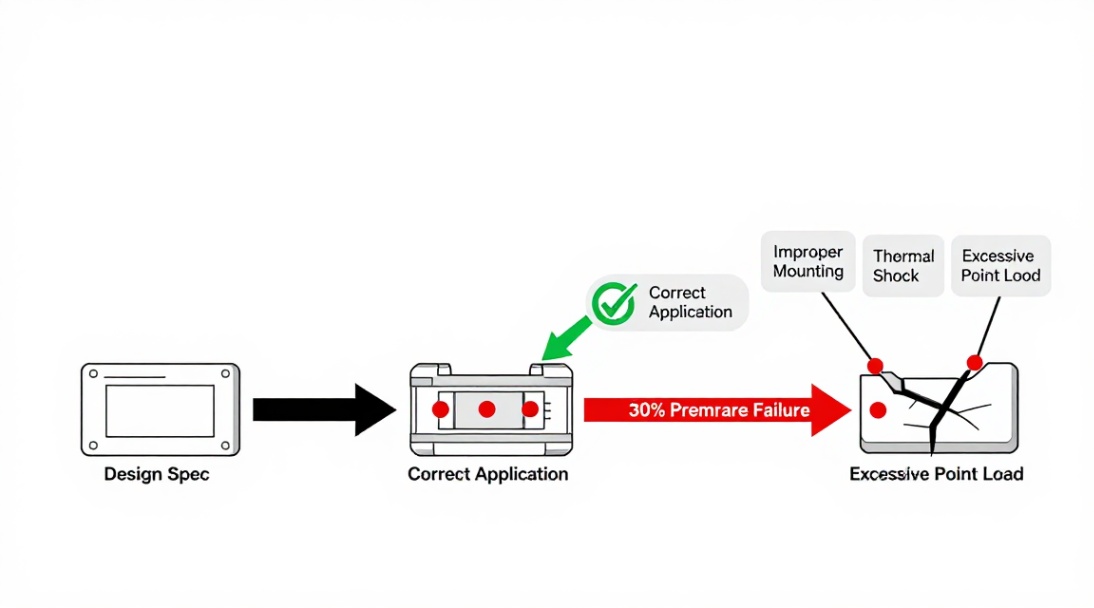
Roughly 30% of all premature failures in high-performance aluminum oxide ceramic components stem not from material flaws, but from application errors. Engineers trust its hardness and assume it’s indestructible. That assumption is costly. Let’s walk through the critical pitfalls so you can avoid them.
1. The Brittleness Blind Spot: More Than Just “Hard”
Aluminum oxide ceramic is incredibly hard and wear-resistant. But that hardness comes with a trade-off: low fracture toughness. We see it all the time-a part designed like a metal component, loaded in a way that creates a stress concentration. It fails not from wear, but from a sudden, catastrophic crack. This is the fundamental mistake. You cannot treat aluminum oxide ceramic like steel. Its strength lies in compression, not tension or impact.
2. The Thermal Shock Trap
Alumina has excellent thermal stability at equilibrium. Its weakness is rapid temperature change. The low thermal conductivity and relatively high coefficient of thermal expansion mean different parts of the component heat or cool at different rates. This induces internal stresses that can easily exceed the material’s tensile strength. We’ve seen furnace linings crack because of an uncontrolled shutdown, or sealing faces fail after a steam quench. The rule is simple: control the rate of change.
3. The Machining & Tolerancing Minefield
This is where projects get derailed. You cannot machine aluminum oxide ceramic like aluminum. Post-sintering machining requires diamond tools, specialized processes, and significantly more time. A common error is specifying machined metal-like tolerances on complex alumina parts. The cost skyrockets, and you introduce micro-cracks that become failure points. Always design for net-shape or near-net-shape sintering whenever possible. Work with your ceramic supplier from the earliest design phase.
4. The Wrong Grade for the Job
Not all alumina is the same. Using a standard 96% alumina in a high-purity chemical environment? That’s a mistake. The 4% of sintering aids (like silica and magnesia) can leach out, leading to corrosion and weakening. Conversely, specifying costly 99.8% high-purity aluminum oxide ceramic for a simple wear plate is overkill. You must match the grade-96%, 99.5%, etc.-to the actual requirement: electrical insulation, chemical inertness, or ultra-high wear resistance.
Beyond Pure Alumina: The Composite Frontier
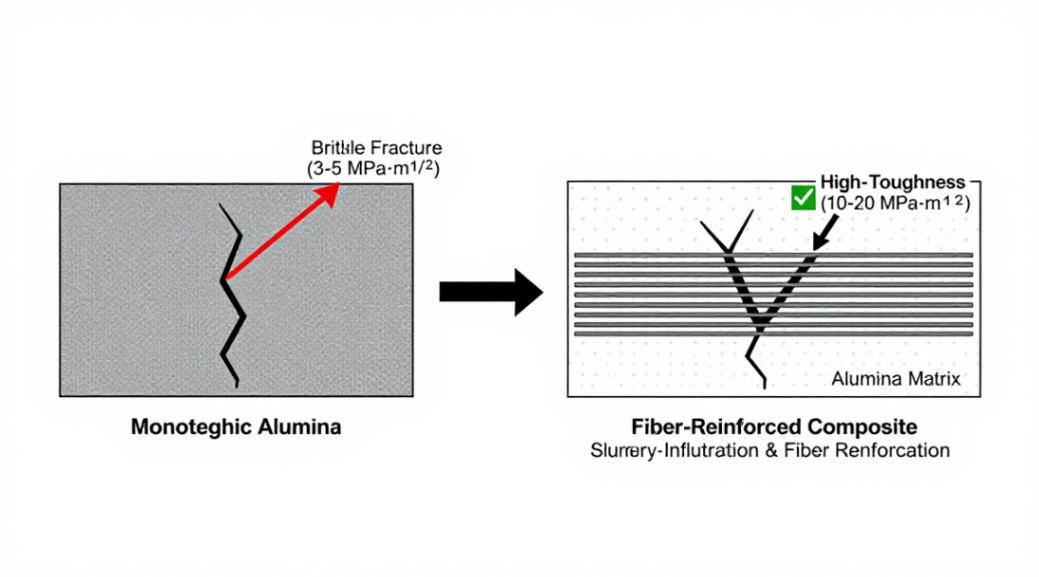
For the most demanding applications, monolithic aluminum oxide ceramic hits its limits. This is where advanced composites come in. Research shows that continuous fiber reinforcement can boost fracture toughness from a brittle 3-5 MPa·m¹/² to a remarkable 10-20 MPa·m¹/². New manufacturing strategies, like slurry infiltration for ceramic matrix composites, allow for dense, tough parts at lower sintering temperatures. If your application involves extreme thermal cycling or impact, it’s time to look beyond pure alumina.
5. Joining & Assembly Errors
You can’t weld it. You can’t braze it like metal without specialized techniques. A frequent failure point is the interface between the ceramic component and its metal housing. Using a rigid epoxy or a metal with a mismatched expansion coefficient guarantees failure. You must design for the joint, using compliant layers, specialized adhesives, or mechanical fixation methods that allow for differential expansion.
6. Ignoring the Surface Finish
The surface condition of aluminum oxide ceramic is paramount. A rough, as-fired surface can act as a crack initiator under load. For sealing applications, the required surface finish is measured in micro-inches Ra. For wear parts, a polished surface can reduce friction and particle generation. Never assume the “standard” finish is adequate. Specify it.
7. Overlooking the Competition
Alumina is a workhorse, but it’s not always the champion. Before you commit, do a quick sanity check against other engineering ceramics. Need higher toughness and strength? Zirconia might be better. Need extreme thermal conductivity for a heatsink? Look at aluminium nitride ceramic. Dealing with molten metal? Silicon carbide ceramic or boron nitride ceramic could be superior. For ultra-high temperature stability, consider mullite ceramic. Alumina is excellent, but it’s not a universal solution.
Stop Guessing, Start Succeeding
The path to a successful alumina component is clear: respect its unique properties, design for them, and specify with precision. The biggest risk is proceeding with incomplete knowledge. You don’t have to learn these lessons through expensive field failures.
We strongly recommend you consult with a true specialist before finalizing your design. A seasoned ceramic engineer can review your application, suggest the optimal grade and process, and help you avoid these costly pitfalls from day one. Don’t let a hidden mistake compromise your project. Get an expert opinion now.
Suppiler
Synthetic-chemical focus on the research and development, production and sales of ceramic products, serving the electronics, ceramics, chemical and other industries. Since its establishment in 2015, the company has been committed to providing customers with the best products and services, and has become a leader in the industry through continuous technological innovation and strict quality management.
Our products includes but not limited to Aluminum Nitride, Aluminum Oxide, Boron Carbide, Boron Nitride, Ceramic Crucible, ect. If you are interested in any type of these, please feel free to contact us.