Next-Generation Ceramics: Unlocking Superior Properties for Industry

You’ve Been Here, Haven’t You?
You need a component that’s hard, chemically inert, and electrically insulating. The specs point you toward an aluminum oxide ceramic. You pull the trigger, only to find the part fails in service-it chips under impact, doesn’t handle the thermal cycle, or costs three times what it should. Frustrating. We’ve been there too. The problem isn’t the material; it’s the subtle, critical mistakes we make when selecting and applying it. Let’s fix that.
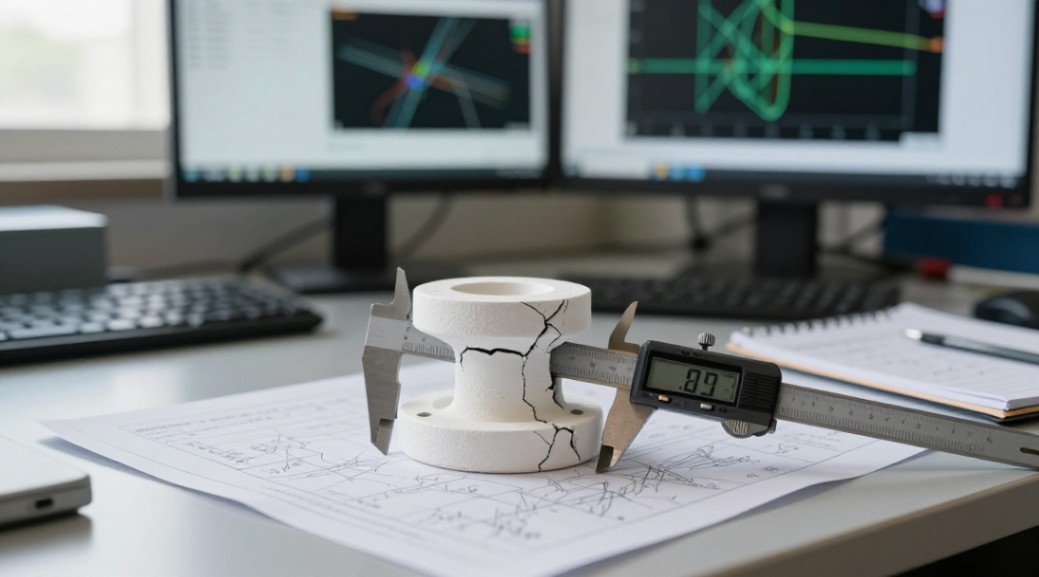
The Unseen Pitfalls of Choosing Alumina
Thinking of aluminum oxide ceramic as a single, universal material is the first and biggest mistake. Its performance is a sliding scale dictated by purity and processing. Choosing the wrong point on that scale guarantees failure.
The Purity Trap: More Isn’t Always Better
A 99.8% pure alumina substrate is excellent for a circuit. Put that same high-purity grade into a sand-blasted nozzle, and it will fracture. Why? Ultra-high purity boosts electrical properties and chemical resistance, but often at the expense of fracture toughness. For brutal mechanical wear, a lower purity grade with engineered grain boundaries might be the smarter, more durable, and cheaper choice.
The Wrong Tool for the Job: A Critical Comparison
Selecting aluminum oxide ceramic by default is another common error. It’s a fantastic all-rounder, but specialized ceramics exist for a reason. Let’s use logic. Compare key attributes side-by-side to see where alumina shines and where you should look elsewhere.
| Material | Key Strength | Major Weakness vs. Alumina | When to Choose Instead of Alumina |
|---|---|---|---|
| Aluminium Oxide (Al2O3) | Best cost-to-performance balance, excellent wear & corrosion resistance, superb electrical insulation. | Lower fracture toughness, moderate thermal conductivity. | Your default choice for wear plates, electrical insulators, chemical nozzles, and biocompatible seals. |
| Silicon Nitride (Si3N4) | Exceptional fracture toughness and thermal shock resistance. | Significantly more expensive, more complex to machine. | High-stress structural applications like bearings or engine components facing severe thermal cycling. |
| Aluminum Nitride (AlN) | Very high thermal conductivity (like a metal) while being an electrical insulator. | More brittle than alumina, sensitive to moisture, higher cost. | Critical heat sink substrates in high-power electronics where you must move heat fast. |
| Zirconia (ZrO2) | Extremely high fracture toughness and wear resistance; can be polished to a very smooth finish. | Lower hardness, higher cost, potential phase instability at very high temperatures. | Applications demanding extreme durability against chipping and impact, like cutting tools, scissors, or biomedical implants. |
| Silicon Carbide (SiC) | Extreme hardness, exceptional thermal conductivity, and oxidation resistance at very high temperatures. | Brittle, expensive, and electrically conductive (a deal-breaker for insulators). | High-temperature kiln furniture, advanced armor, or abrasive slurry handling where wear is extreme. |
See the pattern? Picking the wrong ceramic is expensive. For a wear lining, silicon carbide ceramic might last longer but cost 5x more. Is that value? Sometimes. Often, a high-density 96% alumina is the perfect, economical solution.
How to Avoid These Mistakes in Your Next Project
Now that we see the traps, let’s build a simple selection shield. Follow this logic.
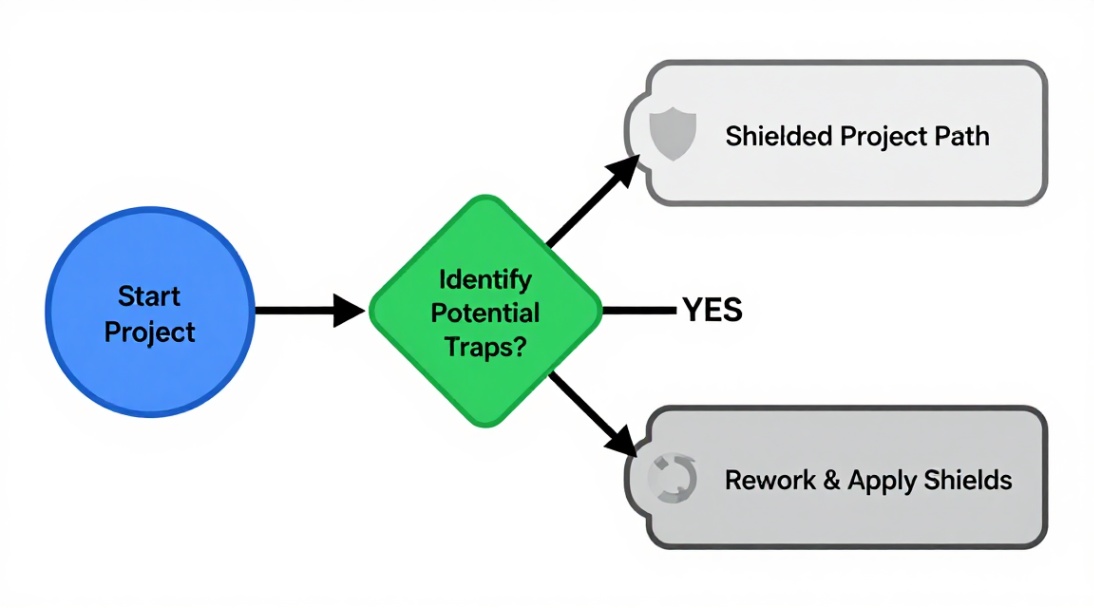
1. Interrogate Your Environment First
Start with the problem, not the material. Write down the three harshest conditions your part will face. Is it pure abrasion? Is it thermal shock from a 500°C oven to a cool-down? Is it a caustic chemical spray? Rank them. Aluminium oxide ceramic handles chemical and abrasive wear superbly. It struggles with severe, rapid thermal cycling compared to silicon nitride ceramic.
2. Define ‘Failure’ for Your Business
Failure isn’t just breaking. Is it a 10% loss in efficiency? Is it contaminating a process? Is it a three-day production line shutdown for replacement? A more expensive, longer-lasting ceramic like a specialized silicon carbide-bonded silicon nitride might have a higher upfront cost but a vastly lower total cost of ownership.
3. Engage with Fabrication Early
The manufacturing process defines the final properties. A dry-pressed part has different limits than an isostatically pressed one. That complex internal channel you designed might be impossible in a high-purity alumina but feasible in another formulation. Discussing the shape, tolerances, and required properties with your ceramic supplier early prevents redesigns and delays. For instance, achieving a perfect surface for a special coating for boron nitride ceramic crucibles requires a specific base material finish.
Making the Right Choice Clear
The goal is confidence, not guesswork. We’ve walked through the logic: define the environment, understand the trade-offs in the material table, and collaborate on manufacturability. This disciplined approach prevents the vast majority of application failures.

Your next step is practical. Review a current or upcoming project with this lens. Map its requirements against the table. If the balance points squarely at aluminum oxide ceramic, your job is to specify the correct grade and process. This is where precise communication with your supplier matters. Providing them with a clear, prioritized list of requirements-wear, corrosion, temperature, electrical needs, and budget-allows them to recommend the optimal alumina formulation, be it for a simple insulator rod or a complex medical implant component. That conversation is the final, critical step to a successful, reliable component.
Suppiler
Synthetic-chemical focus on the research and development, production and sales of ceramic products, serving the electronics, ceramics, chemical and other industries. Since its establishment in 2015, the company has been committed to providing customers with the best products and services, and has become a leader in the industry through continuous technological innovation and strict quality management.
Our products includes but not limited to Aluminum Nitride, Aluminum Oxide, Boron Carbide, Boron Nitride, Ceramic Crucible, ect. If you are interested in any type of these, please feel free to contact us.