Next-Generation Ceramics: Unlocking Superior Properties for Industry

Why I Always Keep a Spare Alumina Liner in My Toolbox
Twenty years ago, I watched a production line grind to a halt. A critical wear part had failed after just three weeks. We replaced it with a simple-looking white ceramic part. That part lasted three years. That was my first real lesson in aluminum oxide ceramic. It wasn’t magic. It was materials science done right. Let’s cut through the jargon and talk about how to use it.
What Exactly is Aluminum Oxide Ceramic?
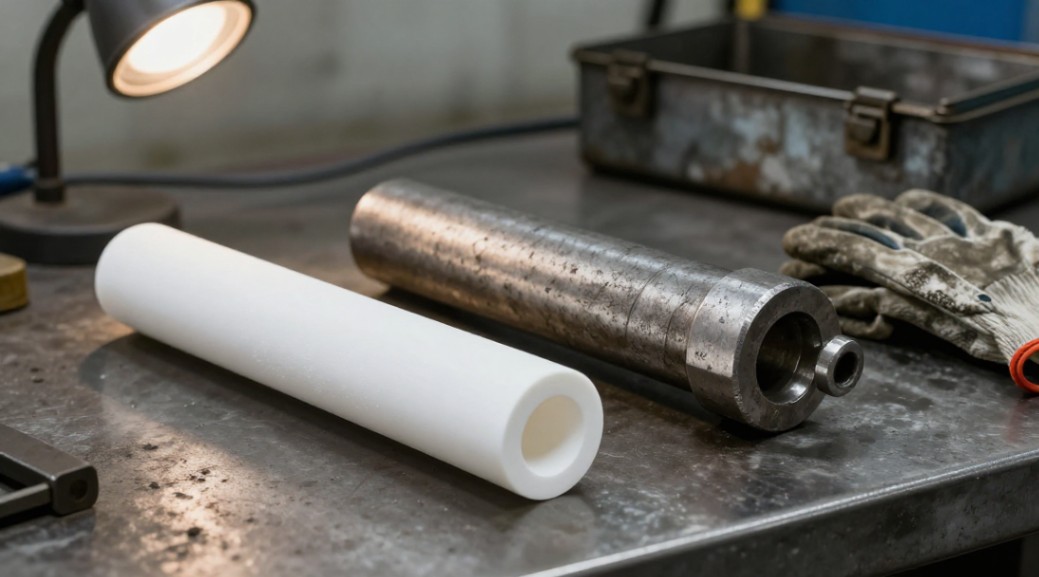
At its core, it’s Al2O3. We take fine, pure aluminum oxide powder, shape it, and fire it at extreme heat. This process, called sintering, transforms the powder into a dense, rock-solid material. Forget “ceramic” meaning delicate china. This is engineering armor. We commonly see it as a white or ivory-colored component, though it can be other colors depending on purity and additives.
Aluminum Oxide Ceramic Properties: Why Engineers Trust It
We don’t pick materials because they sound advanced. We pick them because they solve specific, expensive problems. Aluminium oxide ceramic solves three big ones.
1. It Refuses to Wear Down
Its hardness is legendary. On the Mohs scale, it’s a 9. Diamond is a 10. This makes it perfect for abrasive environments. Think of sand blowing against a pump seal or metal powder sliding through a feed tube. Softer materials erode. Aluminum oxide ceramic stands its ground. This property is why it’s the backbone of grinding wheels and industrial sandpaper.
2. It Laughs at Heat and Corrosion
You can take it to 1700°C (3092°F) without it softening or melting. Most metals give up long before that. It also resists attack from harsh chemicals and molten metals. That’s why you find it lining furnaces and crucibles for molten metal.
3. It’s a Perfect Electrical Insulator
Even at high temperatures, it maintains excellent dielectric strength. This makes it the go-to material for spark plug insulators, circuit board substrates, and high-voltage switchgear. It doesn’t conduct electricity, and it doesn’t break down under electrical stress.
Aluminum Oxide Ceramic vs. The Competition: A Quick Guide
Picking a ceramic is about trade-offs. Here’s how aluminum oxide stacks up.
- Vs. Zirconia (ZrO2): Zirconia is tougher and more fracture-resistant. Use it for parts taking sharp impacts. But aluminum oxide ceramic wins on hardness, wear resistance, raw material cost, and maximum service temperature.
- Vs. Silicon Nitride Ceramic (Si3N4): Silicon nitride is the champion for thermal shock and has better mechanical strength. It’s fantastic for engine components. Aluminum oxide ceramic is harder, a better electrical insulator, and typically more cost-effective for wear plates and electrical housings.
- Vs. Silicon Carbide Ceramic (SiC): Silicon carbide has higher thermal conductivity. Choose it for heat sinks or extreme abrasion. Aluminum oxide ceramic offers superior electrical insulation and better corrosion resistance against certain acids.
How to Choose and Use Aluminum Oxide Ceramic: A 4-Step Process
Follow this decision path. It saves time and money.
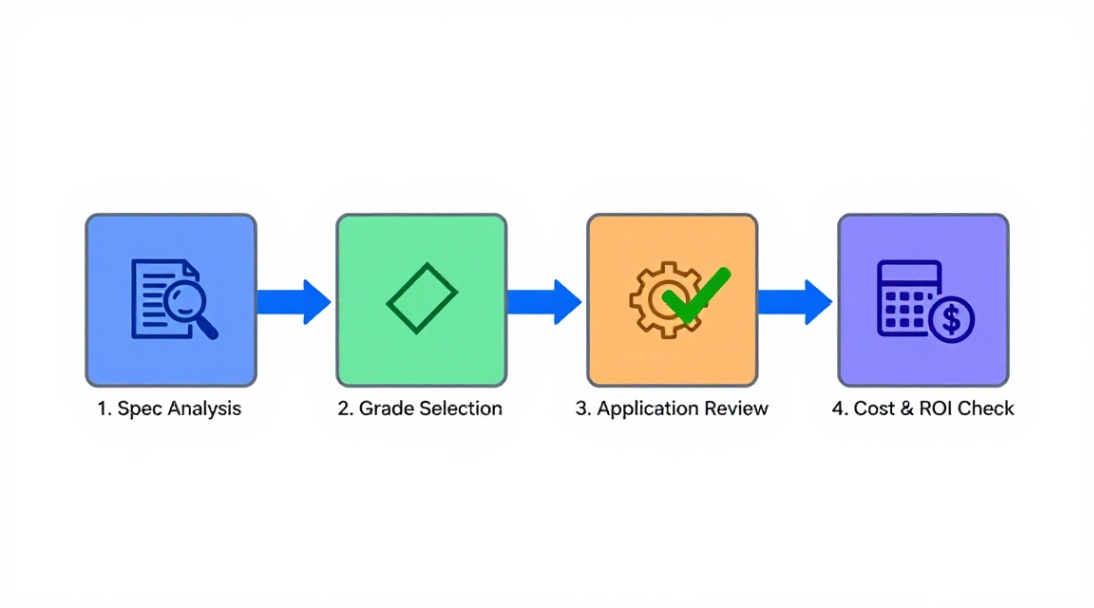
Step 1: Define Your Primary Enemy
Is it abrasive wear? Is it electrical insulation at high heat? Is it chemical corrosion? Write down the top one or two failure modes of your current part. Aluminum oxide ceramic excels at wear, insulation, and temperature. If your main enemy is impact or thermal shock, consider zirconia or silicon nitride ceramic first.
Step 2: Select the Right Grade and Purity
Not all alumina is equal. The purity defines its performance. 99.5% Al2O3 offers the best properties: highest hardness, best corrosion resistance, and maximum temperature capability. Use it for critical applications. 96% Al2O3 is a workhorse. It’s slightly less pure but offers great performance and is more economical for many wear parts and insulators. For specialized needs like translucent tubes or advanced composites, we look at 99.9%+ purity.
Step 3: Understand the Manufacturing Limits
Aluminum oxide ceramic is hard. That means you can’t machine it like steel. It’s shaped in the green (pre-sintered) state or ground with diamond tools after sintering. Design with this in mind. Sharp internal corners are difficult. Tolerances need careful planning with your supplier. Always prototype.
Step 4: Plan for Integration
Ceramic-to-metal joints are a common failure point. They expand and contract at different rates. We solve this with flexible metal sleeves, compliant adhesives, or clever mechanical design that allows for movement. Don’t just swap a steel part for a ceramic one. Redesign the assembly to accommodate it.
Common Applications You Can Trust It For
We’ve specified it here for decades. These applications prove its value daily.
- Wear Parts: Pump seals, liner tiles, ballistic armor, thread guides.
- Electrical & Electronic: Substrates for circuits, insulating housings, laser tubes.
- Medical: Hip joint bearings, dental implants, surgical tool tips. Its biocompatibility is excellent.
- Industrial: Thermocouple protection tubes, crucibles, labware, cutting tool inserts.
Looking Ahead: The Future of Alumina
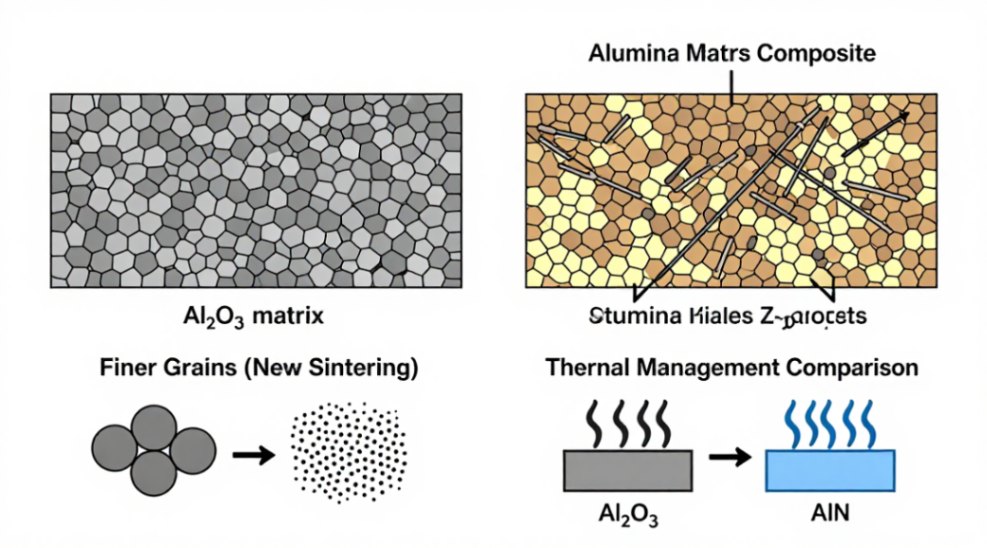
The work continues. Researchers are making it even better. We now have alumina matrix composites, where we add materials like silicon carbide whiskers or zirconia particles to dramatically improve toughness. New sintering techniques allow for finer grains and higher strengths. For ultra-demanding thermal management, materials like aluminum nitride ceramic (which has much higher thermal conductivity) or boron nitride ceramic (an excellent high-temperature lubricant) are filling specialized roles. The key is matching the material to the job.
My advice? Start simple. If you have a part failing from abrasion or needing insulation where it gets hot, aluminium oxide ceramic is your first port of call. Its balance of performance, availability, and cost is unmatched. Talk to a specialist ceramic manufacturer early in your design process. They can guide you on grades, like whether you need the supreme wear resistance of boron carbide ceramic or the thermal properties of a mullite ceramic, or if standard alumina is perfect. Bring them your broken part. We speak that language.
Suppiler
Synthetic-chemical focus on the research and development, production and sales of ceramic products, serving the electronics, ceramics, chemical and other industries. Since its establishment in 2015, the company has been committed to providing customers with the best products and services, and has become a leader in the industry through continuous technological innovation and strict quality management.
Our products includes but not limited to Aluminum Nitride, Aluminum Oxide, Boron Carbide, Boron Nitride, Ceramic Crucible, ect. If you are interested in any type of these, please feel free to contact us.