Next-Generation Ceramics: Unlocking Superior Properties for Industry

Are You Making These 4 Costly Mistakes with Aluminum Oxide Ceramic?
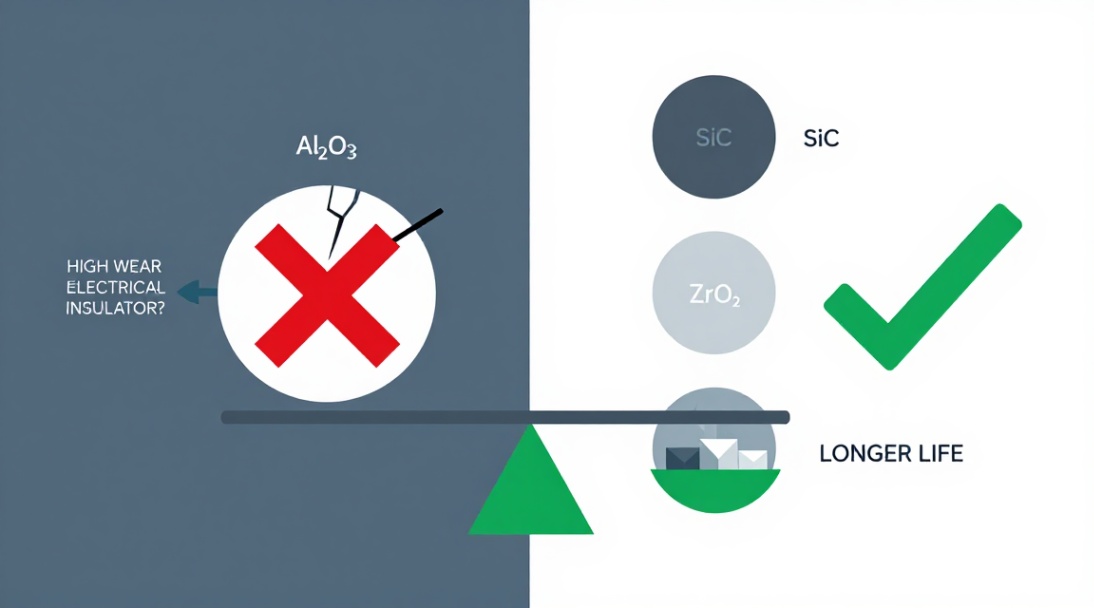
Have you ever specified aluminium oxide ceramic for a high-wear application, only to face premature failure? Or have you chosen it for an electrical insulator and later discovered a competitor’s part lasted three times longer? You’re not alone. The industry treats alumina as a universal ceramic workhorse, but that’s a dangerous simplification. Blindly picking it leads to over-engineering, under-performance, and budget waste. This is not a love letter to alumina. This is a logical breakdown of when it wins, and when it gets crushed by ceramics like silicon carbide, zirconia, and aluminum nitride ceramic.
The Core: What Aluminium Oxide Ceramic Actually Is
Aluminum oxide ceramic is a man-made crystalline material derived from bauxite ore. We call it alumina. Its structure gives it three pillar properties: extreme hardness (second only to diamonds and a few others), excellent wear resistance, and good thermal stability. It doesn’t melt until over 2000°C. But the raw material is just the beginning. The final part’s behavior hinges on purity, grain structure, and the sintering process.
The Purity Game: Your Performance is in the Percentage
Not all alumina is equal. The purity percentage is your first critical specification.
- 85% – 94% Alumina: The ‘commodity’ grade. Higher glassy phase content. Cheaper, easier to machine, but lower strength and corrosion resistance. Use it for general wear plates, textile guides, and non-critical insulators.
- 96% – 99.5% Alumina: The engineering workhorse. High density, excellent mechanical and electrical properties. This is the sweet spot for seals, pump components, cutting tool inserts, and robust electrical insulators.
- 99.9% Alumina: ‘High-purity’ or ‘advanced’ alumina. Exceptional corrosion resistance, highest electrical resistivity, and superior surface finish. This grade is for semiconductor equipment, advanced optics, and demanding biomedical implants.
Choosing the wrong purity is the most common error. Over-spec 99.9% and you waste money. Under-spec with 85% in a chemical seal and you’ll have a failure report on your desk.
How It’s Made: The Process Defines the Limits
Manufacturing method dictates geometry, tolerance, and property consistency.
- Dry Pressing: Fast, cheap, for simple, high-volume shapes. Limited geometry complexity.
- Isostatic Pressing: Applies uniform pressure from all sides. Produces parts with highly uniform density and superior mechanical properties, even for complex shapes like tubes and rods.
- Injection Molding: Enables highly complex, net-shape geometries. Essential for small, intricate parts like electronic substrates or biomedical components. Higher tooling cost.
The Real Competition: Aluminum Oxide Ceramic vs. The Field
Here is the unvarnished comparison. This is where logical selection happens.
Alumina vs. Silicon Carbide Ceramic
- Alumina Advantage: Better electrical insulator. Lower material cost. More familiar machining.
- Silicon Carbide Kill Shot: Far superior thermal conductivity (3-4x higher). Better thermal shock resistance. Higher hardness and wear resistance at extreme temperatures. For high-heat flux, abrasion, or thermal management, silicon carbide ceramic (including reaction-sintered silicon carbide ceramics and pressureless sintered silicon carbide ceramics) is the clear winner.
Alumina vs. Zirconia (ZrO2)
- Alumina Advantage: Harder, more wear-resistant. More chemically inert. Better electrical insulator.
- Zirconia Kill Shot: Fracture toughness is 2-3x higher. It’s the ‘tough’ ceramic. Far superior bending strength. If your part faces impact or tensile stress, zirconia prevents catastrophic failure where alumina would shatter.
Alumina vs. Aluminum Nitride Ceramic
- Alumina Advantage: Drastically lower cost. Good enough mechanical strength.
- Aluminum Nitride Kill Shot: Thermal conductivity is 8-10x higher, rivaling metals. It’s a premier electrical insulator that also cools. For high-power electronics and LED substrates, AlN is non-negotiable. Alumina is a thermal bottleneck.
Alumina vs. Boron-Based Ceramics
This is a niche but critical battle.
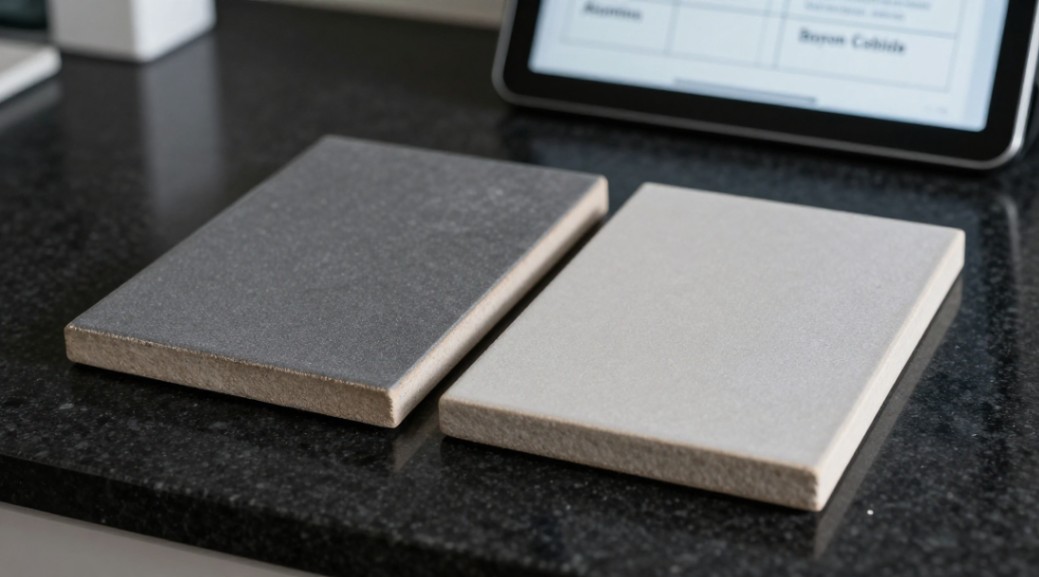
- Boron Carbide: Harder than alumina. An armor and abrasive specialist. More expensive and brittle.
- Boron Nitride Ceramic: The ‘white graphite.’ Excellent lubricity and thermal shock resistance. Often used with a special coating for boron nitride ceramic crucibles. For non-wetting, high-temperature metal handling, BN is unique. Alumina will wet and react.
The Devil in the Details: Machining and Standards
Alumina is hard. Machining it requires diamond tools (grinding, lapping). Complex shapes drive cost exponentially. Know the standards: ASTM F603 for biomedical implants, ASTM D2442 for electrical insulators, and various MIL specs. The grade number (e.g., AL-995) tells a story of purity and properties.
The Hard Limits: Where Aluminum Oxide Ceramic Fails
Let’s be blunt. Alumina has weaknesses you cannot ignore.
- Brittleness: Its Achilles’ heel. Low fracture toughness. It cracks under impact or point loads. (This is why research into continuous fiber reinforcement for composites is pushing toughness boundaries in advanced ceramics).
- Moderate Thermal Conductivity: It’s an insulator, not a heat spreader. Don’t use it where heat needs to move.
- Thermal Shock Vulnerability: While good, it’s inferior to silicon nitride ceramic or silicon carbide ceramic. Rapid temperature cycles can cause micro-cracking.
The Future: Where Alumina Still Holds the Throne
Alumina isn’t obsolete. It’s being refined. Future trends focus on ultra-high-purity grades for semiconductor wafer processing, transparent alumina for optics and armor, and advanced composites. Its biocompatibility ensures a permanent role in dentistry and orthopedics. For cost-effective, hard, chemically stable, and insulating components, alumina remains the default choice. But it should never be the only choice you consider.
Your Decision Matrix: Stop Guessing, Start Specifying
Forget gut feeling. Use this logic.
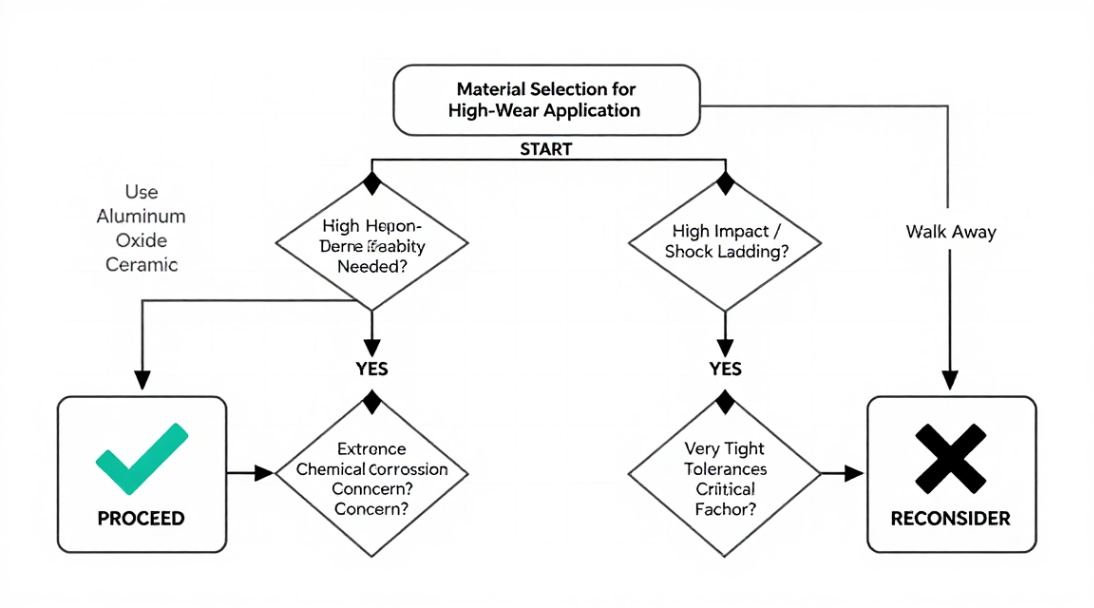
- Primary Need is Wear Resistance + Low Cost? Start with 96% – 99% aluminum oxide ceramic.
- Primary Need is Electrical Insulation + Some Heat? Alumina works. Need major heat sinking? Switch to aluminium nitride ceramic.
- Primary Need is Thermal Shock Resistance or High Toughness? Immediately evaluate silicon nitride ceramic or zirconia.
- Primary Need is Extreme Hardness/Abrasion + High Temp? Look at silicon carbide ceramic or boron carbide.
The next step is concrete. Take your specific application parameters-load, temperature, chemical environment, cost target-and pressure-test them against this matrix. Then, engage with a technical ceramic supplier who offers more than just alumina. Present your shortlist from this analysis. Their ability to guide you between alumina, zirconia, and the full spectrum of silicon carbide-bonded silicon nitride ceramics or mullite ceramic options will prove their expertise. Your best material decision starts by looking beyond the old standard.
Suppiler
Synthetic-chemical focus on the research and development, production and sales of ceramic products, serving the electronics, ceramics, chemical and other industries. Since its establishment in 2015, the company has been committed to providing customers with the best products and services, and has become a leader in the industry through continuous technological innovation and strict quality management.
Our products includes but not limited to Aluminum Nitride, Aluminum Oxide, Boron Carbide, Boron Nitride, Ceramic Crucible, ect. If you are interested in any type of these, please feel free to contact us.