Next-Generation Ceramics: Unlocking Superior Properties for Industry

The Story of a Worn-Out Press Punch (And How Aluminum Oxide Ceramic Saved the Day)
I remember a call I got about twelve years ago. A small but determined manufacturing manager in Ohio was nearly in tears. He was running a high-speed stamping operation, and his carbide press punches were failing after just 8,000 cycles. The edges were rounding. The surface was chipping. He was stopping production every three days to swap tooling. I asked him one simple question: “Have you considered aluminum oxide ceramic?” His answer was silence, then a hesitant “Doesn’t that stuff shatter like glass?”. That is the single biggest myth about this material. And the very thing that kept him from solving his problem. Let me show you how we fixed it, step by step, and how you can avoid the same costly mistakes.
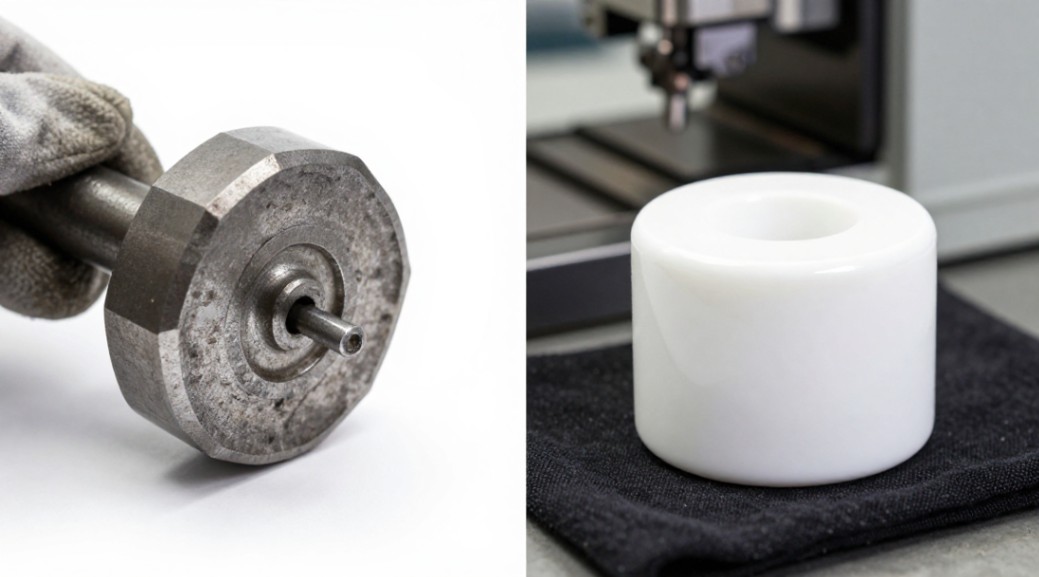
In my two decades working with advanced ceramics, I have seen aluminum oxide ceramic (also called alumina) quietly outperform hardened steel, tungsten carbide, and even some fancier ceramics in the most punishing environments. But only when it is used correctly. This is not a magic pill. It is a precision tool. To use it, you have to think like a ceramic engineer. So, let’s put on our dust masks, grab our calipers, and walk through this together.
1. Understanding the Beast: What Makes Aluminum Oxide Ceramic So Tough?
First, we have to accept the truth. Aluminum oxide ceramic is not a single thing. It is a family of materials. The star of the show is alpha-alumina, a crystalline structure that is about as stable as materials get. The chemical composition is Al₂O₃. But the purity is the secret.
We commonly use three main grades. This is where many people get lost, and I want to make it very clear. 85% alumina is the budget-friendly workhorse. It has some silica and clay added to make it easier to fire. It is tough, but it trades a little hardness for that ease of manufacturing. 95% alumina is your sweet spot. This is what I recommend for 80% of industrial applications. It is hard, resists wear, and offers excellent electrical insulation. 99% alumina is the monster. It has the highest hardness, the best chemical inertness, and the highest melting point (over 2000°C). But it is also the hardest to machine and the most expensive.
When you compare it to other options, the picture becomes clearer. Zirconia is tougher (more fracture resistance), but it is softer and degrades in wet environments at high temperatures. Silicon carbide ceramic is harder and conducts heat better, but it is more expensive and can be tricky to bond with metals. Aluminum nitride ceramic is king for thermal management but is a nightmare to polish. Boron carbide ceramic is incredibly light and hard (used for armor), but it oxidizes at high temperatures and is very costly. Boron nitride ceramic is soft and machinable but has poor wear resistance. Mullite ceramic is cheap and good for thermal shock, but it lacks hardness. Quartz ceramic is great for high-purity melting but fragile. Silicon nitride ceramic is tough but difficult to sinter. Reaction-sintered silicon carbide ceramics and pressureless sintered silicon carbide ceramics offer high performance but require careful process control. Recrystallized silicon carbide ceramics are excellent for high-temperature kilns but are porous. The point is: for pure wear resistance, thermal stability, and cost-effectiveness, aluminum oxide ceramic often wins. But you must pick the right grade.
2. Step-by-Step: How to Select the Right Grade for Your Application
Here is the first action step. Do not stare at a data sheet. Do not guess. Do this:
Step 1: Analyze the Enemy. What is wearing out your part? Abrasion (grit, sliding)? Erosion (particles hitting the surface)? Corrosion (acids, bases)? Thermal shock (rapid heating/cooling)? If it is pure abrasion, go straight to 99% alumina. If it is thermal shock, consider a lower purity or a composite like silicon carbide-bonded silicon nitride ceramics. If it is corrosion, check the pH. Alumina is excellent in most acids but degrades in strong, hot caustics.
Step 2: Define the Geometry. Is it a simple tile? A complex nozzle? A thin wall tube? Complex shapes are easier to make with 85% or 95% alumina because the green body (the unfired part) is easier to machine. For simple, solid components, 99% is a beast to green-machine but incredible once fired.
Step 3: Check the Temperature. Aluminum oxide ceramic loves the heat. It can sit at 1600°C all day. But the strength drops significantly above 1000°C. If you are above that, you might need a recrystallized silicon carbide ceramic or a special coating for boron nitride ceramic crucibles if you are melting something corrosive. Do not assume alumina works everywhere.
Many users on Reddit in the r/ceramics and r/materials forums have shared this exact experience. One user posted about using 85% alumina for a pump seal in a sulfuric acid environment. He was shocked when it failed in two weeks. The feedback was immediate: “You need 99.5% purity, buddy. The glassy phase in the lower grade got eaten out by the acid.” That community wisdom is gold. Listen to it.
3. Manufacturing: The Art of Firing (Sintering, Hot Pressing, and Isostatic Pressing)
You are not a factory owner, probably. But you need to know how your parts are made. This helps you talk to suppliers and understand why some parts cost ten times more than others.
Sintering is the standard method. You press the alumina powder into a shape (green body). Then you fire it in a kiln at around 1500-1700°C. The particles fuse together. This is great for volume production. The limitation? Shrinkage. The part shrinks about 15-20% during firing. Tolerances are not tight. You will need to machine the fired part to get exact dimensions.
Hot pressing is for high-performance parts. You press and heat simultaneously. This gives you a denser, stronger part with less shrinkage. It is expensive. But for a critical cutting tool or a wear pad, it is worth it.
Isostatic pressing (or HIPing) is the gold standard. You put the powder in a flexible mold, apply high pressure from all sides, and then sinter. This gives you uniform density and nearly zero porosity. For biomedical implants or high-voltage insulators, this is often the only way to go. The cost is high, but the reliability is unmatched.
4. The Hard Part: Machining and Finishing Aluminum Oxide Ceramic
This is where most people fail. They buy a beautiful alumina part, and then they try to drill a hole in it with a standard Bosch bit. I have seen the sparks. I have heard the curses. Do not do this.
Aluminum oxide ceramic is extremely hard. You cannot cut it with steel tools. You must use diamond. Period. Here is the correct process:
Step 1: Rough Grinding. Use a resin-bonded diamond grinding wheel with a coarse grit (like 60-80). Use plenty of water coolant. Grind slowly. If it turns red, you are going too fast. Stop. Let it cool.
Step 2: Surface Finishing. If you need a smooth surface (for a seal, for example), you must lap and polish. Start with a diamond slurry of 15 microns on a cast iron plate. Then move to 6 microns, then 1 micron. This is tedious. It is slow. But it produces a surface with almost no friction. I have seen people skip this step and then complain about wear. Do not skip it.
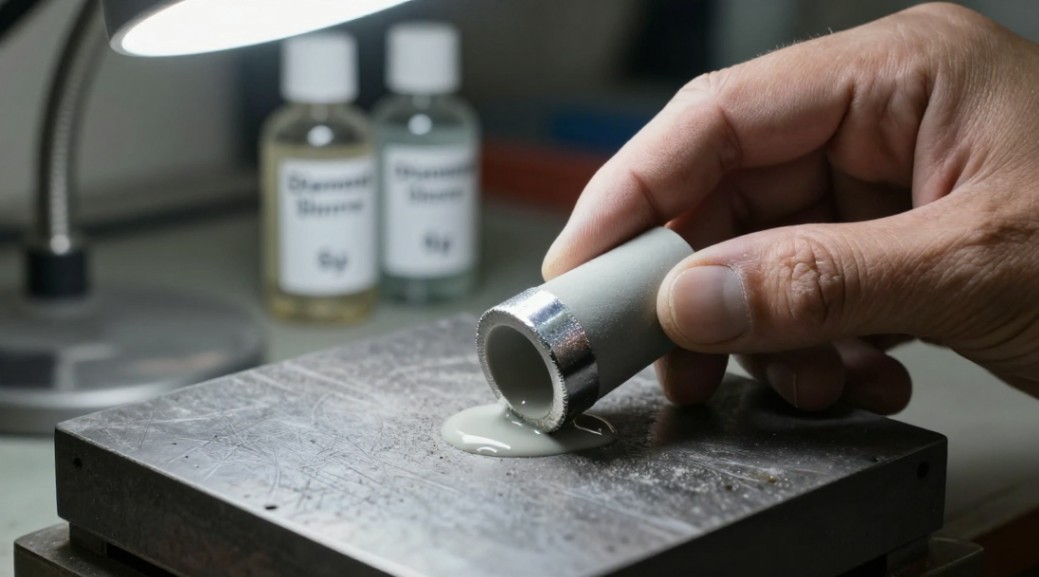
Step 3: Tolerancing. You are not getting a +/- 0.01 mm tolerance from a sintered part. You need to diamond grind it. Plan for post-processing. If your design requires tight fits, tell your supplier upfront. They will leave stock for grinding.
One successful story I recall is a lab manager who needed a flat plate for a high-temperature testing rig. She ordered a standard 95% alumina tile. It was warped. She was furious. Instead of giving up, she bought a diamond grinder and a granite surface plate. She spent an afternoon manually lapping the tile with a 6-micron diamond paste. The result was a mirror finish, perfectly flat. She used it for five years. The lesson? The material is only as good as the finish you give it.
5. Real-World Applications: Where This Material Shines
Let’s talk about where you will actually use this. The applications are not theoretical. They are the backbone of modern industry.
Cutting Tools: Insert tips for high-speed machining of steel and cast iron. Aluminum oxide ceramic inserts can run at much higher speeds than carbide. They resist crater wear from chip flow. But they are brittle. Do not use them for interrupted cuts (like a keyway). Use them for continuous, hard turning.
Biomedical Implants: Hip joints, dental implants. Alumina is bio-inert. It does not corrode in the body. It is extremely hard, so it does not wear out. The challenge? It is brittle. If a patient falls, the ceramic ball can fracture. Newer composites (like alumina-zirconia) are being used to solve this, but pure alumina is still a workhorse.
Electrical Insulators: Spark plugs, high-voltage bushings, substrates for microchips. Aluminum oxide ceramic has superb dielectric strength and volume resistivity. 95% alumina is the standard here. It withstands high voltages and does not track (carbon traces) like organic insulators.
Wear Components: Pump seals, nozzle liners, sand-blasting nozzles, chute liners. This is the bread and butter. If you are handling abrasive powders or slurries, alumina will outlast steel by 10x to 100x. A Reddit user in the mining industry once posted: “We swapped a steel chute liner for an alumina tile. We went from replacing it every month to replacing it every two years. It saved us $40,000 in downtime alone.” That is the kind of feedback that tells you the material works.
6. The Brutal Truth: Limitations You Must Accept
I am not here to sell you a dream. Aluminum oxide ceramic has real weaknesses. If you ignore them, you will have a disaster.
Brittleness: It is the number one killer. Alumina has a fracture toughness of about 3-4 MPa·m^½. That is very low. It is not a structural material for impact loads. Do not drop it. Do not hit it. If your application involves hammering or sudden mechanical shock, look at silicon nitride ceramic or zirconia.
Difficulty in Machining: As I said, diamond is the only way. This makes prototyping expensive. If you need a complex shape, consider getting a near-net-shape green body that is easy to machine with carbide tools before firing. The shrinkage is predictable, so you can design your part to end up at the right size after firing.
Cost Considerations: 85% alumina is cheap (around $5-10 per part for simple geometries). 99% alumina can be 5-10 times more expensive. Hot-pressed or HIPed parts are even more. For a one-off lab part, this is fine. For a mass-produced automotive sensor, the cost can be a problem.
Thermal Shock: Alumina has a relatively low thermal conductivity (about 25-30 W/mK at room temperature) compared to aluminum nitride ceramic (180+ W/mK) or silicon carbide ceramic (120+ W/mK). If you suddenly plunge a thick alumina part into water from 800°C, it will shatter from thermal shock. You must design for gradual temperature changes.
7. Your Action Plan: How to Succeed with Aluminum Oxide Ceramic
Here is my direct recommendation for you, based on everything I have learned. Do not treat this as a generic material. Treat it as a precision instrument.
First, define your operating conditions exactly. Second, choose the right purity. 95% is the default. Go to 99% for aggressive chemical or abrasive wear. Go lower for cost or thermal shock. Third, design your part with generous radii. Sharp corners are stress concentrators. They will crack. Fourth, plan your finishing process. Do not expect a perfectly flat surface from sintering. You will need diamond grinding and lapping.
I have a trusted partner that I send every engineer to for prototyping and production. They stock every grade from 85% to 99.9% alumina. They do standard sintering and isostatic pressing. They also provide a specialized machining service for hard ceramics. They are not the cheapest on the market, but their defect rate is under 0.1%. That matters when your part is a critical pump seal in a chemical plant.
If you are serious about solving your wear, thermal, or insulation problem, stop experimenting with guesswork. Visit their product page today. Request a sample batch of 95% alumina test tiles. Try to machine one yourself (carefully). Test it in your exact environment. See the difference. The ROI is often measured in weeks, not years. I have seen it happen hundreds of times. You can be next.
Click the link below. Order your test samples. And let me know how it goes. I am always here to help you get the results you need.
Suppiler
Synthetic-chemical focus on the research and development, production and sales of ceramic products, serving the electronics, ceramics, chemical and other industries. Since its establishment in 2015, the company has been committed to providing customers with the best products and services, and has become a leader in the industry through continuous technological innovation and strict quality management.
Our products includes but not limited to Aluminum Nitride, Aluminum Oxide, Boron Carbide, Boron Nitride, Ceramic Crucible, ect. If you are interested in any type of these, please feel free to contact us.