Next-Generation Ceramics: Unlocking Superior Properties for Industry

A Cautionary Tale from the Factory Floor
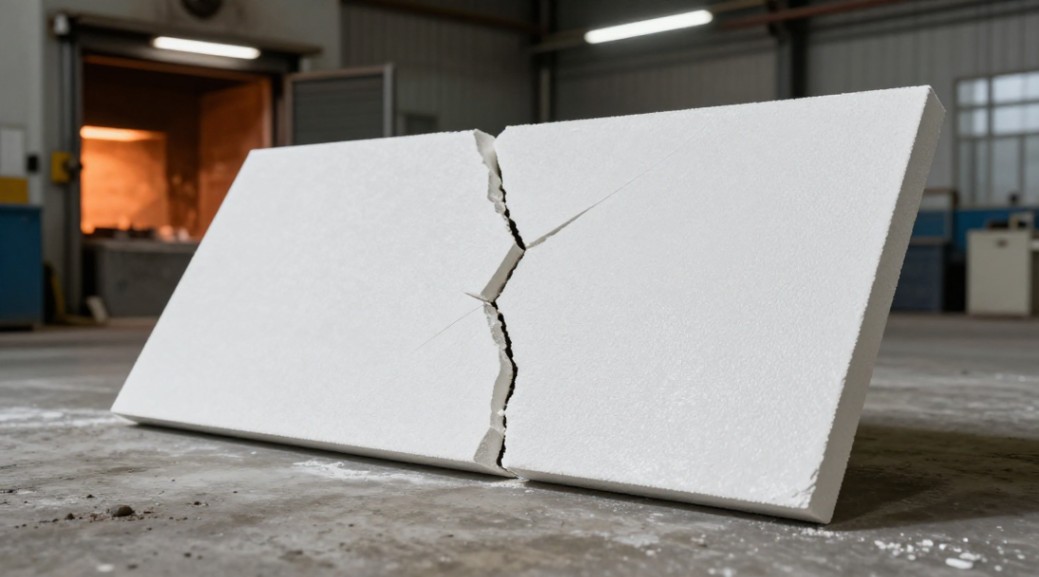
Three years ago, a frantic call came from a client running a high-temperature furnace. Their new aluminum oxide ceramic insulation boards, a premium 99.5% purity grade, were cracking. Not during the initial heat-up. Not under full load. But during the cooldown cycle. The failure was sudden and catastrophic, shutting down the line for a week. The engineers had spec’d the highest-purity alumina, believing it was the “safest” choice. They were wrong. That decision cost them over $200,000 in downtime and replacement parts. This story isn’t unique. It’s a symptom of a widespread misunderstanding about this ubiquitous, yet deceptively complex, material. Let’s pull back the curtain on the common, expensive mistakes made with aluminum oxide ceramic, or alumina, every single day.
Mistake 1: Chasing Purity Like a Holy Grail
This is the most pervasive and costly error. You assume 99.5% Al2O3 is always superior to 96% or 85%. It’s not. Purity directly correlates with properties, but often in ways that backfire. Higher purity alumina boasts superior electrical insulation and chemical resistance. It’s harder. It also becomes significantly more brittle and expensive. For a wear-resistant pump seal facing corrosive slurry, 85% alumina with a tailored glassy silicate phase often outperforms its purer cousin. The secondary phase enhances fracture toughness, resisting the micro-cracks that cause catastrophic failure. The 99.5% part would shatter. Dr. Lena Vance, a ceramic processing expert, puts it bluntly: “Specifying 99.5% alumina for a mechanical component without a rigorous stress analysis is engineering malpractice. You’re paying a 40% premium for increased fragility.”
Mistake 2: Treating It Like Super-Hard Metal
Aluminum oxide ceramic is not a drop-in replacement for tool steel or tungsten carbide. Its compressive strength is phenomenal. Its tensile strength? Not so much. This is the brittleness trap. You cannot drill, tap, or machine it like metal after sintering. The window for modification is brutally small. Precision grinding with diamond tools is the only option, and it must be designed in from the start. One client attempted to modify a sintered alumina insulator with a standard carbide end mill. The part exploded, sending shrapnel into the safety shield. Always design for net-shape or near-net-shape forming via dry pressing, isostatic pressing, or injection molding. Assume post-sinter machining is only for achieving final tolerances in the microns, not for creating new features.
The Forming Method Dictates Your Fate
| Process | Best For | The Trap |
|---|---|---|
| Dry Pressing | High-volume, simple shapes (tiles, substrates). | Limited geometry complexity; density gradients cause weak points. |
| Isostatic Pressing | Complex shapes, superior density uniformity (crucibles, tubes). | Higher tooling cost; longer cycle time. |
| Injection Molding | Extremely complex, net-shape parts (threaded components, labyrinths). | High binder removal risk; costly debinding step can warp the part. |
Mistake 3: Ignoring the Thermal Shock Monster
Alumina has excellent thermal stability but relatively poor thermal shock resistance compared to materials like silicon nitride ceramic or even mullite ceramic. Its high coefficient of thermal expansion and moderate thermal conductivity are a dangerous combination. Rapid temperature changes induce severe stress. The furnace failure story? Classic thermal shock. The board’s core cooled and contracted faster than the surface, creating internal tensile stresses that exceeded its strength. For applications involving rapid cycling, you must consider microcracking-tolerant grades or alternative materials like silicon carbide ceramic. Never assume “high temperature” automatically means “rapid temperature change.”
Mistake 4: Overlooking the Surface Finish Reality
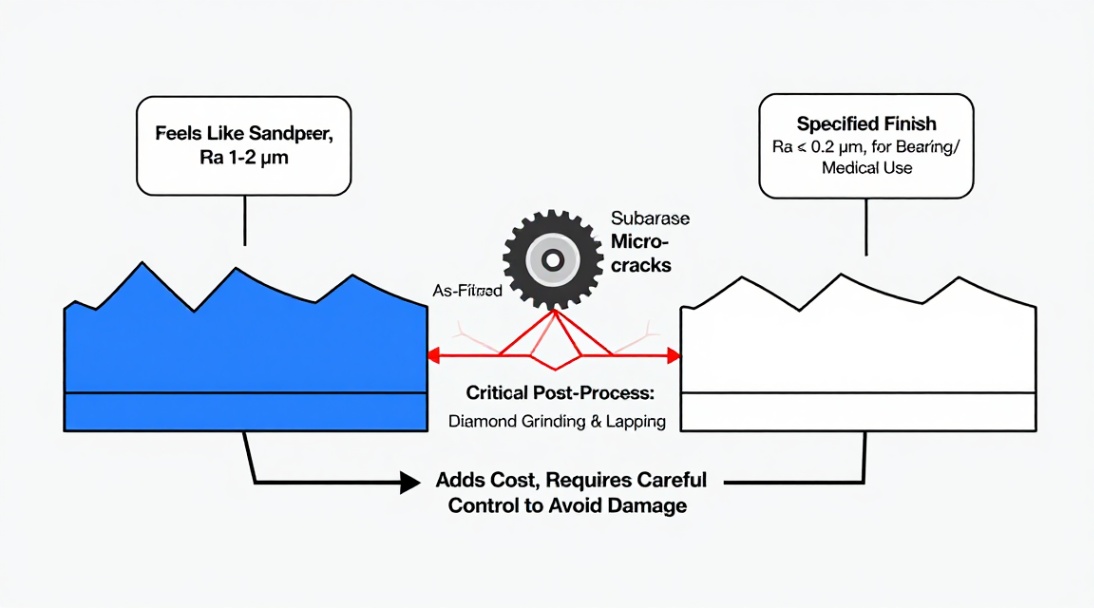
“As-fired” alumina has a surface roughness measured in microns. For a bearing seat or a medical implant, that’s unacceptable. It feels like sandpaper. Achieving a mirror finish requires diamond grinding and lapping, processes that can double the part’s cost and introduce subsurface damage if done incorrectly. The subsurface microcracks from aggressive grinding become failure initiation points under load. Specify your surface finish requirement (e.g., Ra ≤ 0.2 µm) and allow for the necessary post-processing steps and cost in your budget. A flawless, high-purity aluminum oxide ceramic component is worthless if its surface prematurely wears out its mating part.
Mistake 5: The “Set It and Forget It” Installation
Alumina cannot absorb misalignment or stress. Installing it like a metal component guarantees failure. You must use compliant layers, precise fixtures, and avoid point loads. A common error is over-torquing a bolt through an alumina plate, creating a localized stress concentration that propagates a crack. The material doesn’t yield. It fractures. Always design the interface and assembly procedure with the ceramic’s brittleness as the primary constraint. Partner with a fabricator who provides clear installation guidelines, not just the finished part.
The Path Forward: Ask These Questions First
Before you commit to aluminum oxide ceramic, stop. Interrogate your application.
- Is this primarily a wear, corrosion, insulation, or high-temperature application?
- What are the exact thermal cycling profiles? Ramp-up and cool-down rates are critical.
- What are the primary mechanical loads? Compression, tension, shear, or impact?
- What is the true cost of failure? Downtime, safety, or part replacement?
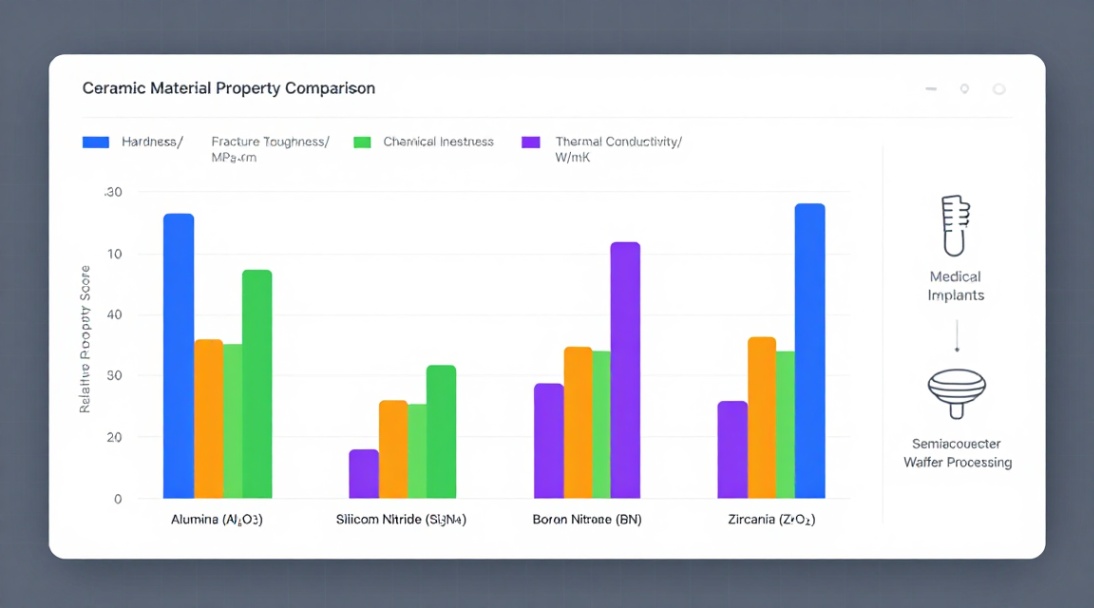
Your answers might point you to alumina. They might also reveal that silicon nitride ceramic offers better fracture toughness for a dynamic load, or that a special coating for boron nitride ceramic crucibles provides better metal release. For components where ultimate hardness and chemical inertness are paramount, and where you can design around its brittleness, alumina is unparalleled. Its role in medical implants and semiconductor wafer processing is testament to that. But you must respect its limits.
The smartest engineers don’t just pick a material from a catalog. They engage with a specialist who can navigate these trade-offs. They run finite element analysis on the specific grade. They request sample batches for real-world testing under their exact conditions. They understand that the choice between 96% and 99.5% alumina, or between alumina and silicon carbide ceramic, isn’t academic. It’s the difference between a reliable workhorse and a catastrophic, expensive failure. Your next step shouldn’t be to place an order. It should be to consult with an application engineer who has the scars-and the success stories-to prove they know the difference.
Suppiler
Synthetic-chemical focus on the research and development, production and sales of ceramic products, serving the electronics, ceramics, chemical and other industries. Since its establishment in 2015, the company has been committed to providing customers with the best products and services, and has become a leader in the industry through continuous technological innovation and strict quality management.
Our products includes but not limited to Aluminum Nitride, Aluminum Oxide, Boron Carbide, Boron Nitride, Ceramic Crucible, ect. If you are interested in any type of these, please feel free to contact us.